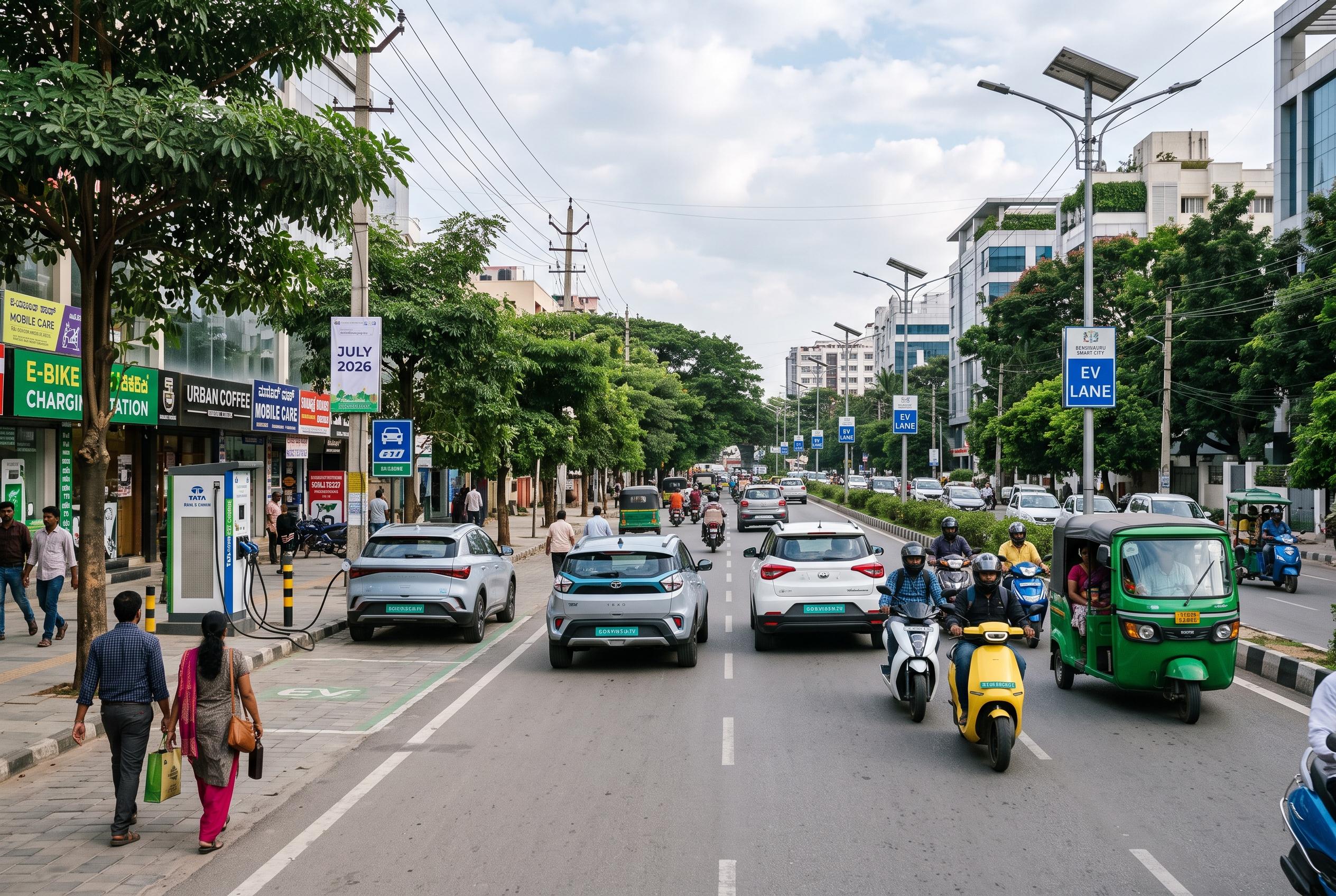

India’s electric vehicle market surged to a new monthly high in July 2026, with retail registrations surpassing 327,900 units. The growth is driven by increased adoption across two-wheelers, three-wheelers, and passenger vehicles, signalling a maturing and expanding EV landscape.
India’s electric vehicle market reached a fresh monthly high in July 2026, with retail registrations climbing to 327,901 units, according to data cited by the Federation of Automobile Dealers Associations. That was up more than 66% from July 2025 and extended the momentum seen in June, when the market had already set a record with 306,220 units and overall penetration above 12%. Together, the figures suggest that EV adoption in India is broadening rather than remaining confined to a few early adopters.
Electric two-wheelers drove much of the July advance. Dealers reported that the category crossed 200,000 monthly sales for the first time, lifting its market share to 11.2% from 10.6% in June and 7.7% a year earlier. The increase matters because scooters and motorcycles are the most visible entry point for mass-market electrification, especially for urban commuters seeking lower running costs and simpler maintenance.
Three-wheelers remained the most electrified segment by far. Their EV share rose to 65.1% in July from 62.7% in June, reflecting the economics of high-utilisation vehicles in shared and commercial transport. Passenger vehicles also posted strong gains, with electric registrations up 83% year on year and market share holding at 7.9%. However, supply constraints for some popular models continue to cap faster growth in that category, even as demand improves.
Commercial vehicles, too, showed a steady rise in electrification, with EV market share increasing to 3.57% from 3.54% in June and 1.65% in July 2025. The pattern across segments points to a wider shift in India’s vehicle market: EVs are no longer growing in just one niche. June’s record retail volumes and July’s stronger showing together indicate that the market is entering a more mature phase, supported by improving consumer acceptance and expanding use cases.
Disclaimer: This content is intended for informational purposes only. Readers are advised to exercise their own judgement, conduct due diligence, or consult a qualified expert before acting on any information provided.