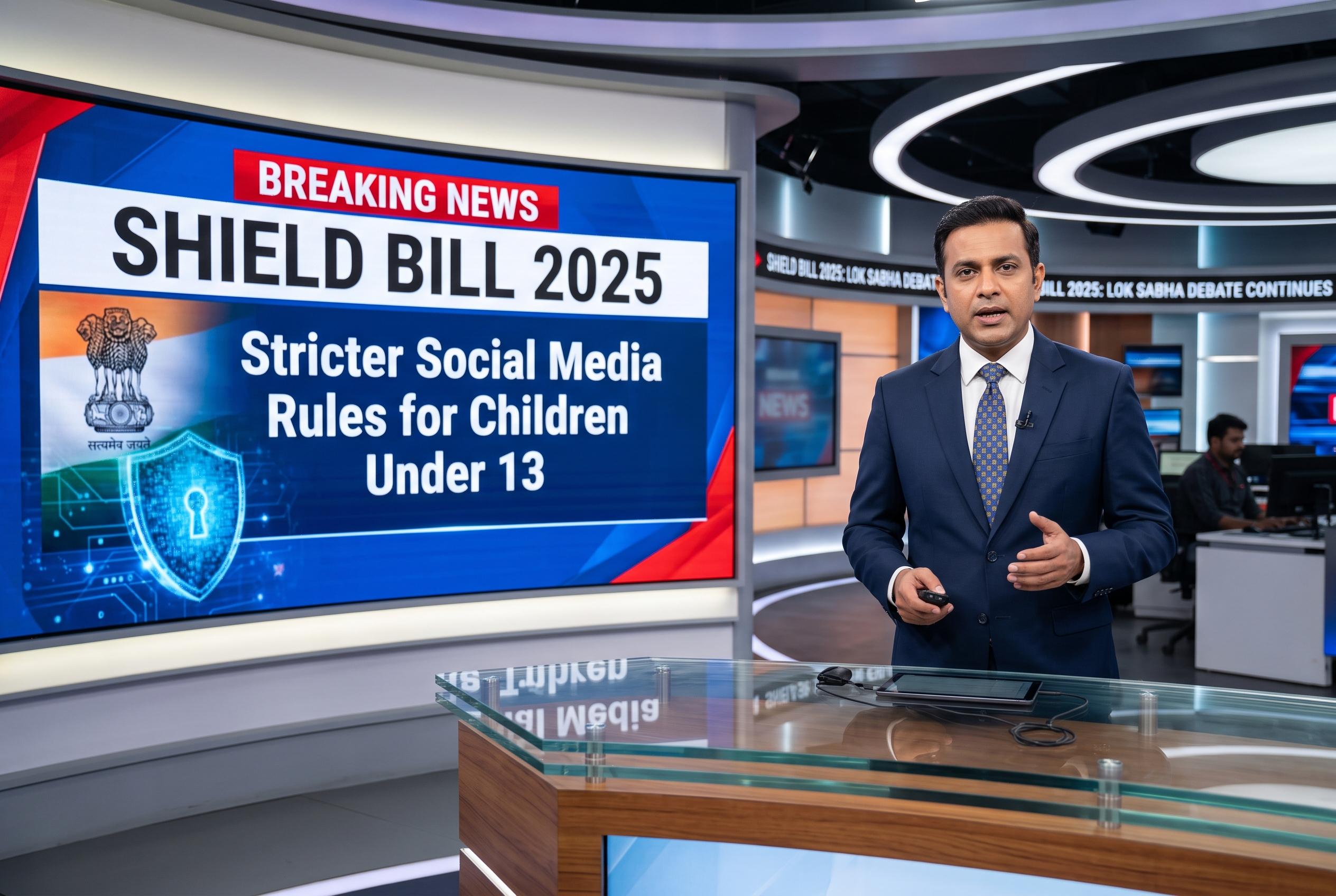

A proposed Indian legislation, the SHIELD Bill 2025, seeks to ban social media and online gaming accounts for children under 13, imposing stricter age verification, data protections, and content safeguards amid similar international efforts.
A proposed Indian bill would bar children under 13 from opening social media or online gaming accounts unless a parent gives verified consent, placing fresh legal duties on platforms that reach younger users. The Safeguarding Healthy Internet Environments for Little Digital-Natives, or SHIELD, Bill, 2025, was put forward by Bharatiya Janata Party MP Baijayant Panda and would require age-verification systems, parental-control dashboards and limits on how platforms collect and use data from minors.
The draft legislation goes further than simple account checks. It would stop services from tracking, profiling or serving personalised advertising to children, and it would require safeguards against pornography, gambling, simulated betting, violent or extremist material and drug-related content. The bill also proposes penalties of up to Rs 10 crore for violations, with repeated or deliberate breaches potentially leading to suspension or blocking under section 69A of the Information Technology Act.
The proposal arrives as governments in other countries examine similar controls. In the United States, the Kids Off Social Media Act introduced in the Senate in January 2025 would also prohibit users under 13 from accessing social media and would force platforms to remove children’s accounts and related data. It would additionally ban personalised feeds for minors under 17 based on device, language, location or age signals. In India, however, private members’ bills rarely become law, which means the SHIELD Bill is likely to be more significant as a marker of policy debate than as an immediate route to regulation.
Disclaimer: This content is intended for informational purposes only. Readers are advised to exercise their own judgement, conduct due diligence, or consult a qualified expert before acting on any information provided.