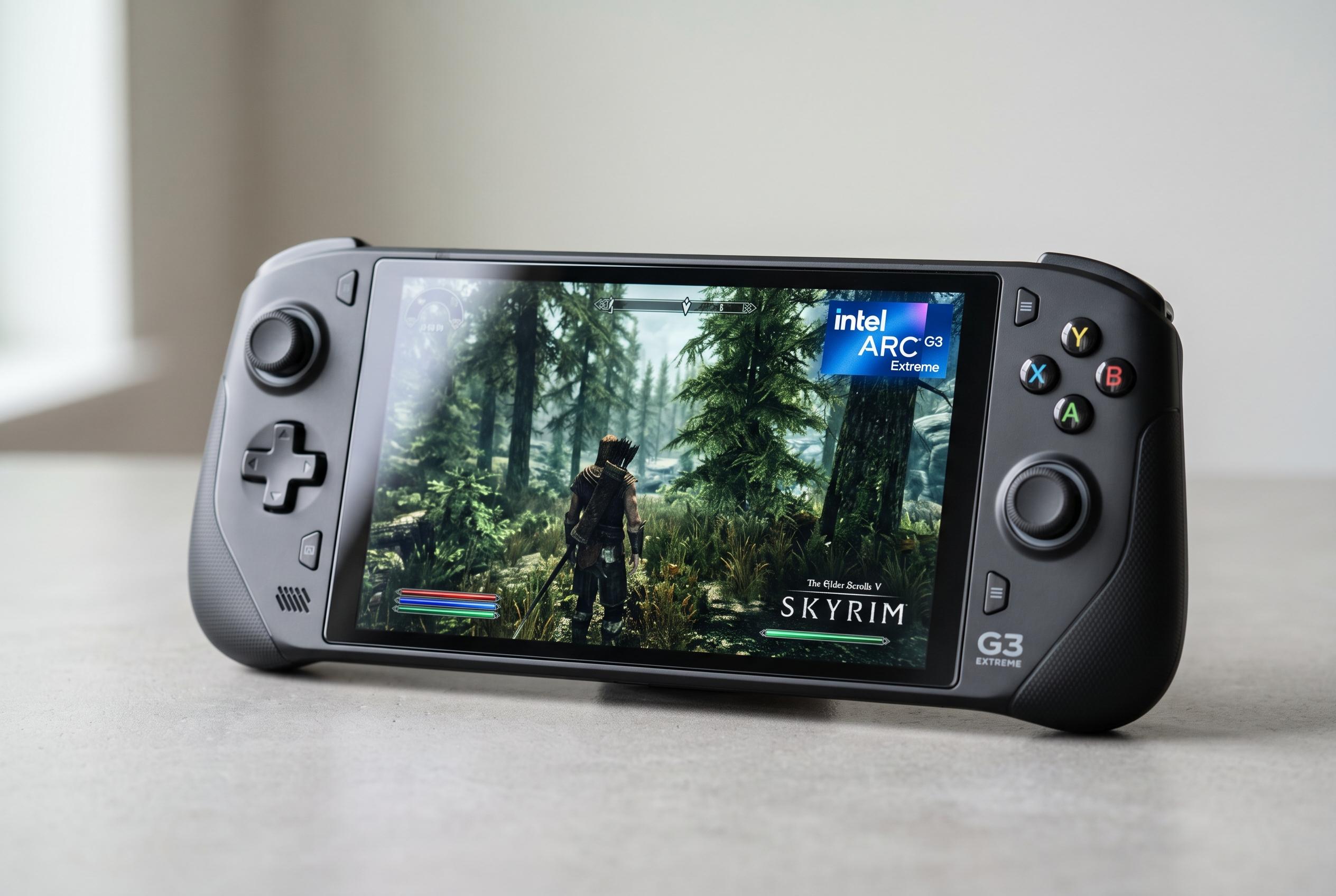

Intel’s Arc G3 Extreme, designed specifically for portable gaming, shows significant performance gains over AMD’s Ryzen Z2 Extreme, promising a new competitor in the premium handheld gaming market with impressive efficiency and graphics capabilities.
Intel’s Arc G3 Extreme is shaping up as a serious entrant in handheld gaming, after fresh testing suggested it can outpace AMD’s Ryzen Z2 Extreme at the 35W setting. The chip sits inside MSI’s Claw 8 EX AI+ and is designed specifically for portable gaming rather than being a repurposed laptop processor, with Intel pairing a 14-core CPU with Arc B390 graphics and support for fast LPDDR5X memory, according to Intel’s launch materials and subsequent coverage.
That hardware choice matters because handhelds are constrained by power. Tom’s Hardware reported that Arc G3 Extreme is built around Panther Lake silicon and can be configured across an 8W to 35W range, which gives manufacturers room to balance speed and battery life. In practice, the emphasis appears to be on graphics first, with the Arc B390 GPU and Intel’s XeSS upscaling tools doing much of the heavy lifting in games.
The latest benchmark results point to a clear performance jump. Notebookcheck said Intel’s chip was often more than 50% faster than AMD’s rival at 35W in its testing, while game runs quoted by other outlets showed strong results in titles such as Forza Horizon and Cyberpunk 2077 at 1080p-oriented settings. That suggests Intel is no longer merely closing the gap in handheld gaming, but competing at the top end of the category.
Efficiency is the other part of the story. Review coverage of the MSI Claw 8 EX AI+ has highlighted unusually strong battery life and low idle drain, which matters as much as peak frame rates for a Windows handheld. Intel’s own pitch for the platform also centred on practical gaming targets, including 60fps-plus performance in many AAA titles at low to medium settings, indicating that the company is aiming for sustained play rather than benchmark-only wins.
There are still limits to the market impact. Intel arrived later than AMD, which gave it time to refine drivers and study how handheld PCs are used, and early devices are expected to sit at the premium end of the price range. Even so, the evidence so far suggests the Arc G3 Extreme is not a token return to the segment. It is a credible handheld platform with enough performance headroom and efficiency to challenge AMD where it matters most.
Disclaimer: This content is intended for informational purposes only. Readers are advised to exercise their own judgement, conduct due diligence, or consult a qualified expert before acting on any information provided.