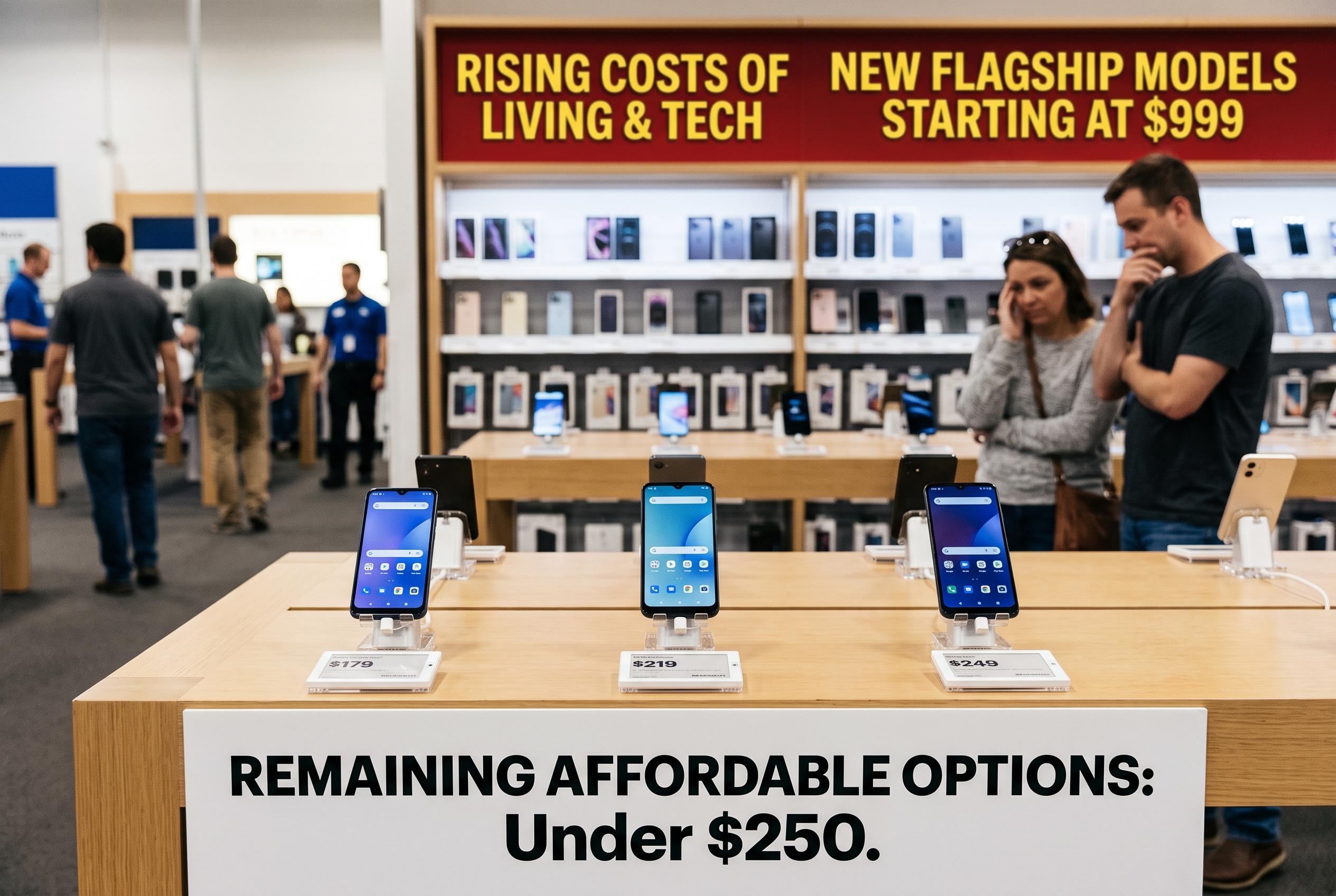

Rising memory chip costs are causing a sharp decline in low-cost smartphone options in the US, with manufacturers adjusting prices and shifting focus amid increasing market polarisation.
A sharp rise in memory prices is squeezing the US budget smartphone market, leaving buyers with far fewer low-cost options than a year ago. Counterpoint Research said sales of phones priced below $100 fell 64% in the second quarter of 2026 from a year earlier, while shipments of those devices dropped to about a third of last year’s level.
The pressure comes mainly from DRAM and NAND flash, which now make up a much larger share of the bill of materials in low-end phones. Axios reported that AI demand is pushing up memory-chip prices across the electronics sector, as major cloud and tech groups lock in long-term supply. TechSpot, citing Omdia, said memory represented nearly 60% of the total component cost in sub-$400 smartphones in the first quarter of 2026, and more than 64% in devices below $99.
That cost shock is forcing manufacturers to raise prices or withdraw their cheapest models. Omdia has warned that smartphones under $400 are likely to be hit hardest, because they already operate on very thin margins and have little room left for further cost cutting. The result is a market that is becoming more polarised: premium devices remain comparatively resilient, while entry-level handsets are under growing strain.
Counterpoint’s figures show the split clearly in the US. Overall smartphone sales fell 5% in the quarter, but the four largest brands – Apple, Samsung, Motorola and Google – together slipped only 4%. Smaller brands fell 45%, with companies such as HMD already weakened by weaker prepaid channels and tariff pressure. In prepaid and financed phone sales, Samsung and Motorola gained ground, helped by demand for Samsung’s Galaxy A series and Motorola’s Moto G line, as carriers narrowed their budget offerings. Omdia has also said the broader US market is becoming more polarised, with the sub-$300 segment holding up better than the middle tiers, where rising prices and tighter subsidies are doing the most damage.
Disclaimer: This content is intended for informational purposes only. Readers are advised to exercise their own judgement, conduct due diligence, or consult a qualified expert before acting on any information provided.