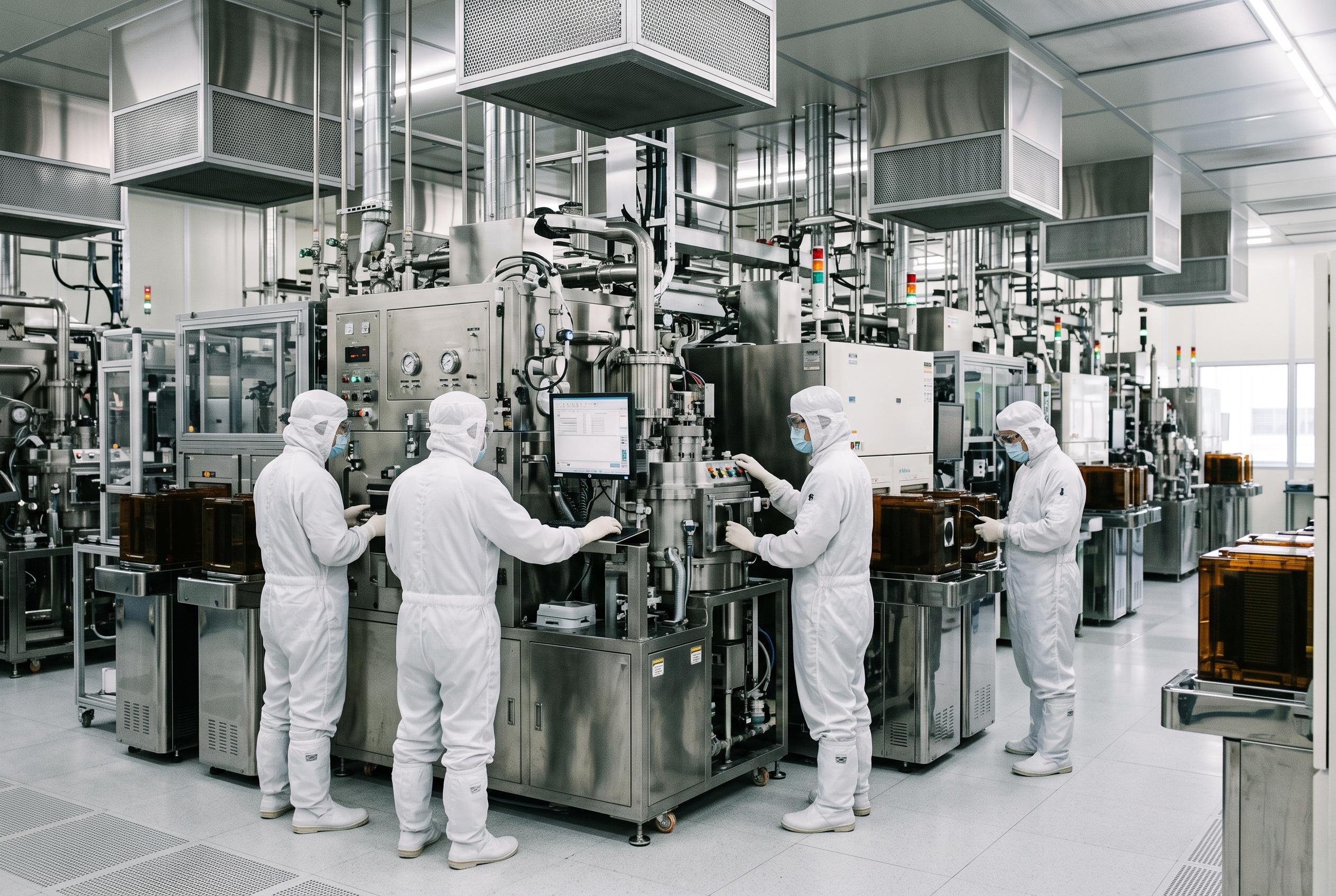

Strike preparations by Micron workers in Taiwan threaten to disrupt production and testing just as the memory maker’s new HBM facility faces demand booked through 2027.
Micron Technology’s labour dispute in Taiwan is intensifying just as the memory maker is scaling up some of its most strategically important production lines. A new advanced packaging and testing facility in Taichung has only recently opened, yet industry reporting says the plant’s output has already been booked through 2027. At the same time, the company’s workers in Taiwan are pressing ahead with strike preparations over a bonus scheme, raising questions over whether a local dispute could spill into global supply chains for high-bandwidth memory used in AI servers.
According to Taiwanese media, Micron employs about 15,000 people in Taiwan, with separate unions representing workers in Taoyuan and Taichung. The Taoyuan union has secured strike authorisation from its members, and the company’s workers have been debating the timing and scope of any walkout. President William Lai has urged both sides to negotiate sincerely, while also noting Micron’s substantial long-term investment in Taiwan. Reuters previously reported that Micron has invested more than NT$1.6 trillion in the country.
The possible industrial action matters because Micron is one of only three dominant players in the DRAM market. TrendForce data for the second quarter show Samsung holding 39.4% of DRAM revenue market share, SK Hynix 24.9% and Micron 23.3%, giving the trio 87.6% of the market. Micron’s DRAM revenue rose 65.5% quarter on quarter in the period as it shifted further towards higher-value server memory. In a market already characterised by low inventory and tight supply, any disruption to production or testing could reduce the buffer available to customers.
Analysts say the risk is not simply the loss of labour hours, but the potential effect on quality control and throughput. The Taoyuan operation is primarily linked to DRAM manufacturing, while Taichung is central to Micron’s HBM-related processes, including stacking, packaging and testing. If engineers and technical staff are absent, equipment maintenance and process monitoring may be affected, which can depress yield and weaken output stability. Even so, the degree of disruption will depend on how many workers participate, which functions are affected and how long any stoppage lasts.
Micron has been expanding elsewhere in the region, but those additions are unlikely to offset a near-term disruption in Taiwan. Company plans in Singapore and at a new plant in Copper Mountain, Taiwan, are not yet at a scale that can fully replace current capacity if work is interrupted. Taiwan News has also reported that Micron is planning an Asia-Pacific logistics centre in Taiwan and is discussing taxation and labour issues with the government, underlining how closely the company’s operational expansion and workforce relations are now intertwined. For now, attention is fixed on the next round of mediation in Taichung and on whether the dispute can be contained before it affects a supply chain already under strain.
Disclaimer: This content is intended for informational purposes only. Readers are advised to exercise their own judgement, conduct due diligence, or consult a qualified expert before acting on any information provided.