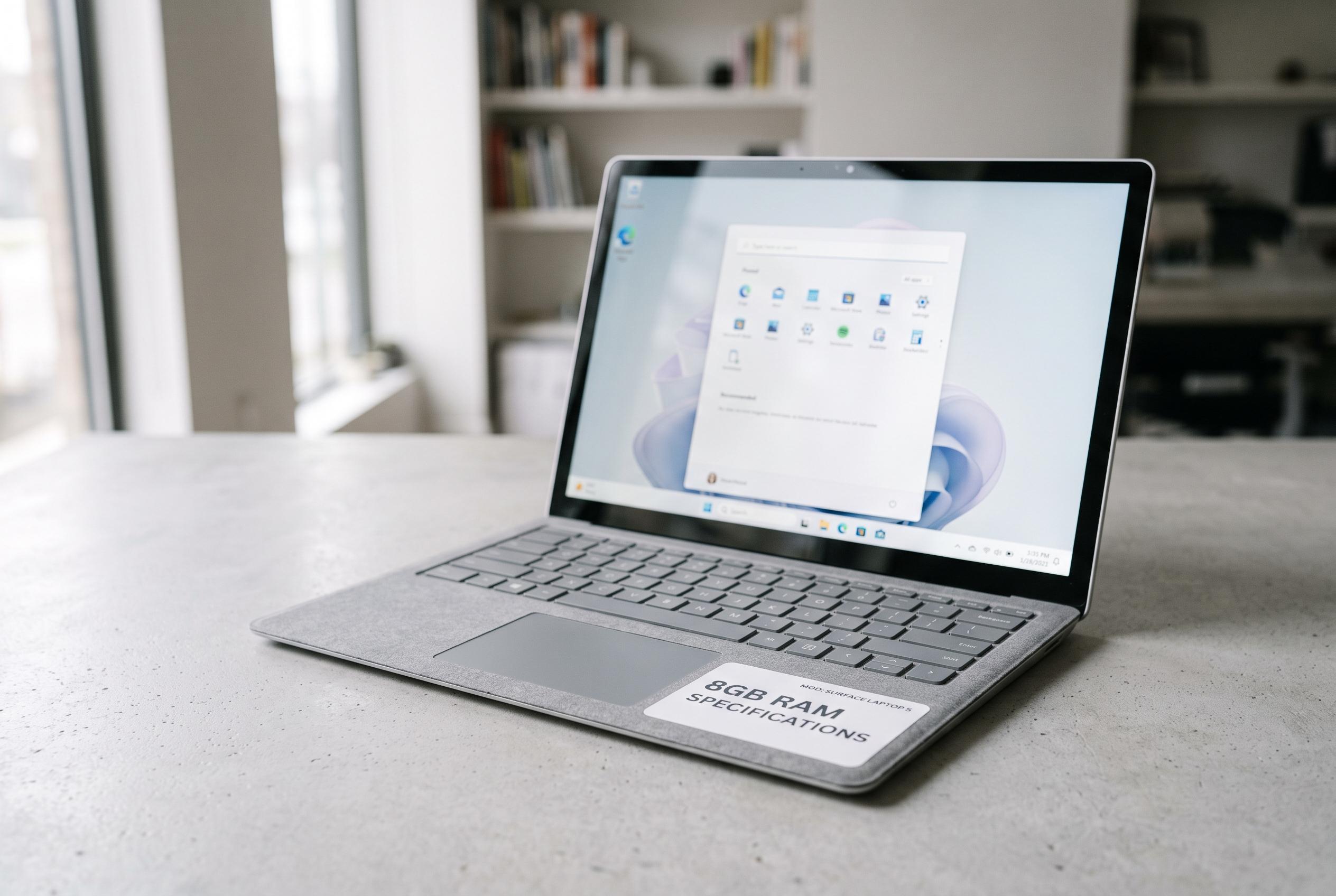

Microsoft has revised its RAM recommendations and brought back 8GB base models for Surface laptops amid a global memory shortage, signalling a shift towards optimizing Windows 11 for lower-spec devices and navigating geopolitical supply constraints.
Microsoft has quietly rowed back on some of its earlier guidance on memory requirements as the global RAM squeeze deepens, with the company removing recommendations that had pointed buyers towards 32GB as the preferred option and 16GB as a practical minimum for smooth Windows 11 use, according to Tom’s Hardware. At the same time, Microsoft has brought 8GB base models back to parts of its Surface line, a sign that higher memory tiers are becoming harder to justify as component costs rise.
The shift underlines how the software giant is now trying to make Windows 11 perform better on lower-spec machines rather than assume users can simply upgrade. Marcus Ash, Microsoft’s corporate vice president for design and research for Windows, told Windows Central that the company is focused on cutting the operating system’s memory footprint and reducing performance bloat across the stack, with improvements due before the end of the year. Windows chief Pavan Davuluri has also said Microsoft wants Windows 11 to run better on PCs with 8GB of RAM.
The pressure is not confined to Microsoft. Industry reporting cited by Tom’s Hardware says HP, Asus and Acer have begun using small quantities of memory from China’s CXMT in limited notebook models for non-US markets as manufacturers search for extra supply during an unprecedented shortage driven by demand from AI data centres. That adds a geopolitical layer to the supply problem, with US officials scrutinising CXMT’s links to China and considering restrictions on its products.
Apple is facing a similar bind. Thanh Niên reported that the company has been struggling to secure cheaper DRAM supply and has found price talks with CXMT difficult, while the Financial Times, as cited by MacRumors, reported that Apple has begun testing CXMT memory chips but has not yet committed to using them commercially. The company is also said to be lobbying Washington for broader acceptance of the supplier.
The wider result is a market in which consumers are likely to pay more for hardware while manufacturers absorb tighter margins and supply risk. For now, the memory shortage appears to be pushing the industry in two directions at once: premium chips for AI infrastructure at one end and renewed efforts to squeeze acceptable performance from modest 8GB laptops at the other.
Disclaimer: This content is intended for informational purposes only. Readers are advised to exercise their own judgement, conduct due diligence, or consult a qualified expert before acting on any information provided.