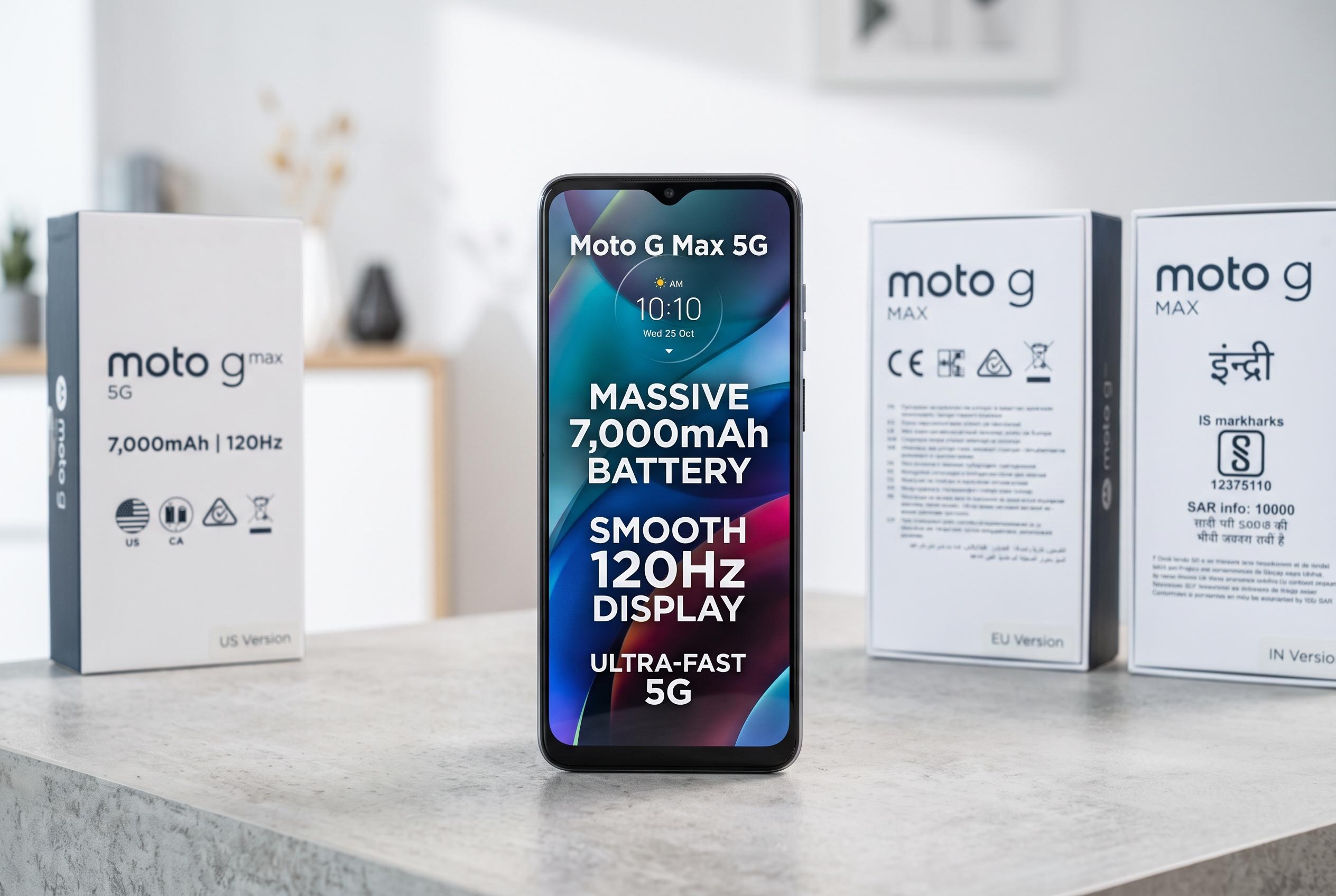

Motorola is set to launch the Moto G Max 5G in India on August 14, featuring a 7,000mAh battery and a 120Hz display, highlighting the company’s strategy of market-specific adaptations amid existing models in Brazil.
Motorola is expected to bring the Moto G Max 5G to India on August 14, with local sales said to begin through motorola.in, Flipkart and offline retailers. Early reports indicate that the phone is being positioned as a battery-heavy addition to the company’s G series, with a 7,000mAh cell and a 120Hz display among the headline features. According to the Indian preview, it may also use a Snapdragon processor and a redesigned body. The device is expected to sit close to last year’s Moto G57 Power in overall positioning, but with a more upmarket finish.
That picture, however, is complicated by Motorola’s earlier launch of the Moto G Max in Brazil. Coverage from multiple technology outlets says the Brazilian model already went official there in June with a 6.8-inch 1.5K AMOLED screen, 120Hz refresh rate and Gorilla Glass 7i protection. It is powered by a MediaTek Dimensity 6400 chip, paired with 8GB of RAM and 256GB of storage, and includes a 5,200mAh battery with 33W charging. Those reports also describe a 200-megapixel main camera, an 8-megapixel ultra-wide lens and a 32-megapixel front camera.
The contrast suggests that Motorola may be adapting the Moto G Max for different markets rather than offering a single, identical model worldwide. If the Indian version follows the line outlined in the local report, it would lean more heavily towards endurance, with a far larger battery than the Brazilian variant and a less advanced LCD panel rather than AMOLED. That would place it in a familiar Motorola pattern: practical specifications, strong battery life and broad distribution through online and physical retail channels.
Disclaimer: This content is intended for informational purposes only. Readers are advised to exercise their own judgement, conduct due diligence, or consult a qualified expert before acting on any information provided.