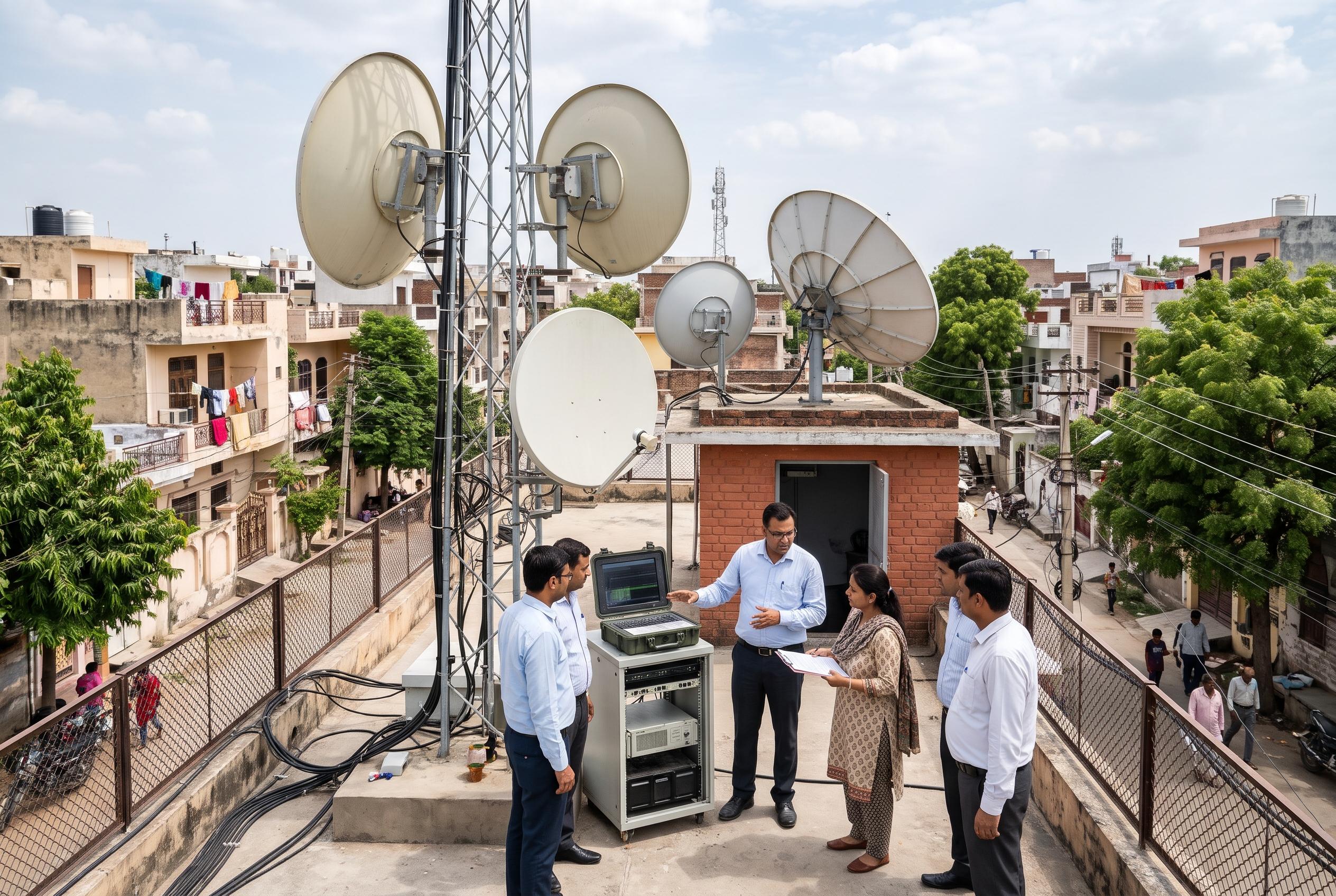

Elon Musk has accused unnamed oligarchs of obstructing Starlink’s Indian launch, but New Delhi says the company remains subject to the same security and licensing process as rival satellite operators.
Elon Musk’s criticism of India’s satellite communications approval process has intensified a broader dispute over Starlink’s long-delayed entry into the market. Writing on X, the SpaceX chief accused unnamed “oligarchs” of trying to block the service, and later questioned whether Reliance Industries chair Mukesh Ambani was the real centre of power in India. India’s Ministry of Communications rejected the allegation, saying the regulatory framework for satellite communications is fair, non-discriminatory and applies equally to all operators at the same stage of the process.
The row comes after years of waiting. According to reporting by TechCrunch and Indian and business media, Starlink has spent more than five years seeking a commercial launch in India and has already secured key approvals, including a GMPCS licence granted in June 2025. Even so, the company is still awaiting final security clearances, spectrum allocation and, in some accounts, approval of its foreign direct investment proposal. The government has said Starlink and two other licensed satellite operators remain at broadly the same regulatory stage while security assessments continue.
Starlink argues that it can extend connectivity to parts of India that remain poorly served by terrestrial networks. Musk has said the service could help rural users and areas where laying fibre or mobile infrastructure is difficult. But the commercial proposition remains uncertain for many Indian households. Reports cited by the Navhind Times place the hardware cost at about Rs 34,000, with monthly plans ranging from roughly Rs 3,000 to Rs 8,600, well above the spending level of most Indian internet users. The company has also partnered with Reliance Jio and Bharti Airtel as it prepares for a possible launch, and has appointed a local lead for its India operations.
The debate also reflects a wider policy tension. India wants more competition in satellite broadband, but officials also want firm control over routing, domestic network location, lawful interception and terminal monitoring. Those requirements are driven by security concerns, especially in border regions, remote terrain and other sensitive areas where satellite links may be most useful. The issue has been sharpened by the war in Ukraine, where dependence on a foreign private provider has been seen as a strategic risk. For now, the likely outcome is continued delay rather than a rapid rollout, with Starlink still needing to satisfy the full regulatory and security process before it can begin commercial service.
Disclaimer: This content is intended for informational purposes only. Readers are advised to exercise their own judgement, conduct due diligence, or consult a qualified expert before acting on any information provided.