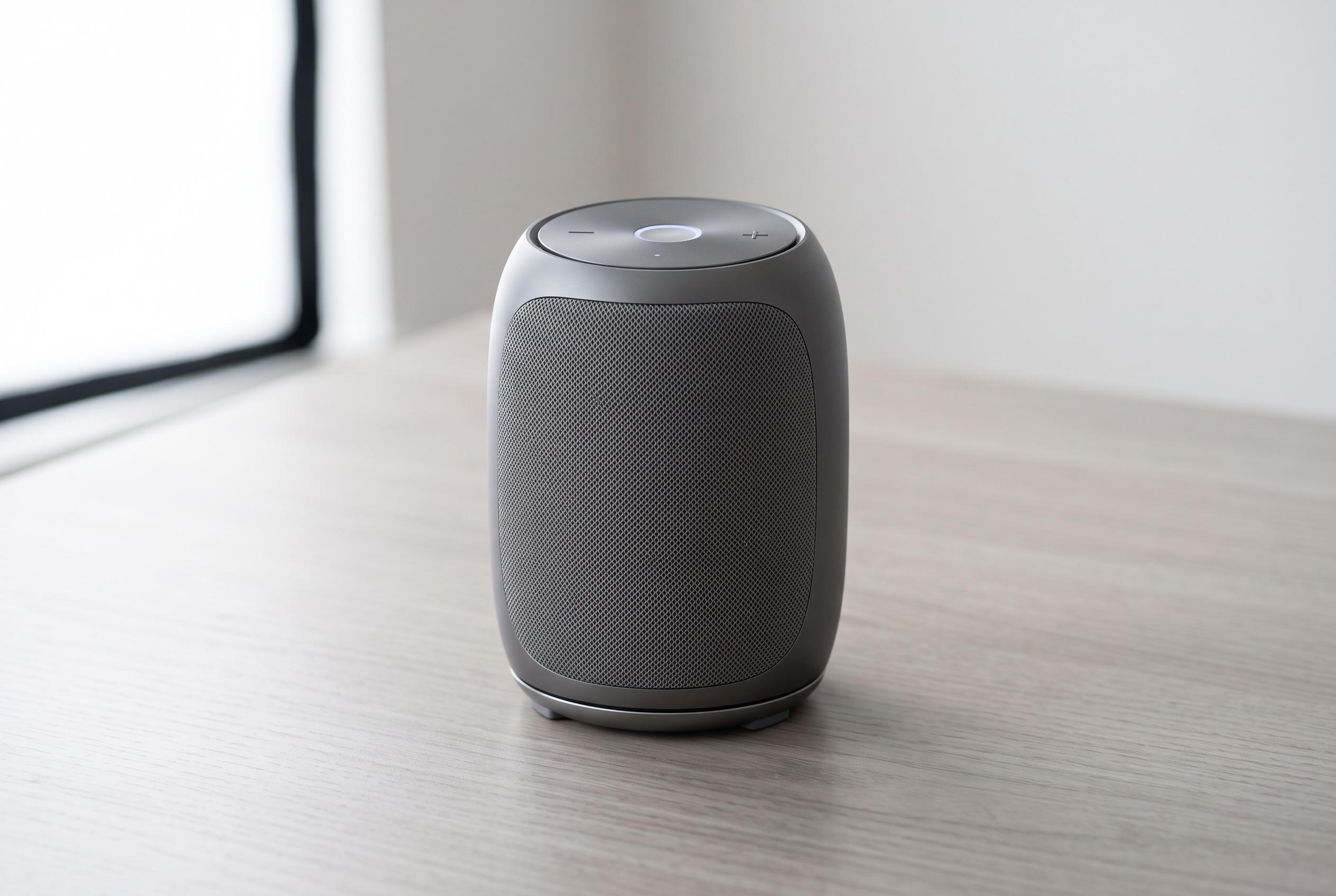

OpenAI is developing a portable, screenless smart speaker, designed alongside Jony Ive, which aims to enter the voice-assistant market in 2027 and disrupt established tech giants like Amazon, Google and Apple.
OpenAI is preparing to move beyond software and into consumer electronics with a new hardware line developed alongside former Apple chief designer Jony Ive, according to reporting from Channel News and several industry publications. The first product is expected to be a premium, screenless smart speaker aimed at global release in 2027, marking a direct challenge to Amazon, Google and Apple in the voice-assistant market.
According to sources cited in Channel News from Shenzhen supply chains, OpenAI has begun working with Chinese component manufacturers on a range of devices, including a smart speaker and a mobile device. The speaker is described as a compact, ring-shaped unit with a metal casing, battery power and wireless charging, allowing it to be carried around the home rather than remaining fixed in one place. The report also says the device will rely on OpenAI’s GPT models and continuous voice interaction instead of a wake word such as “Hey Siri” or “Alexa”.
Other reports add more detail about the hardware. MacRumors said in February that the device is expected in early 2027 and could include an integrated camera, facial recognition for purchases and a companion-style interface that learns from its user over time. Later reporting in July said the product would be portable, display-free and designed to control smart-home accessories, answer questions, play media and handle messages, with mechanical elements intended to give it a more lifelike feel.
Pricing remains unclear. Channel News said one Shenzhen source placed the likely Australian retail price at about $499, while MacRumors and other technology sites have cited a lower target range of $200 to $300. OpenAI has not publicly confirmed either figure, and the company has also not disclosed final shipping dates. The timing may still shift: MacRumors reported in February that the device had slipped from an earlier 2026 target because of legal issues, including a trademark dispute involving the audio startup iyO.
For retailers, the bigger question may be distribution. Channel News said Australian consumer electronics stores could benefit if OpenAI sells through traditional channels as well as its own online platform, although it is not yet clear whether the company will appoint a local distributor. Industry observers say the launch could open a new category in AI hardware at a time when legacy device makers are struggling to build voice products that feel genuinely conversational.
Disclaimer: This content is intended for informational purposes only. Readers are advised to exercise their own judgement, conduct due diligence, or consult a qualified expert before acting on any information provided.