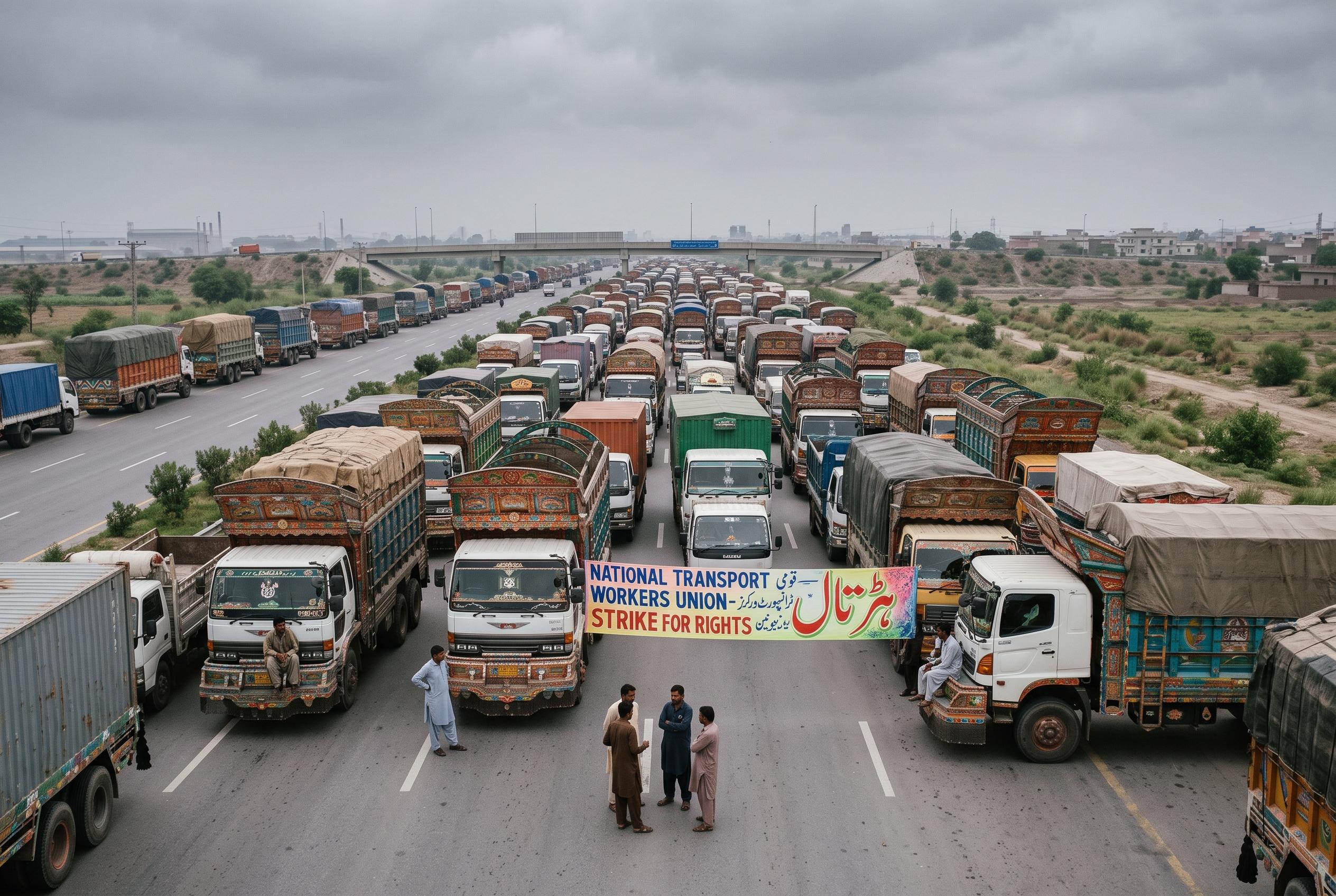

A nationwide strike by goods carriers in Pakistan has disrupted freight movement, exposing deepening tensions over fuel costs and tax policies that threaten economic stability and industrial output.
Pakistan’s transport network is once again under strain after a nationwide strike by goods carriers and oil tankers disrupted the movement of freight and raised fresh alarm over supply chain stability. The immediate impact is being felt in industrial deliveries and export schedules, with businesses warning that prolonged stoppages could leave factories short of raw materials and slow the flow of finished goods to ports. Market observers have repeatedly cautioned that when transport is paralysed, the effects quickly spread beyond haulage firms to workers, consumers and exporters.
The dispute is rooted in a familiar set of complaints. In February, the Pakistan Goods Transport Alliance increased freight fares by 4% after a rise in diesel prices, and its president, Malik Shehzad Awan, warned that further pressure from the government could trigger another strike. Transporters argue that daily changes in fuel prices make it difficult to set freight rates for journeys that can take several days, while also pointing to a withholding tax they say is heavier than the one applied to oil carriers. The January increase in high-speed diesel to Rs268.38 per litre sharpened those objections, particularly in a sector where fuel is the main operating cost.
This is not the first time the issue has escalated into a shutdown. In December 2025, a wheel-jam strike by goods transporters spread through Punjab and Sindh, leaving trucks parked at terminals and slowing the movement of goods across the country. Business groups at the time warned that the stoppage threatened food distribution, industrial inputs and essential commodities, while transport leaders said they would not end the protest until their demands were addressed. The dispute was eventually resolved only after talks with the Punjab government led to the creation of joint committees to examine the sector’s concerns.
There is also evidence that such strikes carry wider economic costs than the immediate disruption suggests. A 2021 study on Pakistan’s transport stoppages found that a 21-day strike had the greatest knock-on effect on financial intermediation, followed by food and beverages and petroleum-related industries. More recently, the Karachi Goods Carriers Association warned in July that repeated fuel-price increases and enforcement pressure on drivers were pushing the transport sector into crisis and could disrupt cargo flows from major ports. Against that backdrop, the government would be wise to open negotiations quickly, examine the tax and fuel-pricing grievances on merit and avoid a prolonged deadlock that would raise costs throughout the economy.
Disclaimer: This content is intended for informational purposes only. Readers are advised to exercise their own judgement, conduct due diligence, or consult a qualified expert before acting on any information provided.