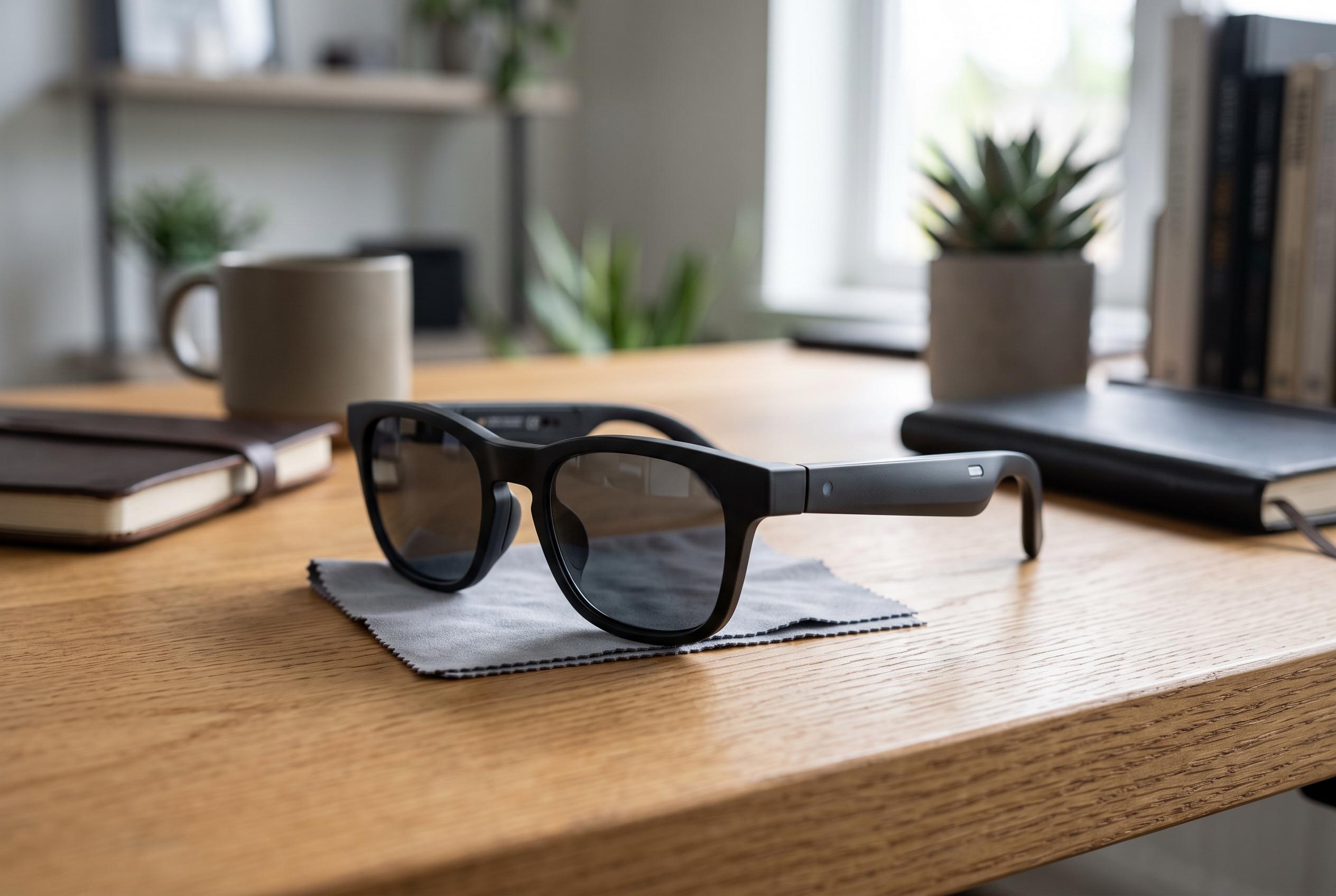

Meta’s new Ray-Ban model highlights growing privacy debates as tech giants delay Apple’s smart-glasses launch amid increasing scrutiny over data protection and surveillance fears.
Smart glasses are moving from novelty to a broader consumer category, but the debate around them is increasingly about privacy rather than engineering. Meta’s latest Ray-Ban model has pushed the issue into public view by adding always-available cameras and AI functions, making it easier to record people in ordinary settings without clear notice or consent. Supporters see a step towards a new class of wearable computing. Critics see a device that normalises passive surveillance.
The concern is no longer confined to theory. According to reporting cited in Europe, regulators are examining whether smart glasses fit cleanly within existing privacy and data-protection rules, while some courts and public institutions are already treating them with caution. The European Parliament has also raised questions about whether Meta’s glasses can capture sensitive personal data and whether that material can be processed outside the bloc for AI training, which would sharpen scrutiny over consent, transparency and cross-border transfers.
Apple’s reported delay to its own smart-glasses project suggests that the largest consumer technology firms are aware of the reputational and regulatory risk. TechRepublic reported that Apple has pushed back the launch of its first model, known internally as N50, while it works through privacy concerns and hardware development. That matters because Apple’s entry would almost certainly legitimise the category further, even as it adds pressure to prove that wearable cameras can be designed with stronger safeguards.
The broader problem is that the technology is advancing faster than the social rules around it. Advocates for digital rights argue that devices should be built around privacy by design, with protections for bystanders as well as users. That debate is likely to intensify if smart glasses become as common as smartwatches. Meta may still be aiming at a future in which glasses replace the phone for some tasks, but the path to mass adoption now runs through questions about who is being recorded, who controls the data and how much private life people are willing to trade for convenience.
Disclaimer: This content is intended for informational purposes only. Readers are advised to exercise their own judgement, conduct due diligence, or consult a qualified expert before acting on any information provided.