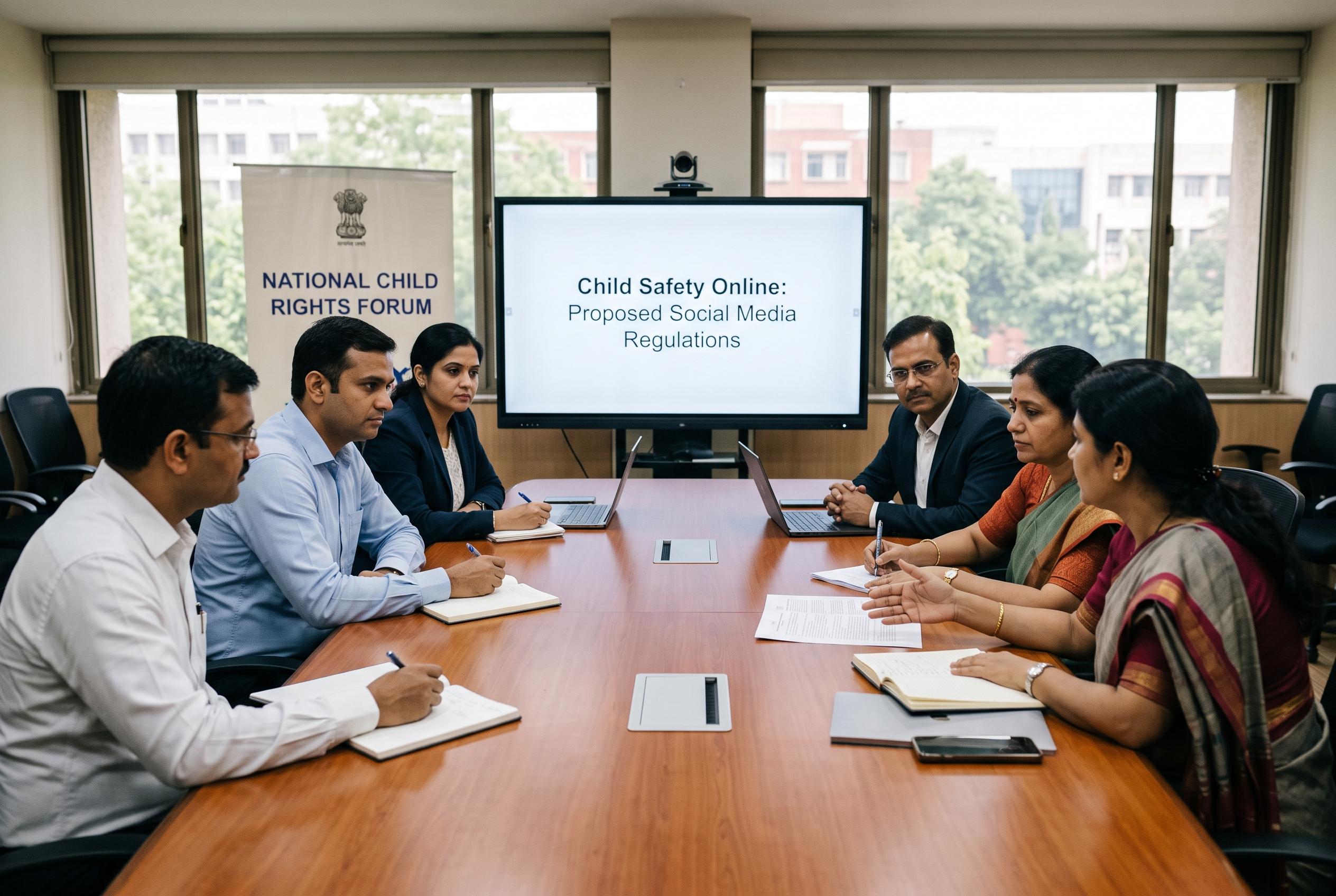

As social media’s influence on youth health intensifies, Indian authorities consider stricter regulations and the development of domestic platforms to safeguard children’s mental health and wellbeing amid rising risks associated with platform design and usage patterns.
The debate over children’s social media use has moved from family concern to public policy. In the article that prompted this discussion, the central argument is that platforms built around algorithmic engagement are no longer neutral tools: they are active environments shaping attention, identity and behaviour at an age when young people are still forming all three. That warning is increasingly reflected in medical and policy assessments abroad, which describe risks ranging from sleep disruption and anxiety to cyberbullying, body-image pressure and compulsive use.
The strongest concern is not simply that teenagers spend time online, but that the design of these services rewards prolonged exposure. The US Department of Health and Human Services says nearly all young people aged 13 to 17 use social media, and many spend more than three hours a day on it. Its guidance also links heavier use with higher risks of depression and anxiety, while noting that many adolescents say social media harms their body image.
That harm is not experienced uniformly. A Pew Research Centre study published in April 2025 found that most teenagers feel more connected to friends through social media, yet about one in five believe it has a negative effect on their mental health. The same study suggests that the impact varies sharply by platform and by pattern of use, with some young people describing benefits to friendship and self-expression while others report stress and emotional strain.
Medical evidence continues to point to a mixed picture. A systematic review in Cureus found that social media can help adolescents build relationships and explore identity, but also carries risks linked to mental distress, self-harm and suicidality. Mayo Clinic, meanwhile, highlights more immediate practical problems, including distraction from schoolwork, disrupted sleep, cyberbullying and exposure to content that can normalise risky behaviour.
Recent European assessment has added further weight to the case for tighter controls. France’s ANSES warned in January 2026 that adolescents are especially vulnerable to poor sleep, anxiety, depression, eating disorders and cyberbullying, and said the personalised design of major platforms can reduce user control by keeping children engaged for longer. The agency called for stricter access rules, safer product design and better digital literacy for parents and schools.
This is where the policy question becomes more difficult. India already has a strong legal language around the welfare of minors, and the principle of parens patriae gives courts a role in safeguarding vulnerable children when their interests are at stake. That makes the case for age verification, content moderation and platform accountability harder to dismiss as mere paternalism, particularly when the issue concerns exposure to content that can damage mental health or development.
There is also a wider strategic argument in the piece: that India should not only regulate foreign platforms more tightly, but also consider building stronger domestic alternatives with clearer child-safety rules and better data controls. That claim is more ambitious than the available evidence can settle, but the policy impulse is clear. If social media is increasingly engineered to capture attention, then the task for regulators, parents and platforms is to decide where childhood begins and commercial persuasion ends.
Disclaimer: This content is intended for informational purposes only. Readers are advised to exercise their own judgement, conduct due diligence, or consult a qualified expert before acting on any information provided.