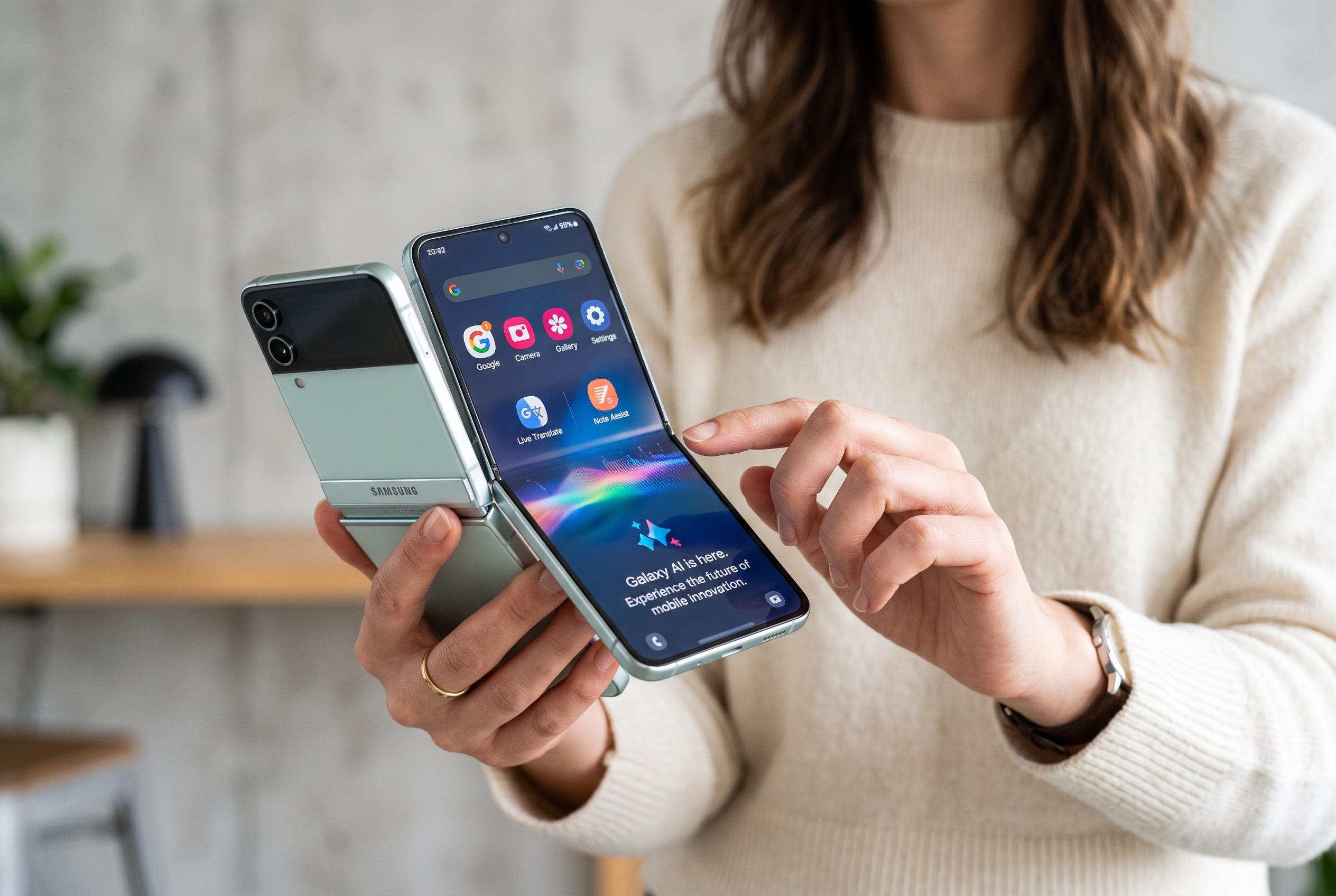

Samsung seeks to strengthen its lead in the evolving foldable smartphone market with innovative designs, AI-driven features, and increased customer loyalty, as consumer demand for portable large displays continues to grow rapidly.
Samsung is trying to extend its lead in foldable smartphones at a time when the wider handset market has become harder to grow through ordinary upgrade cycles. The company’s latest Galaxy Z range is built around a simple bet: that slimmer hardware, stronger hinges and more useful software can make foldables feel less experimental and more essential. According to Samsung, the new devices also reflect rising customer loyalty in the category, with the company saying globally that the Fold7 recorded a 32% repurchase rate and the Flip7 a 37% repurchase rate.
The broader market case is also strengthening. The Edge Malaysia cited research from Future Market Insights saying the foldable smartphone market was worth US$13.5 billion in 2025 and could reach US$17 billion by the end of 2026, before expanding to US$174.6 billion by 2036. It said flip-style devices may account for 34% of the segment and OLED screens 38%, with demand being driven by consumers who want larger displays without sacrificing portability. Grand View Research has separately described foldables as a fast-growing niche, projecting a market of US$74 billion by 2030 and pointing to Asia Pacific as the largest regional market.
Samsung’s strategy is to turn that demand into a stronger ecosystem lock-in. The company says the newest Galaxy Z phones bring improved battery life, lighter designs and display refinements aimed at reducing the visible crease and improving durability. It is also leaning harder on artificial intelligence, with tools that can work across more than 40 apps and services, including notebook-style summarisation and contextual prompts designed to automate routine tasks. That approach matters because, as SamMobile has reported, Samsung’s foldable sales have continued to rise even as rivals enter the category, with Galaxy Z Fold sales up 10% in 2024. PhoneArena has also said the Galaxy Z Fold 7 and Z Flip 7 have exceeded sales expectations in the US, suggesting the category is moving further into the mainstream.
The company is applying the same logic to wearables. Samsung says its Galaxy Watch Ultra2 and Galaxy Watch9 use AI-driven modelling through Qualcomm’s Snapdragon Wear Elite chipset to translate health data into simpler guidance. Features such as Vitals, Heart Health Score and Fitness Index are positioned as wellness tools rather than medical diagnostics, helping users track patterns in sleep, stress, activity and cardiovascular fitness. The broader message from Samsung is that foldables are no longer just a design exercise; they are becoming the centrepiece of a wider device strategy built around portability, personalisation and retention.
Disclaimer: This content is intended for informational purposes only. Readers are advised to exercise their own judgement, conduct due diligence, or consult a qualified expert before acting on any information provided.