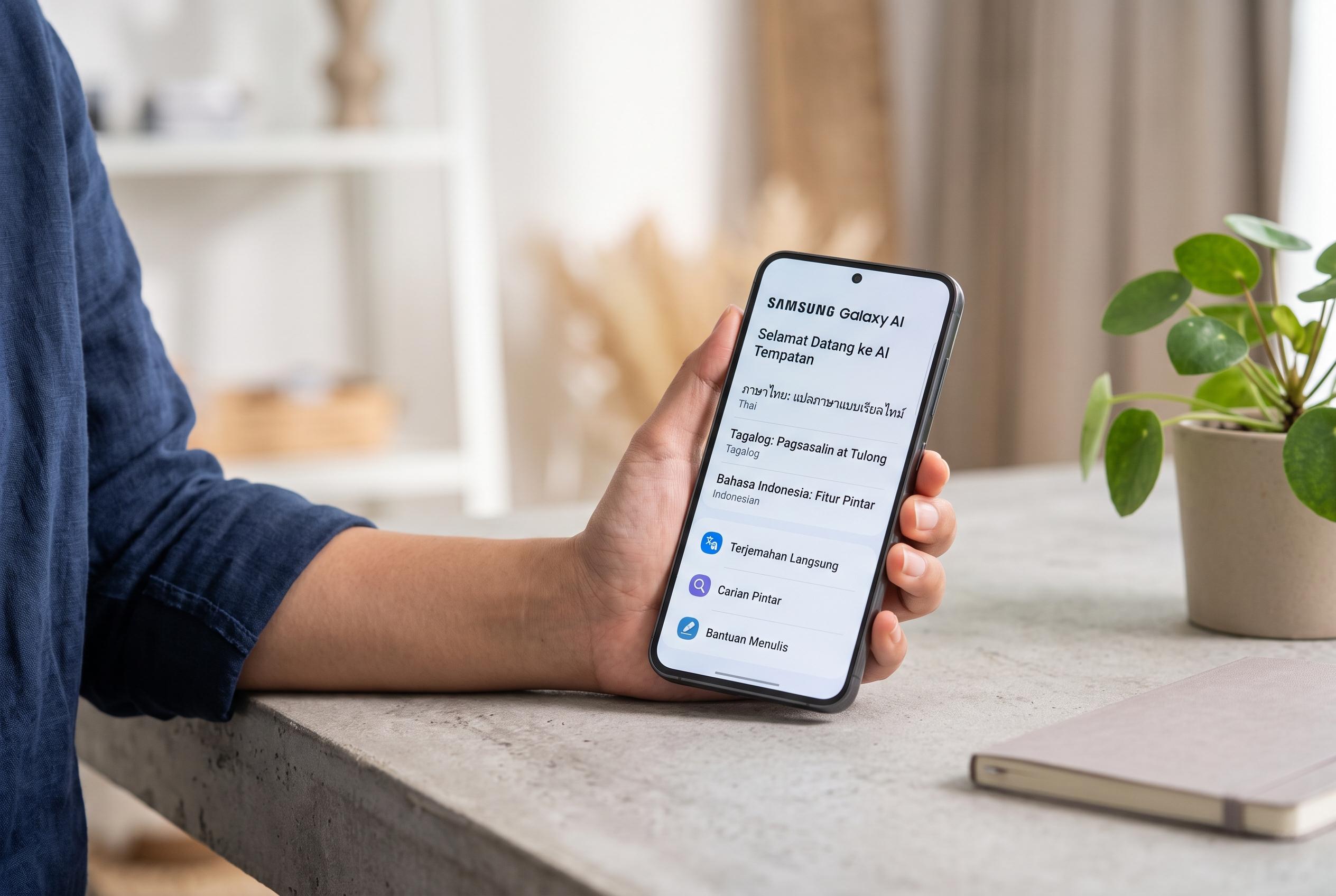

Samsung is positioning its Galaxy AI as a core feature for mass-market smartphones, emphasising localisation, affordability and seamless integration across regional markets in Southeast Asia and Oceania, signalling a shift towards AI-driven devices as standard rather than premium extras.
Samsung is pushing Galaxy AI as a mass-market feature rather than a premium extra, arguing that the real competition in smartphones is no longer just on chip speed or camera hardware but on whether AI tools feel useful, local and affordable. In a round-table discussion after Samsung Unpacked in London, executives including SEA and Oceania president and chief executive CU Kim and mobile research chief Won-Joon Park said regional AI adoption has accelerated sharply and is now part of everyday use rather than a novelty. Samsung has also framed its strategy around devices that fit human routines, not the other way round.
That localisation effort is central to the company’s case. Samsung says Galaxy AI now supports 22 languages, with a particular emphasis on Filipino, Indonesian, Thai and Vietnamese, and has expanded to more dialects and regional variants, including Australian English and Cantonese. The company runs research and development centres across Southeast Asia and Oceania to adapt software to local markets, a sensible approach in a region where language, usage patterns and price sensitivity vary widely. Samsung also says newer foldables, including the Galaxy Z Fold6 and Flip6, are being used to extend AI features to more form factors.
Usage data suggests the bet is working. Samsung said AI use among Galaxy Z Fold7 and Z Flip7 owners in Southeast Asia and Oceania rose from 84% in August 2025 to 96% in June 2026, with features such as Circle to Search, Now Brief and Photo Assist among the most common tools. Company figures also point to a 15% year-on-year rise in sales of the seventh-generation Galaxy Fold models, reinforcing the idea that foldables are moving from niche products to mainstream premium devices in some markets.
Affordability remains the harder problem, especially as memory and component costs continue to weigh on the industry. Samsung’s answer is to cut the total cost of ownership, it says, by keeping core Galaxy AI functions free, offering seven years of software and security updates and pushing trade-in deals, financing options and older flagships to create lower entry points. The company also argues that larger foldables can replace both a phone and a tablet for some users, reducing the need to buy two devices.
Samsung is also leaning on its partnership with Google to give Galaxy devices early access to system-level AI features, while still retaining its own Bixby controls and adding third-party tools such as Perplexity. The company describes this as “agentic AI”, where software can suggest actions and manage tasks but the user remains in control. Knox security, privacy settings and content provenance measures are being used to support that model, as Samsung tries to present AI not as a luxury add-on but as a standard part of the smartphone experience.
Disclaimer: This content is intended for informational purposes only. Readers are advised to exercise their own judgement, conduct due diligence, or consult a qualified expert before acting on any information provided.