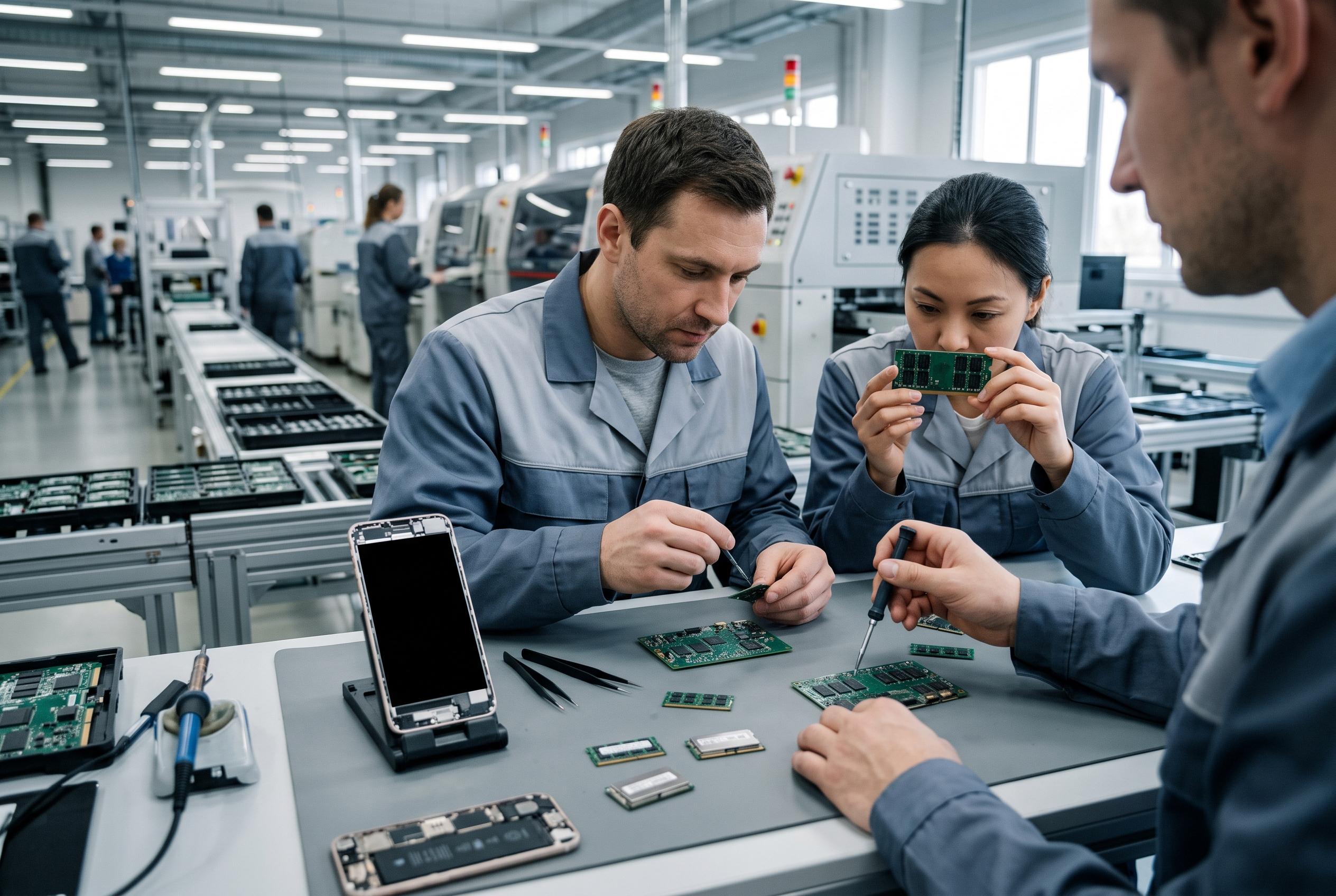

Samsung intends to reduce its smartphone output in the final quarter due to rising memory component costs, marking a shift driven by profitability concerns rather than product launches, as industry-wide memory inflation squeezes margins.
Samsung is preparing to pare back smartphone production in the final quarter of the year as a sharp rise in memory costs squeezes margins across its mobile business, according to a report from the Korean publication Money Today cited by Android Authority. The report says the company’s Mobile Experience division has asked suppliers to reduce output by 20% to 30%, a larger seasonal pullback than the market had expected. Samsung usually trims manufacturing late in the year as buyers wait for the next Galaxy S-series launch, but this year’s reduction appears to be driven less by product timing than by profitability.
The underlying problem is the cost of memory, which remains one of the most important components in modern handsets. Money Today, citing industry sources, said Samsung’s phones are now generating little to no profit once rising memory and semiconductor prices are taken into account. TrendForce data referenced in the report shows that 12GB of LPDDR5X smartphone memory rose to about $145 to $146 in the second quarter, up 175% from a year earlier, and could climb further in the third quarter. If memory prices keep rising faster than handset prices, manufacturers face a straightforward choice: absorb the hit or make fewer devices.
That calculation is particularly awkward for Samsung because the company sits on both sides of the memory market. TrendForce has previously described a wider industry effort to cut output in order to rebalance supply and demand after a weak period for consumer electronics. In that context, Samsung’s reported move to curb smartphone production can be seen not just as a response to weaker handset economics, but also as part of a broader market adjustment in which chip and device makers are trying to protect profitability while prices remain volatile.
Money Today said Samsung had earlier been expected to produce as many as 270 million smartphones this year, but the additional fourth-quarter reductions could pull the annual total down into the low 200-million range. Samsung has not publicly confirmed the reported plan, so the scale and timing of the cuts remain unverified. Even so, the reported reduction highlights how fast memory inflation is reshaping hardware economics, leaving even the industry’s largest vendor with less room to absorb higher component costs.
Disclaimer: This content is intended for informational purposes only. Readers are advised to exercise their own judgement, conduct due diligence, or consult a qualified expert before acting on any information provided.