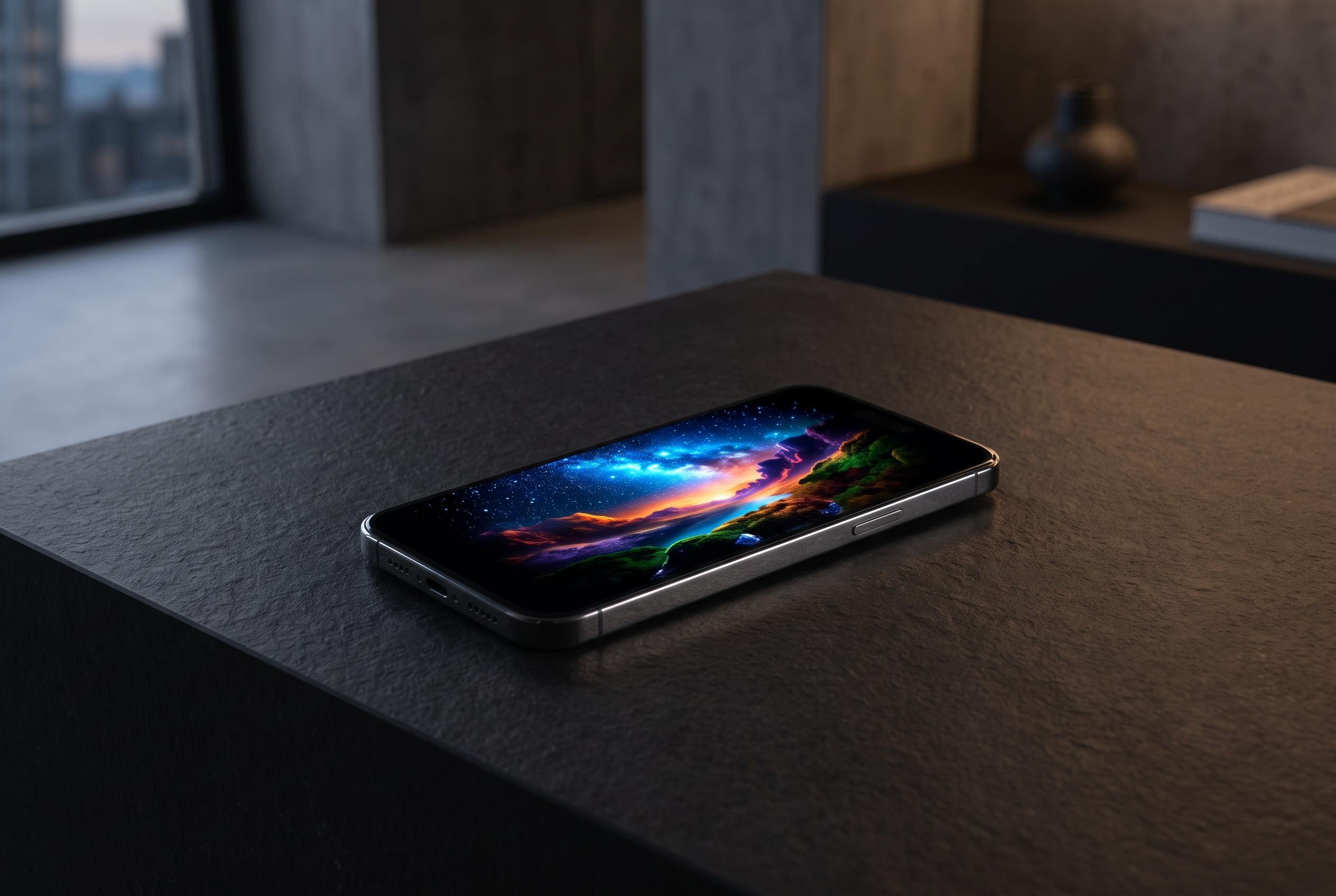

Samsung Display has unveiled its most advanced OLED panel yet, the M16, boasting a peak brightness of 10,000 cd/m², potentially revolutionising screens for premium smartphones including the iPhone 18 Pro and Galaxy S27 Ultra.
Samsung Display has unveiled what it describes as its most advanced smartphone OLED panel yet, the M16, a screen built around a new luminous material that lifts peak brightness to 10,000 cd/m². The display is designed for high-end handsets and, according to reporting by Sammobile and other specialist sites, it is already heading first to Apple’s iPhone 18 Pro range and iPhone Duo before reaching Samsung’s own flagship phones.
For Android devices, the first confirmed launch partner is expected to be vivo’s iQOO 16, which was announced in China today. Samsung Display used that launch to outline the panel’s specifications in more detail. The M16 belongs to the company’s LEAD 2.0 line and combines WQHD resolution with LTPO support, allowing an adaptive refresh rate from 1Hz to 165Hz. It also offers a global peak brightness of 2,800 cd/m² and wider DCI-P3 colour coverage.
The panel is also being pitched as a more refined package for long-term use. Samsung Display says the M16 uses 3,300Hz PWM dimming to reduce visible flicker, a 5,000Hz touch sampling rate, anti-glare coating and an OCF design that removes the polariser layer. The company claims power consumption is down by 30% versus the previous generation, which would matter as much as raw brightness for premium phones that already push demanding high-refresh-rate panels.
The upgrade appears to be part of a broader reset in Samsung’s display strategy. Sammobile reports that the Galaxy S27 Pro and Galaxy S27 Ultra are due to adopt M16 panels at the start of next year, while the standard S27 models are likely to use M14 material instead. If that is correct, the M16 would mark Samsung’s biggest OLED material jump in three years and could deliver improvements in brightness, efficiency, colour accuracy and lifespan across the company’s top tier. Separate speculation that Google would use the M16 in the Pixel 11 now looks less certain, with today’s announcement suggesting that the Pixel line may stay on an older-generation Samsung panel.
Disclaimer: This content is intended for informational purposes only. Readers are advised to exercise their own judgement, conduct due diligence, or consult a qualified expert before acting on any information provided.