
South Korea’s SK Hynix commits $38 billion to build two new semiconductor fabs, signalling a long-term strategic response to surging AI demand amid tight global memory supplies.
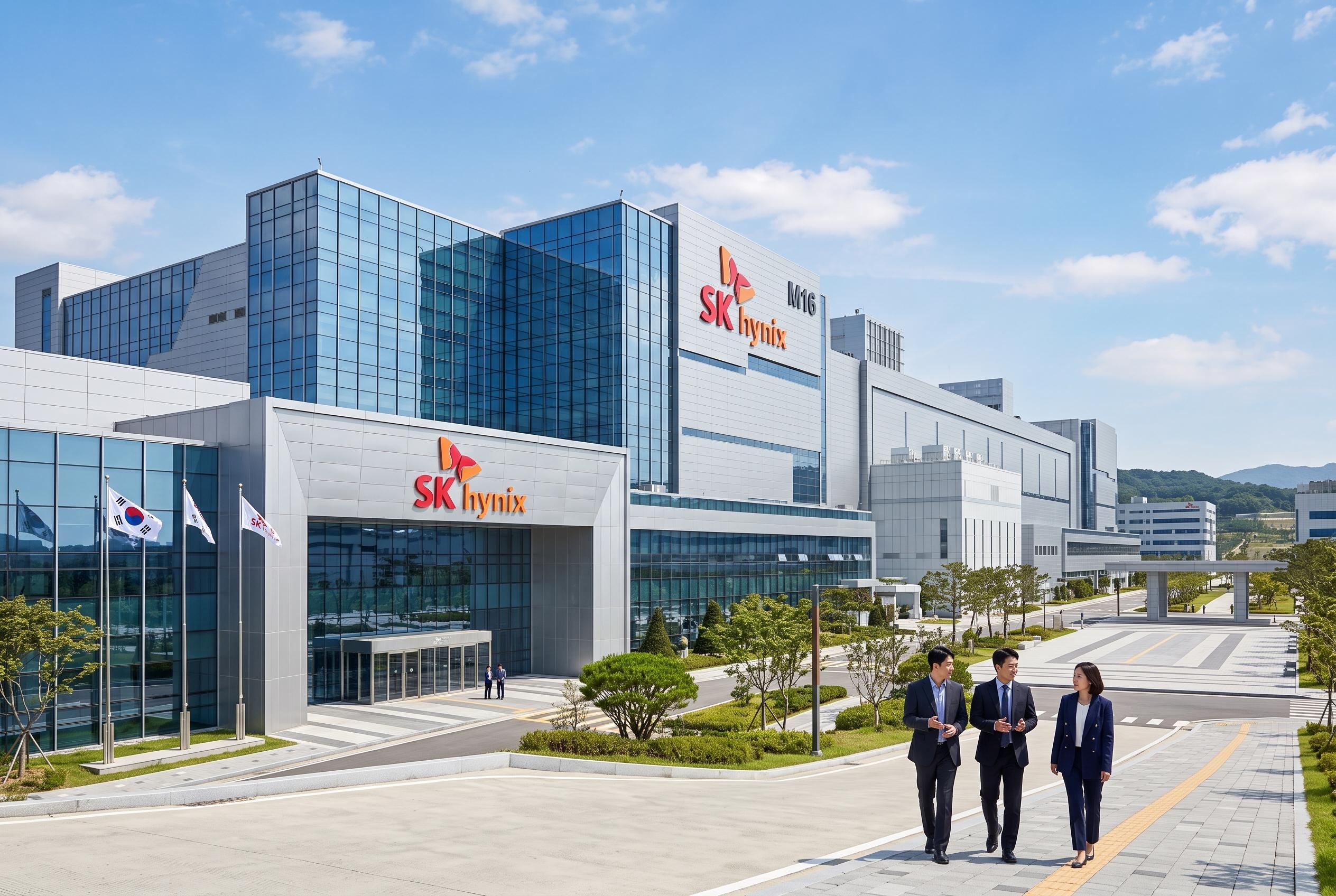
SK Hynix is committing 54 trillion won, about $38 billion, to two new chip plants in South Korea as it moves to capture demand from artificial intelligence infrastructure. The company said the spending will support a DRAM fab in Yongin and a NAND facility in Cheongju, in one of its largest disclosed investment plans to date. Reuters-style reporting on the announcement placed the move in the context of a global memory market still tight enough to keep prices elevated, even as major producers rush to add capacity. According to the company, the strategy is aimed at meeting what it described as rising demand for memory in the AI era.
The Yongin project, known as Y2, is planned as a DRAM site and forms part of SK Hynix’s wider semiconductor cluster there. The company has said construction is due to begin in July 2027, with the first cleanroom scheduled for June 2029. The Cheongju plant, called M17, will make NAND memory, with ground-breaking expected in February 2027 and the first cleanroom opening in December 2028. PC Gamer reported that SK Hynix is also accelerating work at its M15X fab in Cheongju, with wafer production due to begin next month, underscoring how quickly the company is trying to bring capacity on line.
The investment comes at a moment when Samsung has regained momentum in DRAM. Omdia data cited by several outlets showed Samsung widening its lead in the first quarter of 2026, while SK Hynix slipped in market share even as industry revenue surged on the back of AI demand. Counterpoint Research has also said Samsung reclaimed the top DRAM position in the second quarter, adding pressure on SK Hynix to expand. Neil Shah, vice president of research and co-founder of Counterpoint Research, told the press that the spending should be seen as a move for 2029 and beyond rather than an immediate output boost.
That timing matters because new fabs do not solve current shortages. Analysts quoted by PC Gamer said the wider wave of investments from SK Hynix, Samsung, Micron and China’s CXMT should lift global supply through 2028, but not quickly enough to cool prices in the near term. SK Hynix has also tied the plan to a broader capital programme, including about 30% of 2026 sales for facilities and a separate 19 trillion won push into advanced packaging. For customers building AI servers and graphics processors, the result is likely to be a longer wait before memory supply eases in any meaningful way.
Disclaimer: This content is intended for informational purposes only. Readers are advised to exercise their own judgement, conduct due diligence, or consult a qualified expert before acting on any information provided.