
Premium smartphones now account for nearly a third of the global handset market, with changing viewer habits pushing streaming and telecom industries to adapt to mobile-first entertainment in 2026.
Streaming’s next arena is no longer confined to the living room. Counterpoint Research says premium smartphones reached a record 29% of the global handset market in the first half of 2026, with Apple and Samsung accounting for 84% of those devices. That matters because higher-end phones now combine brighter OLED panels, faster chips, stronger batteries and 5G and Wi-Fi 7 support, making them increasingly capable screens for video, sports and gaming.
The shift reflects a broader change in viewing habits. Cable TV is no longer the default option for most Americans, according to CableTV.com’s 2026 State of TV report, while a 2025 study cited in the source material found that 36% of US internet households still subscribed to traditional pay TV and 42% regularly watched free ad-supported streaming services. Among viewers aged 18 to 24, smartphones have already overtaken televisions as the main screen for video, a sign that the industry’s competitive focus has moved well beyond the set in the corner of the room.
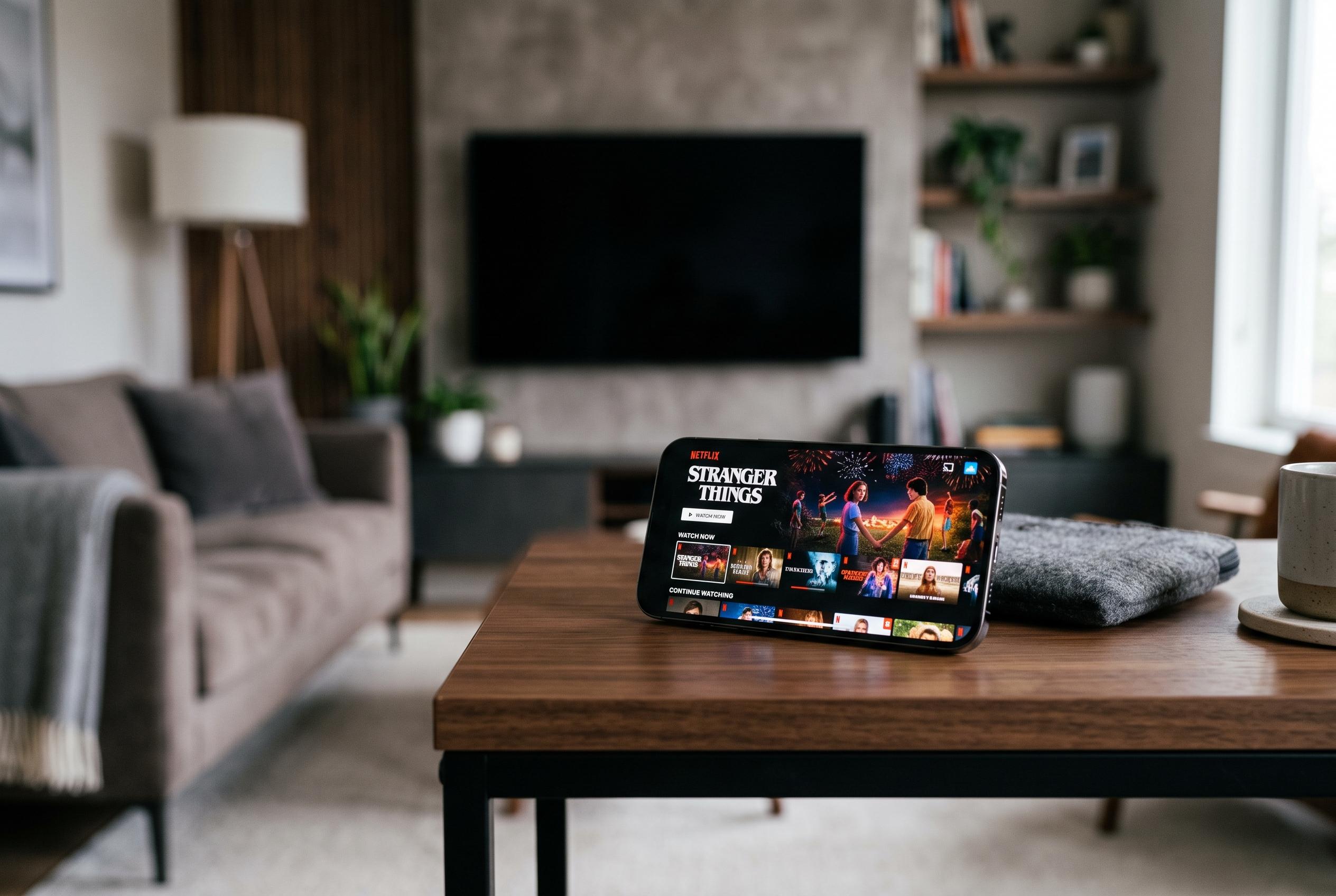
That has pushed streaming and media companies to redesign products for movement between screens. The source material notes that YouTube TV added background audio on mobile so subscribers can keep listening after locking their phones, while Netflix has experimented with phone-based controls tied to connected televisions. The common thread is continuity: viewers increasingly expect to begin on a handset, move to a television and finish on a tablet without losing their place.
Sports has been one of the clearest examples of this change. The source material says 40% of sports fans now watch games only through streaming services, and one-third of US internet households subscribe to at least one sports streaming package, spending an average of $111 a month. That helps explain why leagues and platforms are trying to improve mobile playback, live updates and second-screen features for fans who are not always sitting in front of a television.
The same shift is reshaping telecom strategy. Light Reading reported that Comcast has made wireless its top priority, and the company’s second-quarter 2026 results show more than 10 million wireless lines as it tries to bind broadband and mobile service together. For Comcast and similar groups, the handset is no longer just another device on the network. It is becoming the main way many customers stay connected to media, entertainment and communication services.
Disclaimer: This content is intended for informational purposes only. Readers are advised to exercise their own judgement, conduct due diligence, or consult a qualified expert before acting on any information provided.