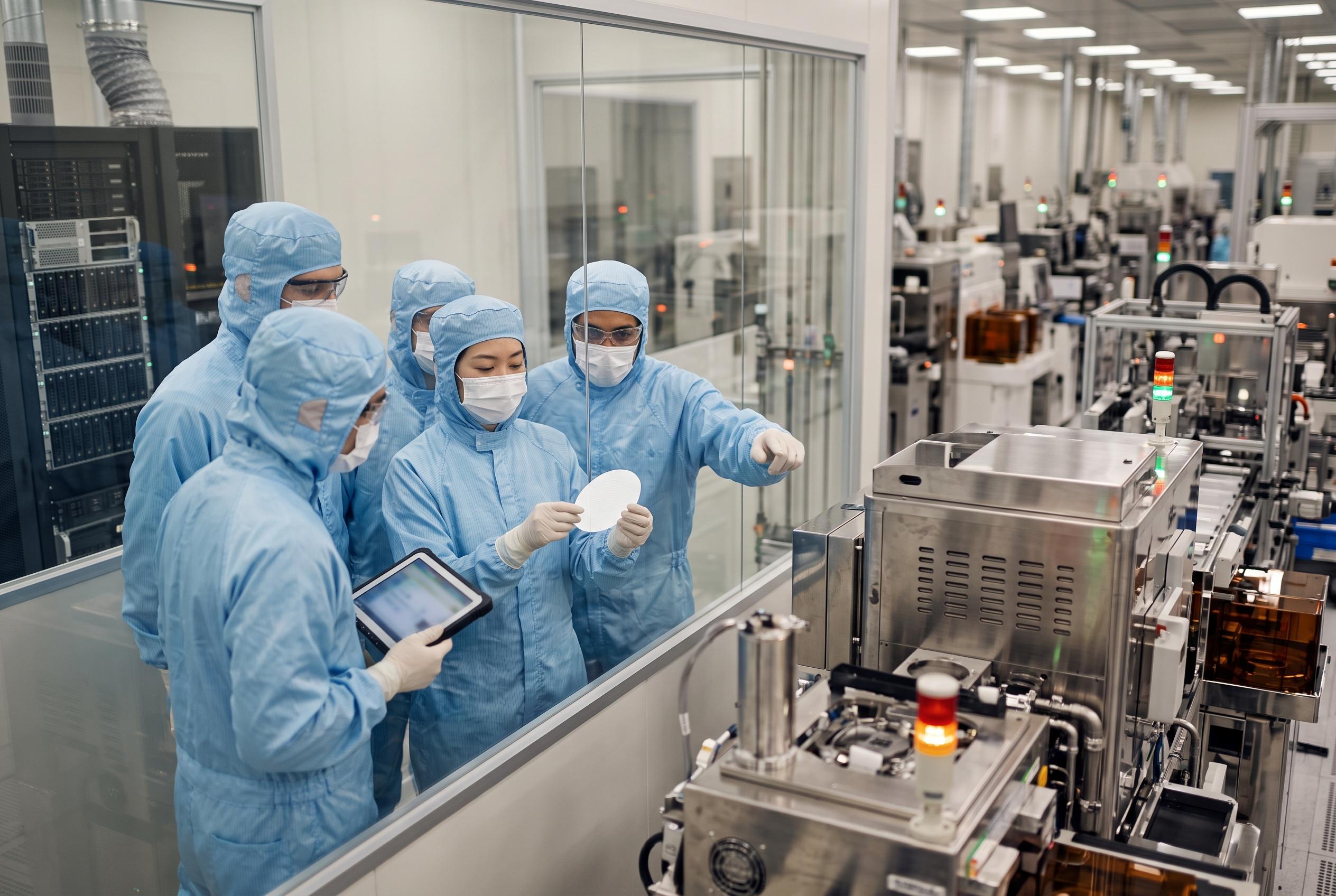

Taiwan’s August export record underscores the island’s deepening dependence on AI and semiconductor demand, prompting calls for diversified industrial strategies amid mounting concentration risks.
Taiwan’s export performance in August showed how deeply the island’s economy has become tied to the global AI cycle. The Ministry of Finance said shipments reached a record US$82.4 billion, up 41% from a year earlier, extending a run of monthly growth to 34 consecutive months and matching Taiwan’s longest ever expansion in exports. Much of the gain came from electronics, with components and information and communications products accounting for a large share of total sales, as demand for AI servers, cloud infrastructure and high-performance computing remained strong.
The figures also underline a structural shift that has been building for years. According to industry data and official commentary reported in Taiwan and international media, Taiwan’s semiconductor sector has been gaining strength as AI investment lifts demand for advanced chips and related equipment. The Ministry of Economic Affairs has previously said the export share of domestic semiconductor equipment more than doubled between 2018 and 2023, while AI-linked orders have repeatedly supported growth in electronics and telecoms exports.
That success, however, comes with concentration risk. The August rebound followed a difficult period in 2023, when exports were still shrinking amid weak global demand and a broader semiconductor downturn. As AI-related chip demand began to recover, the decline moderated and then turned into a sustained expansion, showing how exposed Taiwan is to one dominant technology trend. When that cycle is strong, the economy benefits sharply; if it weakens, the impact can be just as pronounced.
This is why calls for broader industrial diversification are gaining traction. The argument is not to dilute Taiwan’s advantage in semiconductors, but to use the profits, skills and investment generated by that sector to support other areas such as precision machinery, biotechnology, defence technology, unmanned systems, smart healthcare and green technology. The case for action is strongest when exports are at record levels, because it is easier to fund training, research and upgrading before the next external shock arrives.
The broader policy challenge is to avoid repeating the old model of picking winners from the top down. Analysts and commentators have long argued that the more durable approach is to create conditions in which new industries can grow on their own: better research incentives, more flexible regulation, skilled labour, public procurement and easier access to overseas markets. For Taiwan’s many small and medium-sized firms, the practical test will be whether AI-led growth can spread beyond a handful of large exporters and lift productivity across the wider manufacturing base.
Disclaimer: This content is intended for informational purposes only. Readers are advised to exercise their own judgement, conduct due diligence, or consult a qualified expert before acting on any information provided.