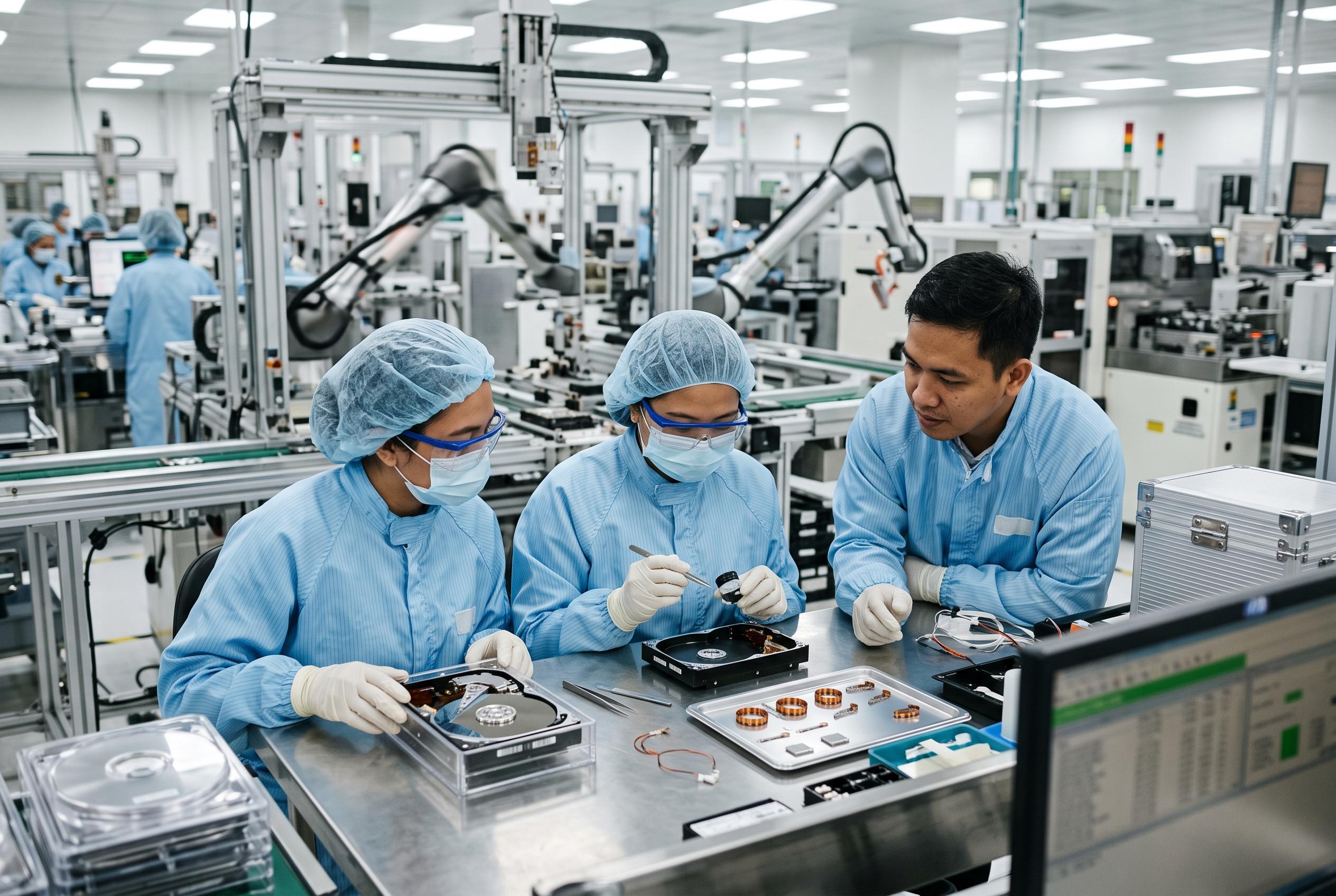

Toshiba is ramping up its hard disk drive manufacturing in the Philippines, aiming to create 3,000 jobs and strengthen its role in the global data storage industry amid plans to develop drives up to 100TB by 2030.
Toshiba Corp is preparing a broader expansion of its hard disk drive business in the Philippines, a move that Philippine officials say could generate about 3,000 additional jobs and deepen the country’s position in the global data storage supply chain. Executive Secretary Ralph Recto said the plan was discussed on Thursday, October 1, during a meeting at Malacañang with Toshiba senior executive vice president Koji Ikeya, who he said signalled the company’s strong interest in enlarging its manufacturing footprint in the country.
The discussion comes as Toshiba accelerates investment in its Philippine operations. According to company material published on its storage division’s website, Toshiba Information Equipment (Philippines), Inc. recently marked its 30th anniversary and began manufacturing nearline hard disk drives at its Laguna Technopark site, extending production beyond its Carmelray Industrial Park facility. The company also said the first shipment from the new line had already been sent, underscoring the operational scale-up.
Industry reports published this week say Toshiba plans to roughly double its nearline HDD production capacity by fiscal 2027 after committing about ¥60 billion, or roughly $380 million, to the Philippine site. The upgrade is intended to support next-generation 30TB-class drives in 2027, followed by larger-capacity products later in the decade, including 40TB-class models and, by 2030, 65TB-class drives. Toshiba is also said to be preparing for eventual 100TB-class devices as demand rises from artificial intelligence and large data-centre operators.
Recto framed the expansion as part of the Marcos administration’s wider push to attract advanced manufacturing, improve supply-chain integration and lift the country further into technology-intensive industries. He cited the Luzon Economic Corridor, which links Subic Bay, Clark, Metro Manila and Batangas, as a key platform for transport, energy, digital infrastructure and manufacturing investment. The government, he said, wants established investors not only to remain in the Philippines but to grow there, with Toshiba’s long-running local presence seen as a model for that strategy.
Disclaimer: This content is intended for informational purposes only. Readers are advised to exercise their own judgement, conduct due diligence, or consult a qualified expert before acting on any information provided.