

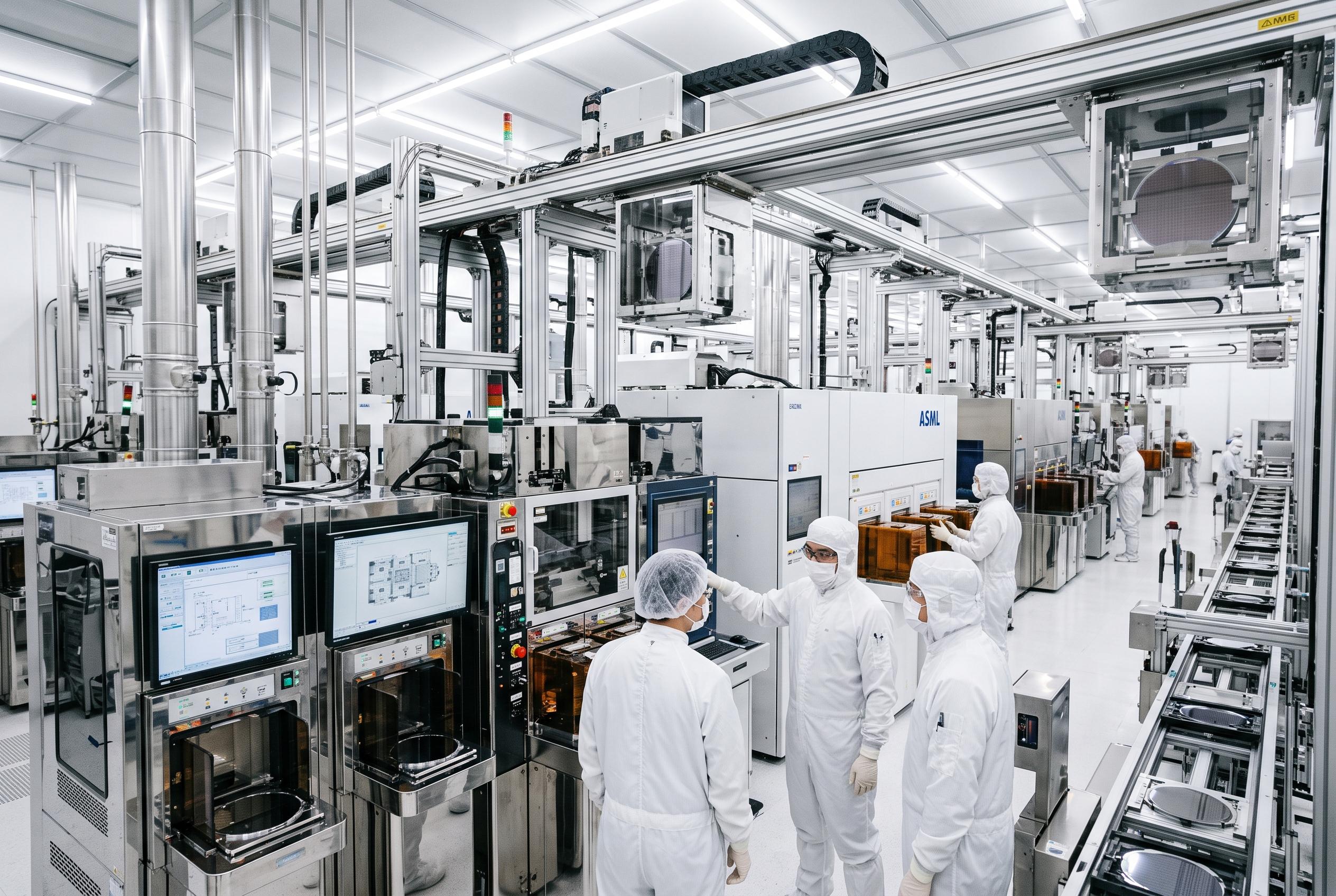

TSMC commits almost 30% of quarterly revenue to factories and equipment, while ASML spends less than 4% as the two companies capture different economics from the AI chip boom.
TSMC and ASML are exposing two distinct capital models behind the same artificial intelligence build-out. Taiwan Semiconductor Manufacturing Co. runs the expensive factories that make advanced chips, while ASML supplies the lithography machines those factories need. In the latest comparison, that difference matters more than sales alone: one company is tying up nearly a third of revenue in capital spending, while the other is directing only a small fraction of sales towards plant and equipment.
According to TSMC’s October 15 results, third-quarter revenue reached NT$1.494 trillion and capital expenditure totalled NT$443.21 billion, equal to 29.7% of sales. Operating cash flow of NT$919.77 billion was still sufficient to cover that outlay, leaving NT$476.56 billion after investment. ASML, by contrast, reported October 14 sales of €11.662 billion and spending of only €447.2 million on property, equipment and intangible assets, or 3.8% of revenue. The structure is different because ASML’s customers bear the cost of building and running the fabs, while ASML itself is not financing that industrial estate.
That lower direct capital burden is a clear advantage for investors who prefer businesses that can grow without owning as much fixed infrastructure. Yet TSMC’s heavier spending also buys control over scarce advanced manufacturing capacity, and its latest operating margin of 58.7% shows how profitable that model can be when utilisation stays high. The question is therefore not simply which company spends less, but which one can sustain returns after those investments are made. TSMC must keep new capacity busy; ASML must keep converting equipment shipments into dependable cash.
One reason ASML’s cash generation looks unusually strong in a single quarter is working-capital timing. The company generated €11.798 billion of operating cash flow, but €7.009 billion came from changes in assets and liabilities. Stripping that out and subtracting the capital bill leaves €4.341 billion, which is a useful diagnostic but not a normalised forecast. That distinction matters because customer payment timing can make one period look much stronger than underlying operations would suggest over a full cycle.
The current risk set is also different. TSMC faces utilisation, construction and geopolitical pressures. ASML faces delayed acceptance of equipment, order timing and export restrictions. Recent reporting from Tom’s Hardware suggests demand for ASML’s tools remains intense, with customers already placing orders for delivery years ahead and the company warning that demand may still outstrip capacity even after planned expansion. The same reporting also noted that ASML has said it sold nothing in Europe in 2026, highlighting the lack of local chip investment on the continent and the company’s call for stronger regional demand. For long-term investors, the more important test is not simply capital intensity, but whether each company can turn its chosen model into durable cash after investment.
Disclaimer: This content is intended for informational purposes only. Readers are advised to exercise their own judgement, conduct due diligence, or consult a qualified expert before acting on any information provided.



