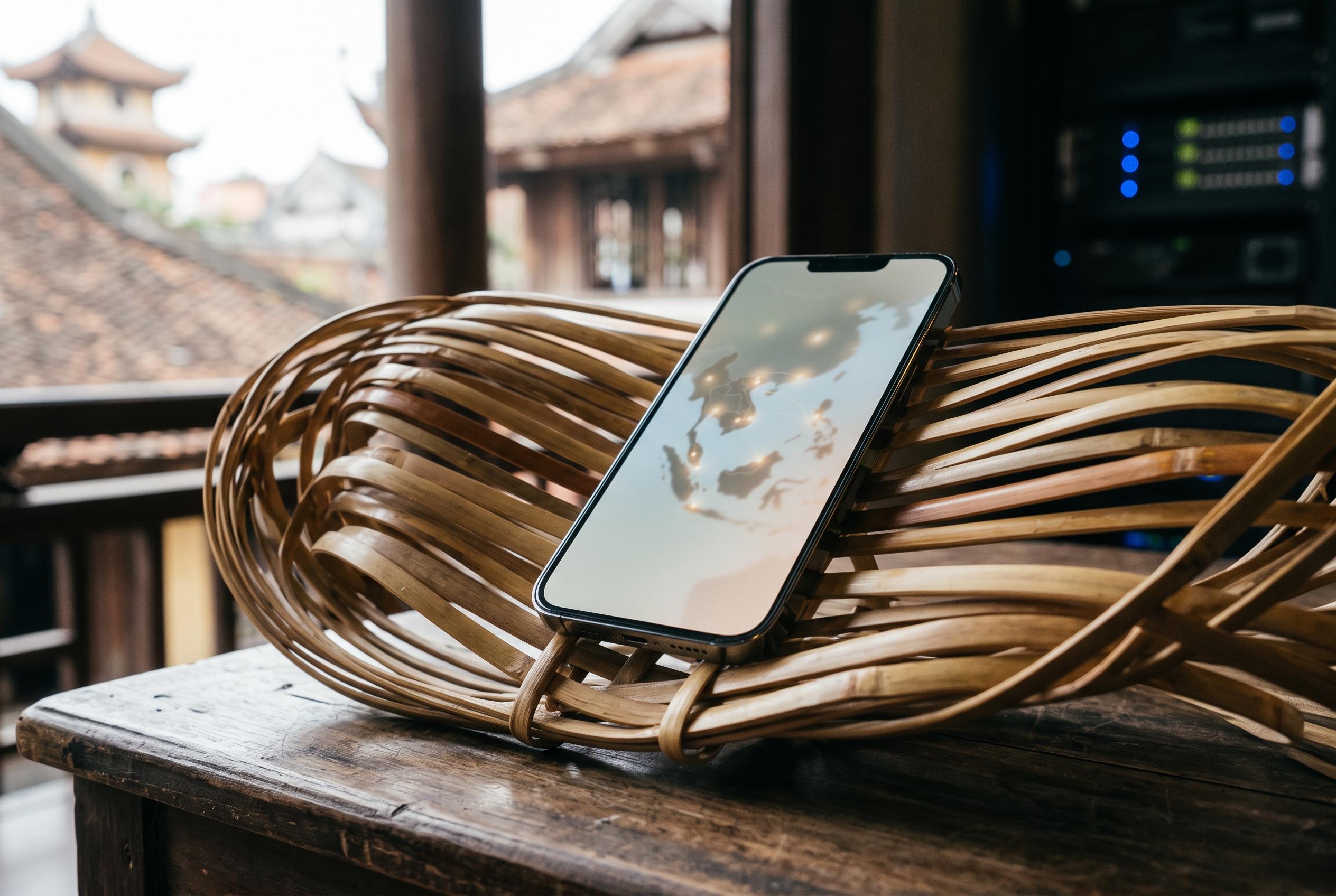

Vietnam has shifted from a colonial history rooted in hierarchy to a confident nation using ‘bamboo diplomacy’ to navigate great power rivalries and build its own technological and economic independence, facing new challenges ahead.
Vietnam’s modern story is often told through a striking contrast: the colonial world portrayed in Régis Wargnier’s 1992 film “Indochine”, and the country that now presents itself as a confident economic and diplomatic actor. In the article by Professor Waldemar Karpa, that contrast is used to show how Vietnam has moved from being an object of imperial bargaining to a state that seeks its own place in the global order. According to the related summary of the piece, that broad argument links the colonial past, the Đổi Mới reforms and the country’s current balancing act between major powers.
The article presents French Indochina as a system built on hierarchy disguised as stewardship. It draws on the film’s depiction of plantations, labour and military power to show how colonial rule combined extraction with the language of civilisation. That historical frame matters because it explains why contemporary Vietnam places such value on sovereignty, flexibility and control over its own development path. The same source argues that the country’s political memory remains central to its economic and diplomatic choices.
Much of that transformation began with Đổi Mới in 1986, when Vietnam abandoned central planning as the sole organising principle of its economy while keeping one-party rule intact. The article says the result was a dramatic rise in living standards, with per-capita income increasing from below $700 in 1986 to nearly $4,500 in 2023, and extreme poverty almost disappearing. The broader point is that Vietnam did not copy a single model; it adapted market tools to preserve the political system while opening the economy to trade and investment.
That strategy has turned the country into an important industrial hub. The article describes how former plantation land is now occupied by industrial parks and how Vietnam has become a major beneficiary of the “China plus one” shift, as firms diversify production beyond China. It also notes Vietnam’s role as an intermediary economy: a large share of exports goes to the United States, while much of its imported intermediate input still comes from China. This makes the country highly exposed to disruptions in global trade.
That exposure became clear in 2025, when Washington announced steep tariffs on Vietnamese goods before later easing them after negotiations. The article presents Hanoi’s response as a careful exercise in crisis management, including offers of lower duties, purchases of American goods and tougher scrutiny of the origin of exports. It also says the episode pushed Vietnam closer to several partners at once, as China, the EU and Japan all moved to deepen engagement. The broader lesson is that Vietnam tries to avoid dependence on any single external power.
The article uses the term “bamboo diplomacy” to describe that approach: firm roots, a stable trunk and flexible branches. That phrase captures a foreign policy designed to bend without breaking, maintaining room for manoeuvre between the United States, China and other major partners. Related pieces by Professor Karpa also show a wider intellectual concern with geopolitical rivalry, technological competition and the need for Europe to preserve strategic autonomy, which places Vietnam’s balancing act in a broader global context.
Yet the article is clear that resilience is not the same as full modernisation. Vietnam still relies heavily on foreign companies for production, and it faces structural weaknesses in domestic technology, skills and productivity. The piece notes the government’s new industrial ambitions, including a semiconductor strategy and a drive to expand the private sector, but it also points to the obstacles: an ageing population, energy dependence on fossil fuels, weak links between foreign firms and local suppliers, and growing climate risks in the Mekong Delta. The message is that the next stage will require more than low costs and political discipline.
In that sense, Vietnam’s challenge is no longer simply to survive external pressure. It must also move from being a production base to becoming a source of its own technology, firms and standards. Karpa’s article presents this as a second form of independence: not the battlefield victory that ended colonial rule, but the slower, harder task of building economic and technological authority. Vietnam has learned how to bend. The question now is whether it can rise high enough to shape the shadow around it.
Disclaimer: This content is intended for informational purposes only. Readers are advised to exercise their own judgement, conduct due diligence, or consult a qualified expert before acting on any information provided.