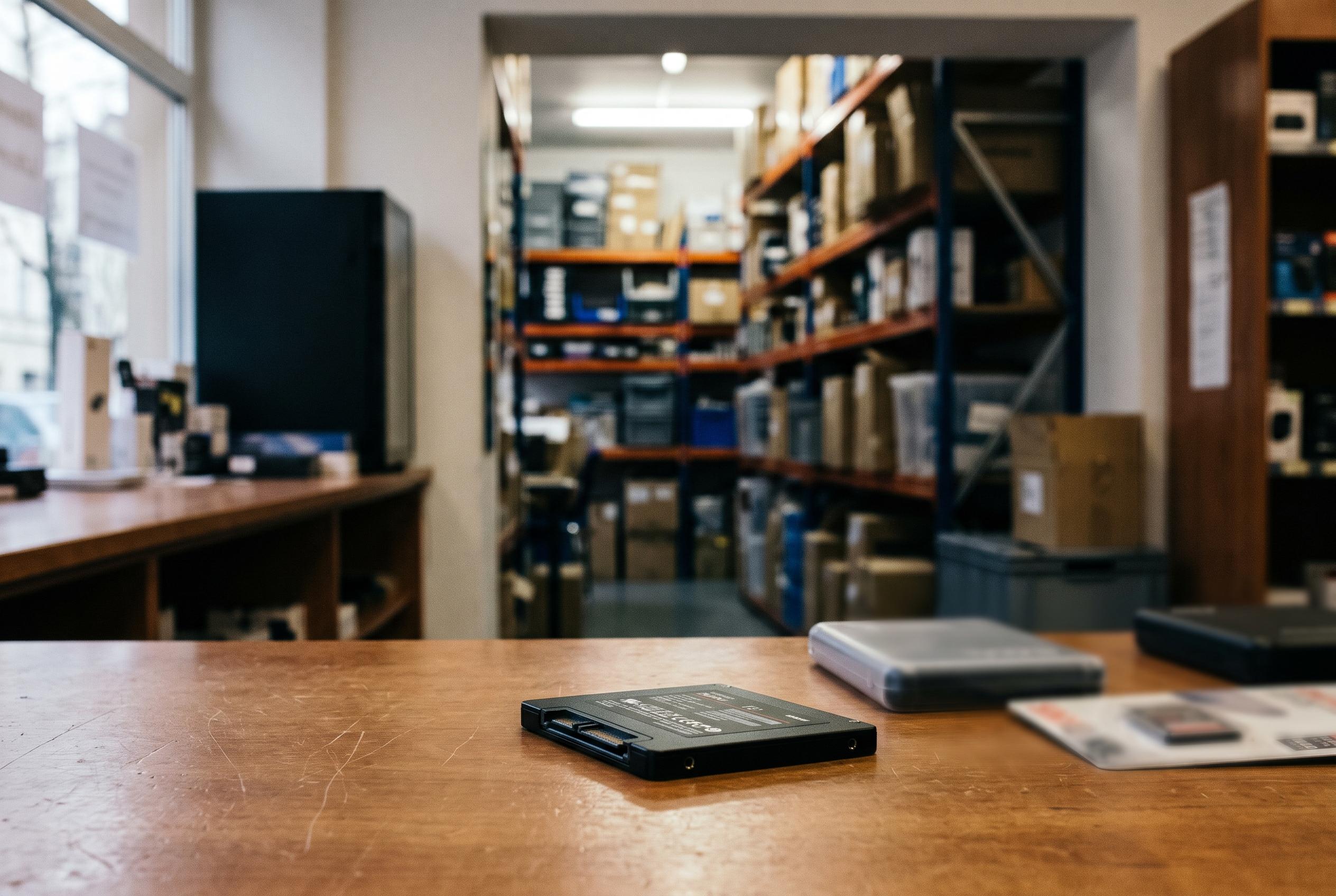

Trade quotations for some 1TB drives have dropped sharply, but high-cost inventory and resilient demand are keeping retail prices firm. Buyers may see discounts during Double 11, though a wholesale dip is no guarantee of cheaper storage in shops.
A fresh wave of talk about falling solid-state drive prices has prompted hopes that the memory market has finally turned. Yet the evidence suggests a narrower shift: the drop is happening in wholesale trade quotations, not in the prices most buyers actually face. According to CFM Flash Market’s weekly pricing data, SSD channel quotations slipped in late October, including a near 8 per cent weekly fall in mainstream 1TB PCIe 4.0 drives. But retail prices in stores and on major e-commerce platforms have not followed at the same pace.
That gap was visible in Shenzhen’s Huaqiangbei electronics market, where CCTV Finance reported on 31 October that 1TB SSDs were still commonly being offered at around 800 to 1,000 yuan or more, while 16GB DDR5 memory was quoted at roughly 1,400 to 1,600 yuan. Sellers told the broadcaster that October sales had fallen by about 20 to 30 per cent, leaving many shops with expensive inventory bought at higher levels. In that environment, merchants have little incentive to cut sharply, and some are instead trying to recover cash by moving stock gradually. The result is a market in which headline price declines exist, but mainly at the wholesale layer.
CFM’s own price page underlines the distinction between trade quotations and consumer pricing. The site says its figures are weekly industry quotes, updated each Tuesday morning in China time, and that they reflect the channel market rather than the shop floor. That difference matters because channel prices can react quickly to changes in supply, demand and inventory pressure, while retail prices usually move more slowly. A separate report carried by China Business Journal and republished by Eastmoney on 31 October made the same point, noting that some SSD quotations had fallen sharply even as retail prices stayed firm, with only limited Double 11 promotions appearing in the market.
The wider backdrop also helps explain why vendors are reluctant to chase prices lower. A corporate document reviewing the 2023 memory downturn says major producers cut output substantially, yet still suffered heavy losses, including estimated losses of about US$10.7 billion for Samsung Memory, US$5.8 billion for SK hynix and US$4.9 billion for Micron. That history has made suppliers cautious about flooding the market again. More recently, SK hynix said in its third-quarter 2026 results that supply and demand are likely to remain out of balance through 2030, citing continued growth in demand, the difficulty of advanced manufacturing and the time needed to build capacity. In other words, AI-linked infrastructure spending is still supporting memory demand, and new supply is unlikely to ease pressure quickly.
For consumers, the practical advice is to buy on need rather than on the hope of a perfect bottom. If a phone storage upgrade, a project drive or a game library needs space now, waiting months to save a modest amount may not be worthwhile. Shopping around still matters: promotions on major platforms can undercut street prices, particularly during Double 11, but buyers should stick to established brands and mainstream products. In a market where counterfeits, poor-quality NAND and exaggerated performance claims remain a risk, the cheapest option is not always the least expensive in the long run. Those who can wait should watch for meaningful retail movement, not just softer wholesale quotes. And those hoping to treat storage as an investment may find, as this market often shows, that the sellers closest to the supply chain know more about the cycle than private hoarders do.
Disclaimer: This content is intended for informational purposes only. Readers are advised to exercise their own judgement, conduct due diligence, or consult a qualified expert before acting on any information provided.