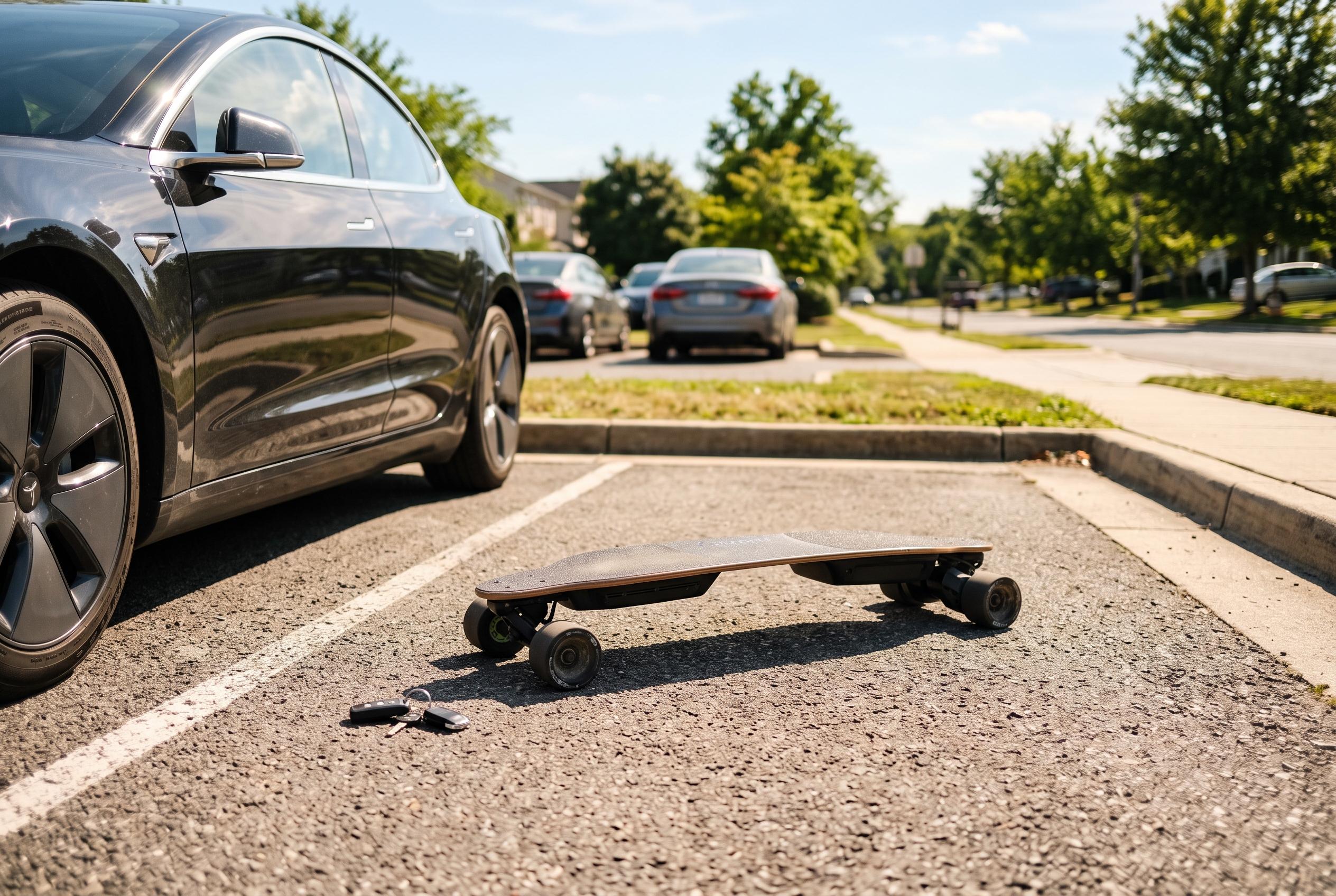

Cabin temperatures rise sharply within minutes of parking, putting electric skateboard batteries under thermal stress and making hot packs unsafe to charge.
A parked car can become hot enough to damage an electric skateboard battery far faster than most riders expect. Ecomobl’s guidance argues that the safest approach in summer is simple: do not treat a vehicle interior as temporary storage, because the heat build-up can be severe even during short errands. Research cited in the article, including Stanford University School of Medicine work published in Pediatrics, shows that cabin temperatures rise quickly once a car is switched off, with the steepest increase occurring in the first half hour.
The reason is the greenhouse effect. Sunlight enters through the windows, heats the dashboard, seats and other surfaces, and that warmth becomes trapped inside the cabin. Independent explainers on parked-car heat describe the same pattern: temperatures can climb into a dangerous range in well under an hour, and even a cracked window does little to slow the rise. In practical terms, a vehicle that feels only warm when you step away from it can become much hotter by the time you return.
That matters because electric skateboards rely on lithium-ion battery packs, which are sensitive to heat. Battery University’s widely cited guidance says these cells may be used at relatively high temperatures, but charging them safely requires a lower limit, and storage is best done in a cooler, partially charged state. Ecomobl’s article stresses that repeated exposure to high cabin temperatures accelerates ageing inside the pack, which can shorten range over time and make the battery less reliable.
The greater concern is that charging a hot battery is more demanding than simply riding one. If a board has been left in a hot car, it should be allowed to cool naturally before being plugged in. The article also warns against assuming that built-in protection systems make extreme heat harmless. A battery management system can reduce risk, but it cannot undo prolonged thermal stress, physical damage or unsafe charging habits.
Signs of heat damage are usually visible if you know what to look for. Ecomobl advises riders to check for swelling, warping, an unusual smell, excess heat around the battery housing, sudden drops in range or cut-outs under load. Any of those symptoms suggests the pack may have been stressed. If the battery is swollen or gives off a chemical odour, the board should be taken out of service and kept away from combustible materials.
The practical advice is straightforward. Bring the board with you rather than leaving it in the car, store it indoors at normal room temperature, and only charge it once the battery has returned to ambient conditions. If you must make a very short stop, the article recommends shade over sun, but treats that as a last resort rather than a routine. The broader lesson is that heat protection costs nothing, yet it can preserve battery life, protect performance and reduce safety risks.
Disclaimer: This content is intended for informational purposes only. Readers are advised to exercise their own judgement, conduct due diligence, or consult a qualified expert before acting on any information provided.