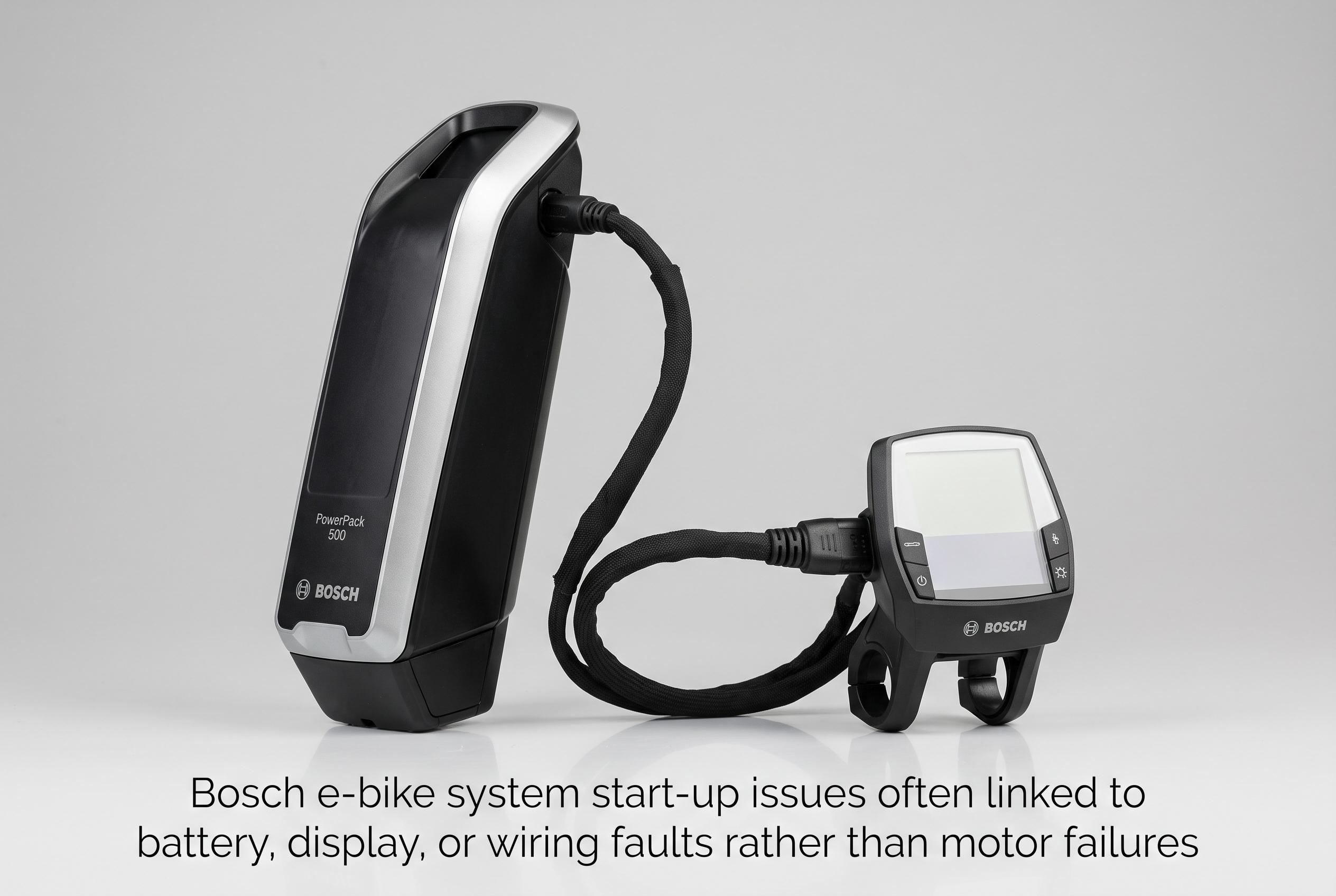

Most Bosch e-bike start-up problems are caused by battery, display, or connection faults, with simple checks and resets often restoring power before dealer diagnostics are needed.
Bosch e-bike systems that refuse to start are usually being stopped by a battery, display, or connection fault rather than a major motor failure. The most common triggers are a battery in deep sleep, poor contact at the display mount, or a flat internal backup cell in older control units, according to troubleshooting guides from Himiway, HandyMechanic and Tern. The first check is simple: press the button on the battery itself, not the handlebar control, to see whether the pack wakes and shows charge.
If the battery LEDs remain dark, the pack may have entered sleep protection or be deeply discharged. Bosch-focused repair guides recommend charging the battery directly off the bike for at least a short period to coax the battery management system back to life, then rechecking the system. If the pack lights up off the bike but the bicycle still will not start, the fault is more likely to lie in the mount, wiring loom, fuse, or controller path, as Richmond eBike and Mad Labs Repair note.
The display and its contacts are another frequent failure point. Himiway and FixEbike both point to dirty or misaligned pins on removable units such as Intuvia, Kiox and Nyon, which can break the wake-up signal between display and drive unit. Cleaning the gold contacts, reseating the unit, and checking for moisture or corrosion can restore power. On older Bosch systems, dead coin cells inside the display can also prevent the bike from switching on at all.
A hard reset can also help. Bosch Smart System users are advised in the Himiway guide to hold the power button long enough to trigger a full restart, while non-Smart systems often respond to a longer press on the display unit after the battery has been refitted. If the system still fails, the next step is to inspect the battery seating, connector pins and cable run for bent contacts, pinched wiring or a latch that has not fully engaged. Tern warns against opening Bosch motor or battery housings, and recommends dealer support where internal work is needed.
Once the basic power path is confirmed, the speed sensor should be checked. Bosch systems will not provide normal assistance if the rear wheel magnet is out of range or the sensor cable is damaged. Himiway says the gap should generally remain within a small tolerance and the magnet must pass directly over the sensor mark on the chainstay; if the display powers up but speed remains at zero, the motor may refuse to assist and may even show an error code.
When none of these steps works, the problem is more likely to need dealer diagnostics. HandyMechanic, Richmond eBike and Mad Labs Repair all note that blown fuses, controller faults, BMS shutdowns and wiring defects often require proper electrical testing rather than trial and error. In practice, that means checking the exact symptom first, then tracing the fault from battery to display to controller, rather than assuming the motor itself has failed.
Disclaimer: This content is intended for informational purposes only. Readers are advised to exercise their own judgement, conduct due diligence, or consult a qualified expert before acting on any information provided.