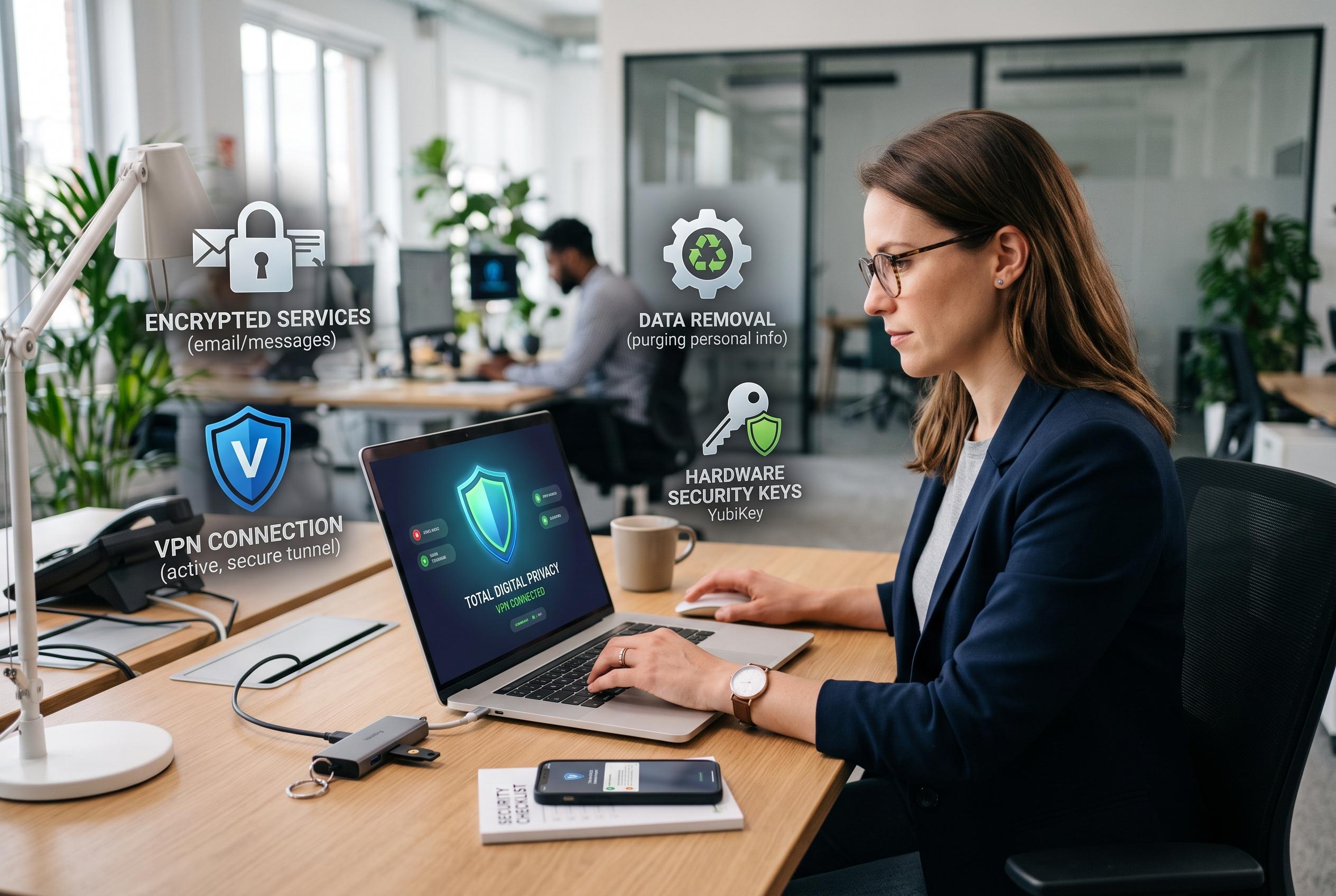

As online threats evolve, combining encrypted services, VPNs, data removal, and hardware security keys offers a comprehensive approach to protecting personal digital lives, according to TechRadar.
Living online now means exposing yourself to more than malware and phishing. Data brokers, ad-supported services and the risk of device theft all widen the attack surface, especially when so much of a person’s digital life sits on a smartphone. TechRadar’s account makes the case that security works best when it is layered, even if some trade-offs remain.
The starting point was already sensible: Norton for desktop protection, Malwarebytes for on-demand checks, 1Password for unique credentials and Apple’s Stolen Device Protection on the iPhone. Two-factor authentication was also already in place, with an authenticator app used instead of text messages, which are more exposed to SIM-swap fraud. That combination still matters, and independent antivirus round-ups from Forbes, Windows Central and Tom’s Guide continue to place well-known names such as Norton, Bitdefender, Microsoft Defender and McAfee among the stronger consumer options.
The bigger shift came with encrypted services. TechRadar says the move to Proton Unlimited brought end-to-end encrypted email through Proton Mail and secure cloud storage through Proton Drive, alongside Proton VPN and Proton Pass. The publication notes that encrypted storage is less searchable because even the provider cannot inspect file contents, but it argues that the privacy gain is worth that limitation for sensitive material such as bank access and recovery keys.
A VPN became part of the routine rather than an occasional tool. According to TechRadar, keeping Proton VPN active hides the user’s real IP address from websites, reduces visibility to an internet service provider and adds protection on public Wi-Fi. The obvious drawback is site blocking, though switching servers or using split tunnelling can work around some of those issues. In practical terms, the article frames the VPN less as a trick for bypassing restrictions and more as an everyday anonymity layer.
The next step was data removal. TechRadar says the user subscribed to Incogni, which sends removal requests to data brokers that may hold names, email addresses and phone numbers tied together in ways that can feed spam, scams and identity theft. The publication also points to manual opt-outs from facial-recognition search engines such as PimEyes and FaceCheck.ID. That approach is slower, but it reduces the amount of personal data that can be stitched together online.
For stronger two-factor authentication, the final upgrade was a set of YubiKey security keys. These hardware devices require physical possession, making them far harder to phish than app-based or SMS codes. TechRadar’s conclusion is pragmatic rather than absolutist: convenience still wins for some accounts, but security keys make sense for the most important ones, while an authenticator app remains a reasonable compromise elsewhere.
Disclaimer: This content is intended for informational purposes only. Readers are advised to exercise their own judgement, conduct due diligence, or consult a qualified expert before acting on any information provided.