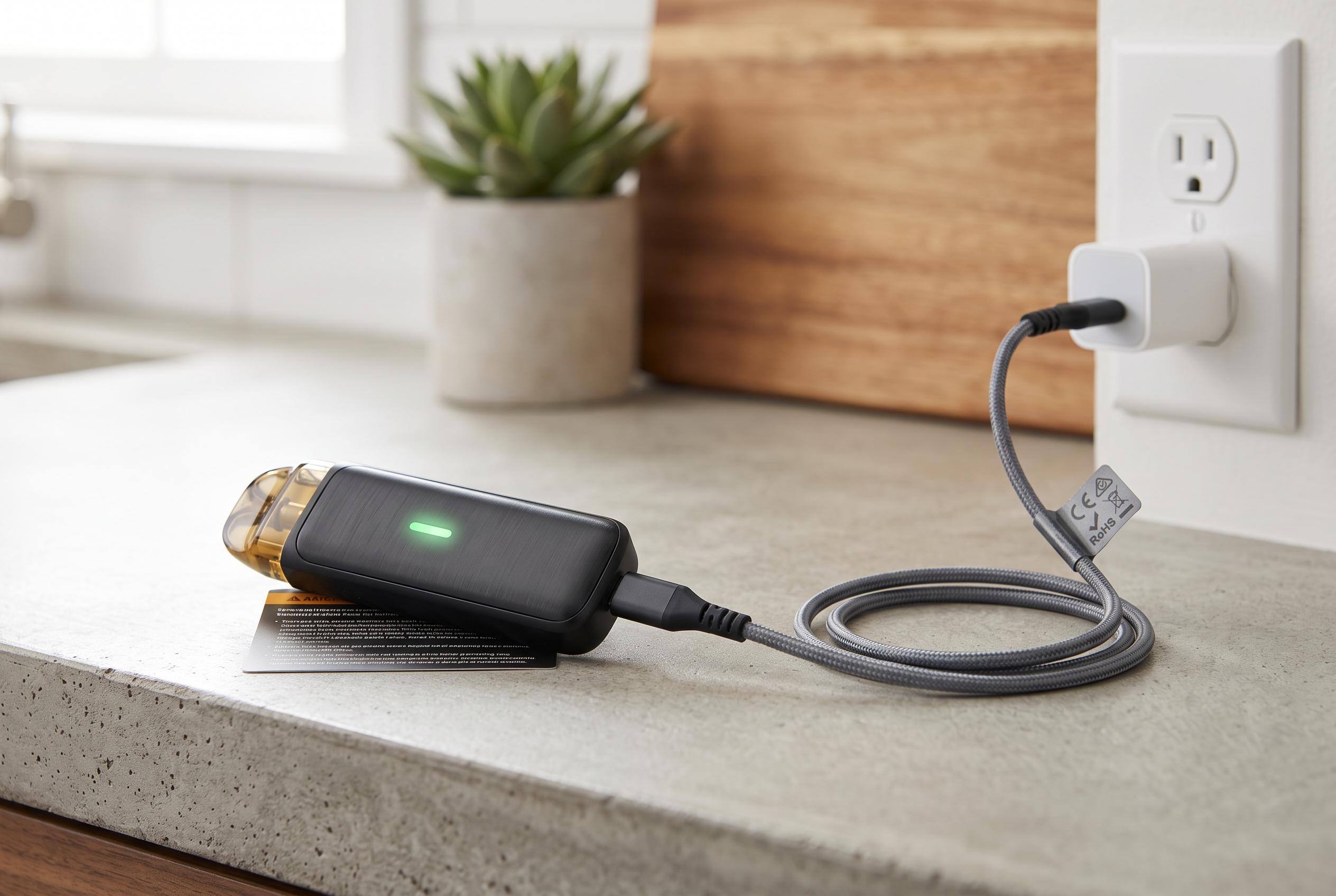

Proper charging practices are crucial for vaping safety, highlighting the importance of using correct chargers, following manufacturer instructions, and monitoring for signs of battery faults to prevent potential fire risks.
Charging a vape is simple in principle, but it is also one of the few routine tasks where the wrong cable or a careless setup can create a real safety risk. Most rechargeable vapes use lithium-ion batteries, which are reliable when used correctly but can overheat if they are damaged, overcharged or paired with unsuitable equipment. According to Simply Eliquid, the safest approach is to follow the manufacturer’s charging instructions for the exact device rather than assuming that any cable with the right connector will do.
The practical process starts with the device itself. Check the manual, packaging or technical specifications for the recommended input, such as 5V/1A or 5V/2A, and inspect the port, cable and battery casing before connecting anything. Several vaping guides, including those from Muvate Global and VapeConnect, say the vape should be placed on a hard, flat surface with good airflow while it charges, and it should never be left on bedding, upholstery or other soft material.
USB-C has become common on modern kits, but the connector alone tells you nothing about charging safety. A phone charger may be suitable only if it matches the vape’s stated voltage and current requirements, and even then it is better to rely on the charger supplied by the manufacturer or an approved replacement. Muvate Global warns against using high-amperage fast chargers on devices that are not designed for them, while Simply Eliquid notes that some current pod systems do support faster charging and others are built for slower input.
Charging times vary widely. Small pod systems may fill quickly, while larger devices can take much longer. The important signal is the battery indicator, not the clock. Most devices show charge status through a light, colour change or on-screen percentage, and the battery should be unplugged once charging is complete. VapeConnect also recommends giving a new pod kit a full initial charge before first use, which helps establish a baseline for the battery gauge.
The same caution applies to how and when a vape is charged. Fire-safety advice cited by Simply Eliquid says devices should not be left charging overnight or while the user is asleep. Illinois fire-prevention guidance similarly advises against leaving lithium-ion devices connected for long periods once they are full. Charging should happen when someone is nearby, so any fault, unusual heat or smell is noticed quickly.
Removable batteries need even more care. Larger mods may use cells such as 18650 or 21700 batteries, and these should be charged either in the device, if the maker allows it, or in a dedicated external charger matched to the cell type. Biology Insights and other safety guides stress that loose cells should be checked for torn wraps, dents or swelling before use, and they should never be carried in a pocket or bag with keys or coins, which can short the terminals.
Warning signs should never be ignored. A little warmth can be normal, especially on faster-charging devices, but swelling, crackling, hissing, a strong smell, smoke or a damaged charging port are reasons to stop immediately. Simply Eliquid says a damaged device should not be charged at all, and London Fire Brigade advises leaving the area and calling 999 if a vape battery catches fire or explodes. In practice, safe charging comes down to a short list of habits: use the right charger, keep the device visible and ventilated, avoid heat and damage, and disconnect it when full.
Disclaimer: This content is intended for informational purposes only. Readers are advised to exercise their own judgement, conduct due diligence, or consult a qualified expert before acting on any information provided.