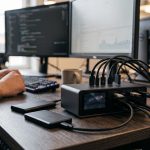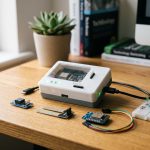

A range of free diagnostic tools now enable users to identify whether Wi-Fi interference, packet loss or latency problems are behind unreliable home internet, moving beyond basic speed tests to uncover hidden network faults.
If home internet has started to feel unreliable, the first step is not to assume the broadband provider is at fault. Buffering in video calls, delays in games and general slowness can come from Wi-Fi interference, router congestion, packet loss or latency problems that a simple reboot will not fix. A handful of free diagnostic tools can narrow down the cause within minutes and give users a clearer picture of where the fault lies.
The most useful starting point is a basic speed test. Ookla’s Speedtest remains one of the most widely used ways to check download speed, upload speed and latency, and it can be run in a browser or through mobile apps. Because it stores historical results, it is also helpful when users need to show a pattern of poor performance rather than a one-off drop.
A faster connection on paper does not always translate into smoother use. BufferSpeed is aimed at a specific problem called bufferbloat, where latency rises sharply when the network is under load. That matters most during video calls and gaming, when delays introduced under stress can be more disruptive than raw speed figures suggest. By measuring latency, jitter and packet loss alongside throughput, the tool helps explain why a connection can appear fast yet still feel unresponsive.
PacketProbe addresses another common source of frustration: packet loss. Using WebRTC-based measurements, it tests latency, jitter and lost packets, with presets tuned for gaming, voice calls, streaming and other everyday uses. That makes it easier to judge whether a connection is merely slow or whether it is unstable in a way that will cause stuttering, dropouts and input lag. Comparing results over Wi-Fi and a wired Ethernet link can also help separate local wireless problems from issues further upstream.
When the connection appears to be down altogether, local diagnostics matter more than internet-based tests. Standard commands such as ping, traceroute or tracert, nslookup and dig remain the quickest way to confirm whether a device can reach the router, resolve domain names and follow a path to the wider internet. On Windows, ipconfig commands can renew leases and clear stale DNS data, while macOS and Linux users can rely on ifconfig or ip and related network tools to check local configuration.
For people who prefer a graphical interface, desktop utilities such as NetPilot and Netforge bundle many of the same checks into one place. NetPilot combines ping, traceroute, DNS lookup and scanning, while Netforge focuses on path analysis and switch discovery on the local network. Both are designed to help users identify whether the problem is inside the home network or beyond it, which is often the key distinction when trying to decide whether to change settings, replace equipment or call the ISP.
Disclaimer: This content is intended for informational purposes only. Readers are advised to exercise their own judgement, conduct due diligence, or consult a qualified expert before acting on any information provided.