

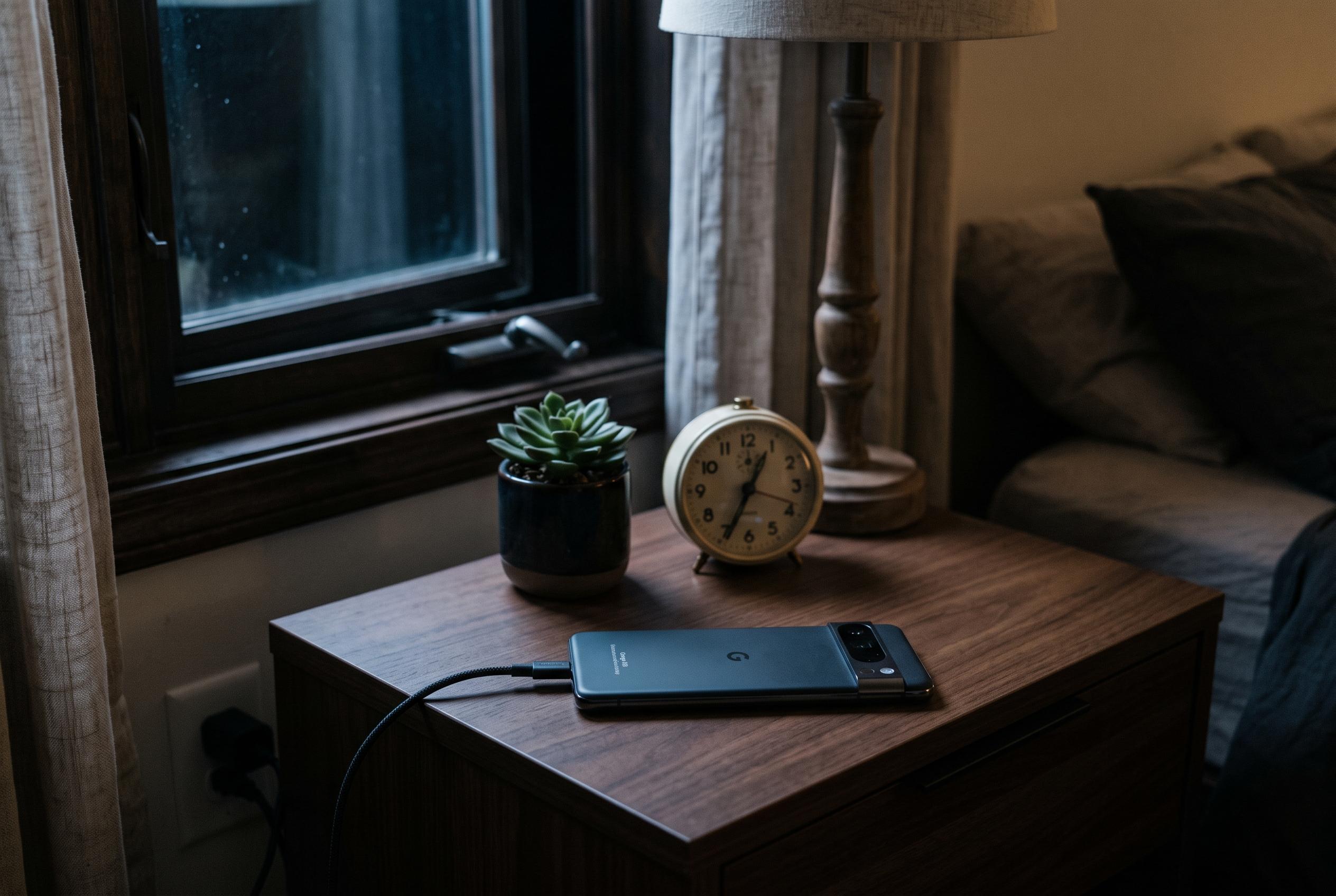

Modern phones prevent overcharging, but prolonged time at full charge and trapped heat can gradually reduce battery capacity. Simple changes to where and how you charge can help extend its life.
Most people can leave a phone charging overnight without fear of the battery being “overcharged”, because modern smartphones are designed to stop drawing full charging current once the battery reaches 100%. The circuitry inside the handset manages voltage and current automatically, which means the old concern that a phone will keep forcing power into a full battery is largely a hangover from much older battery technology. Reuters-style reporting is not available here, but the supplied material from Kunal Chowdhury, alongside coverage from Anker UK, Tom’s Guide and SamMobile, all points to the same practical conclusion: overnight charging is generally safe for everyday use.
The more relevant issue is battery ageing rather than immediate damage. Lithium-ion cells do not like sitting at maximum charge for long periods, and several of the supplied sources note that keeping a battery at 100% for hours at a time can add to long-term capacity loss. Tom’s Guide and SlashGear both describe this as a gradual process rather than a sudden fault, while ABC News says the effect is mainly a slow reduction in usable capacity over time. In other words, leaving a phone plugged in overnight is unlikely to cause drama, but repeated full-charge idling is not ideal for maximising battery lifespan.
Heat is a much bigger concern than overcharge. Anker UK, ABC News and SamMobile all stress that charging on a soft surface, such as a bed or under a pillow, can trap warmth and reduce the handset’s ability to shed heat properly. That matters because excess temperature can accelerate battery wear and, in worse cases, create a genuine safety risk. A phone on a bedside table or other hard surface is less likely to retain heat than one buried under blankets or pressed into a thick case.
This is why smartphone makers have added software features that are designed to reduce battery stress overnight. According to Tom’s Guide and the original article, Apple’s Optimized Battery Charging and Android’s Adaptive Charging hold the battery below full charge for much of the night and complete the last stage shortly before waking. Some devices also let users cap charging at around 80% or 85%, which lowers the time spent at the highest state of charge. These tools are not essential for safety, but they are useful for users who want to slow long-term battery wear.
Fast charging is not usually necessary overnight either. The supplied material notes that higher-wattage chargers can create more heat during the early phase of charging, when the battery is taking in power most quickly. For a phone that will sit idle for several hours, a standard charger is often the more sensible choice, because it reduces thermal stress without affecting morning readiness. Certified cables and chargers also matter, since poor-quality accessories can introduce instability that a well-designed charging system is meant to avoid.
For most people, the practical advice is straightforward: charge on a hard, open surface; avoid covering the device; use reputable charging accessories; and enable battery-protection features if the phone supports them. The central message from the supplied sources is consistent. Overnight charging is not the battery-killing habit it is often made out to be, but good charging habits still matter if the aim is to preserve capacity over time rather than simply keep the phone topped up by breakfast.
Disclaimer: This content is intended for informational purposes only. Readers are advised to exercise their own judgement, conduct due diligence, or consult a qualified expert before acting on any information provided.



