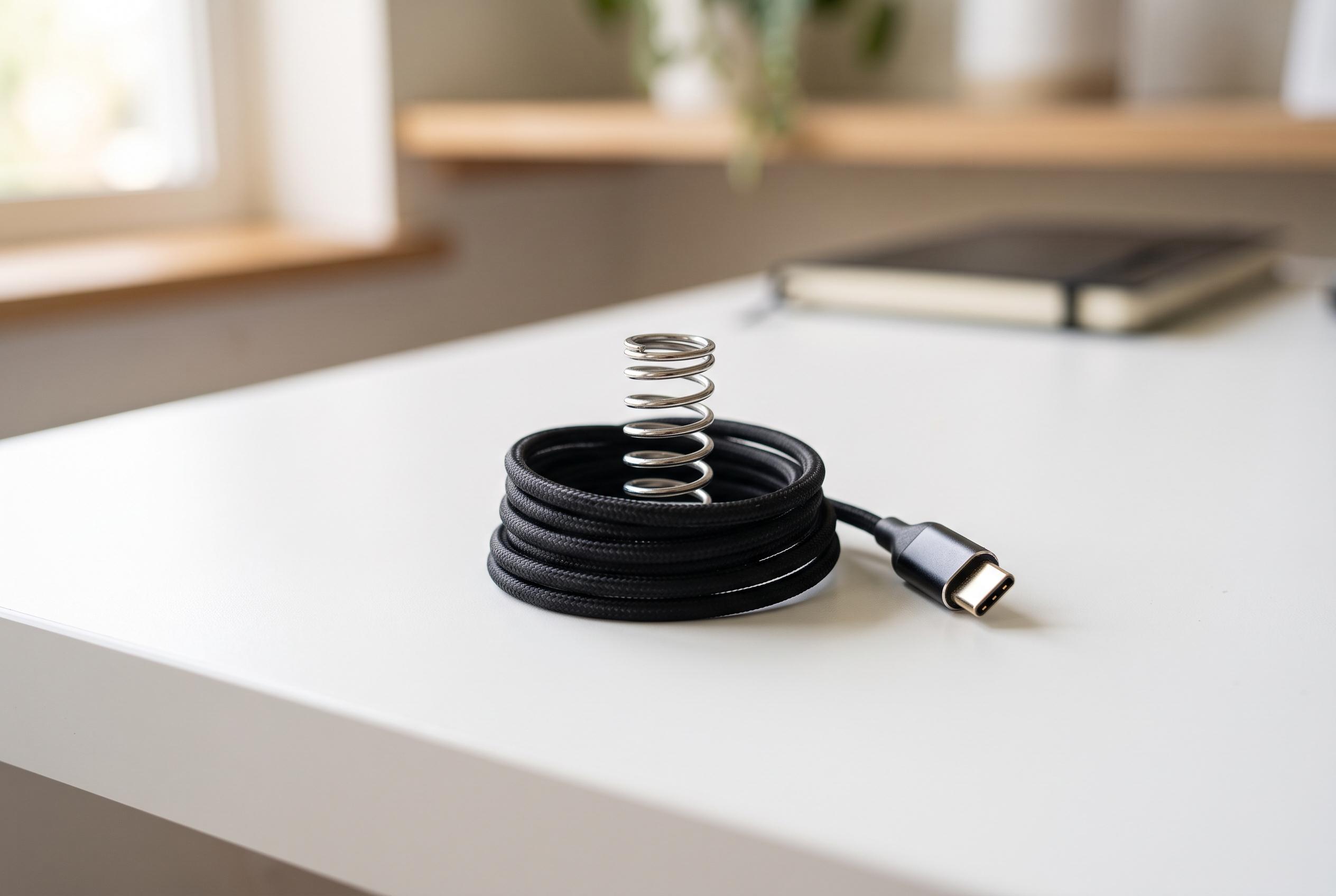

A DIY tip circulating in 2026 suggests that wrapping a pen spring around charging cables can help delay wear and tear, though it remains only a preventative measure. Experts emphasise proper handling and timely replacement as the most effective strategies.
A recurring social media tip making the rounds in summer 2026 suggests that a pen spring can help preserve a charging cable, but only as a preventative measure. The idea is straightforward: wrapping a small spring around the section nearest the connector can reduce sharp bends and ease strain on the most vulnerable part of the lead. Used early, it may slow wear on an intact cable, but it does not repair damage that has already occurred.
The weakness is usually the same whether the plug is USB-C, Lightning or micro-USB: the cable fails where it joins the connector. That junction is where the cord is bent, tugged and compressed most often, whether it is trapped against a wall, stuffed into a bag or wound too tightly after use. Repair guides and accessory makers say this repeated stress concentrates on a very short section of wire, eventually breaking down the outer sheath and, later, the conductors inside.
That is why a spring can work at all. It acts as a crude form of strain relief, spreading the bend over a wider area and making abrupt kinks less likely. It does not affect charging speed or data transfer. It simply reduces the chance that the same small section of cable will be folded in the same place hundreds of times. The effect is modest, but useful if the cable is still in good condition.
The limits matter. Several repair and accessory guides say the trick is only sensible before visible damage appears. A frayed sheath, exposed wire, intermittent charging or excessive heat at the connector means the cable should be replaced, not reinforced. A spring that is too tight can create a new pressure point, while one that is too loose may offer little protection. The goal is protection, not a cosmetic fix.
More reliable habits remain the basics of cable care: unplug by the connector, not the wire; avoid sharp bends; store leads loosely coiled; keep them dry and clean; and replace damaged cables promptly. Those are the measures most often recommended by cable repair specialists, and they are more effective than any quick fix once a lead has already started to fail.
Disclaimer: This content is intended for informational purposes only. Readers are advised to exercise their own judgement, conduct due diligence, or consult a qualified expert before acting on any information provided.