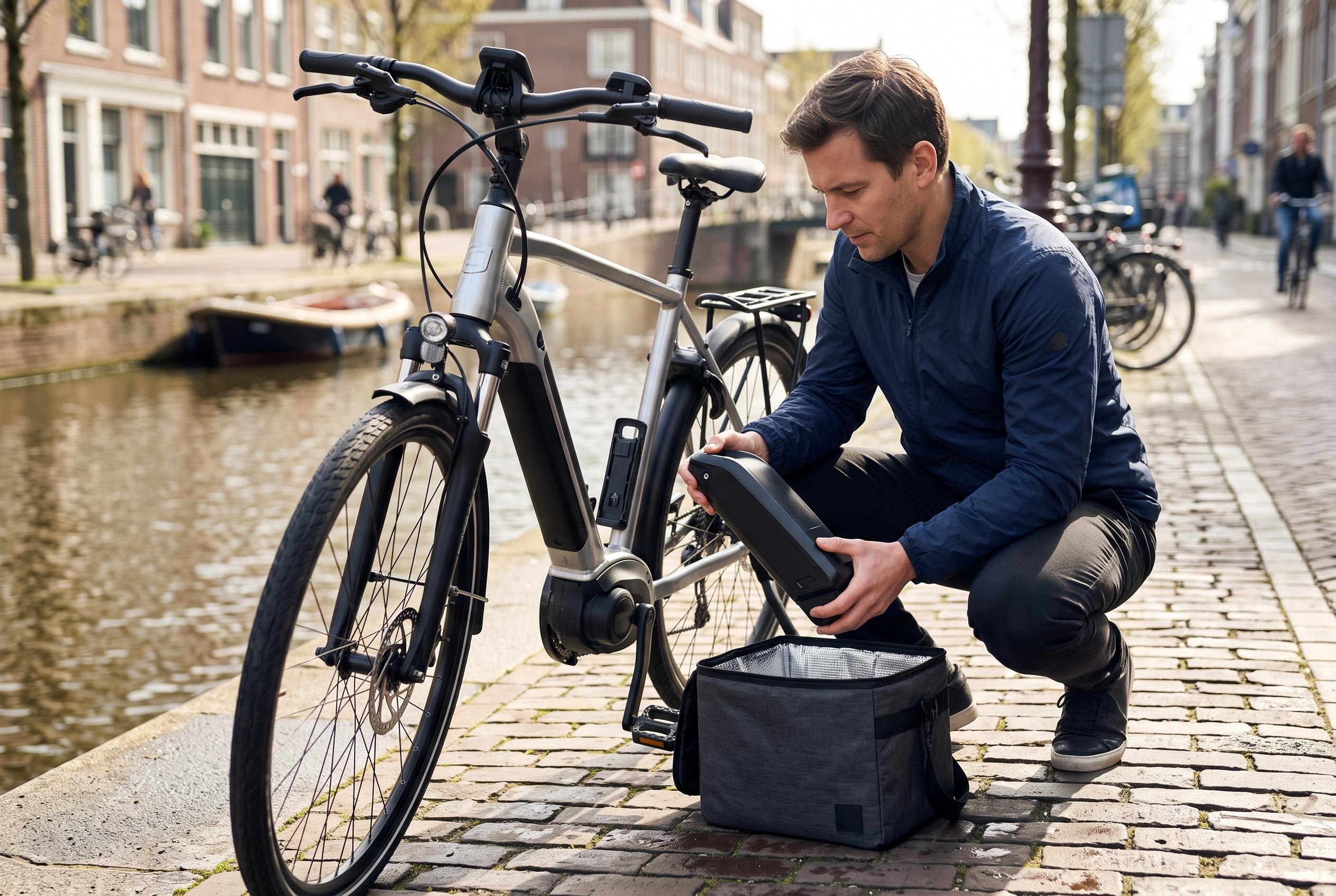

As e-bikes become a staple in Dutch daily life, experts highlight new practices in battery handling that can prolong lifespan, ensuring sustainable and reliable electric cycling amid increasing adoption.
The e-bike battery is now a routine part of daily transport in the Netherlands, where millions of electrically assisted bicycles are on the road. The technology is the same basic lithium-ion chemistry used in phones and electric cars, but the battery pack sits between the two in scale, with cells that move lithium ions between electrodes through an electrolyte and separator. According to the Nederlands Dagblad, that makes charging habits and storage conditions central to how long the battery will last, a view echoed by consumer guidance that warns against running lithium-ion packs flat and leaving them fully charged for long periods.
Tijs Donkers, a battery management researcher at Eindhoven University of Technology, says temperature is one of the first things riders should think about. An e-bike battery should not be charged when it is frozen, and it is better to let it warm up after coming in from a cold shed or winter ride. Consumer Reports gives similar advice, recommending that batteries be charged only when they are above freezing and kept away from very hot conditions. Guides from e-bike specialists also advise charging and storing batteries at room temperature, because extremes speed up degradation.
Donkers also argues against making a habit of charging to 100 per cent every time. He suggests treating the battery more like a daily-use tool than a tank to be filled and emptied completely. In practice, that means aiming for around 80 per cent for routine riding, then topping up only when longer range is needed. Consumer Reports and other battery-care guides broadly support that approach, noting that partial charging and avoiding deep discharge can slow wear and preserve capacity over time. The same advice applies to storage: a battery left for weeks at full charge is under more stress than one kept at a moderate level.
Even with careful handling, an e-bike battery will not last forever. Capacity gradually falls as the cells age, so the distance covered on a full charge slowly shrinks. But the chemistry is resilient if treated sensibly. Donkers says good habits can significantly delay ageing, and he estimates that a battery should manage roughly a thousand charge cycles, with research suggesting that figure may yet rise. For riders, the practical lesson is straightforward: avoid extreme heat and cold, do not drain the battery to zero, and do not keep it sitting at 100 per cent unless a long ride is imminent.
Disclaimer: This content is intended for informational purposes only. Readers are advised to exercise their own judgement, conduct due diligence, or consult a qualified expert before acting on any information provided.