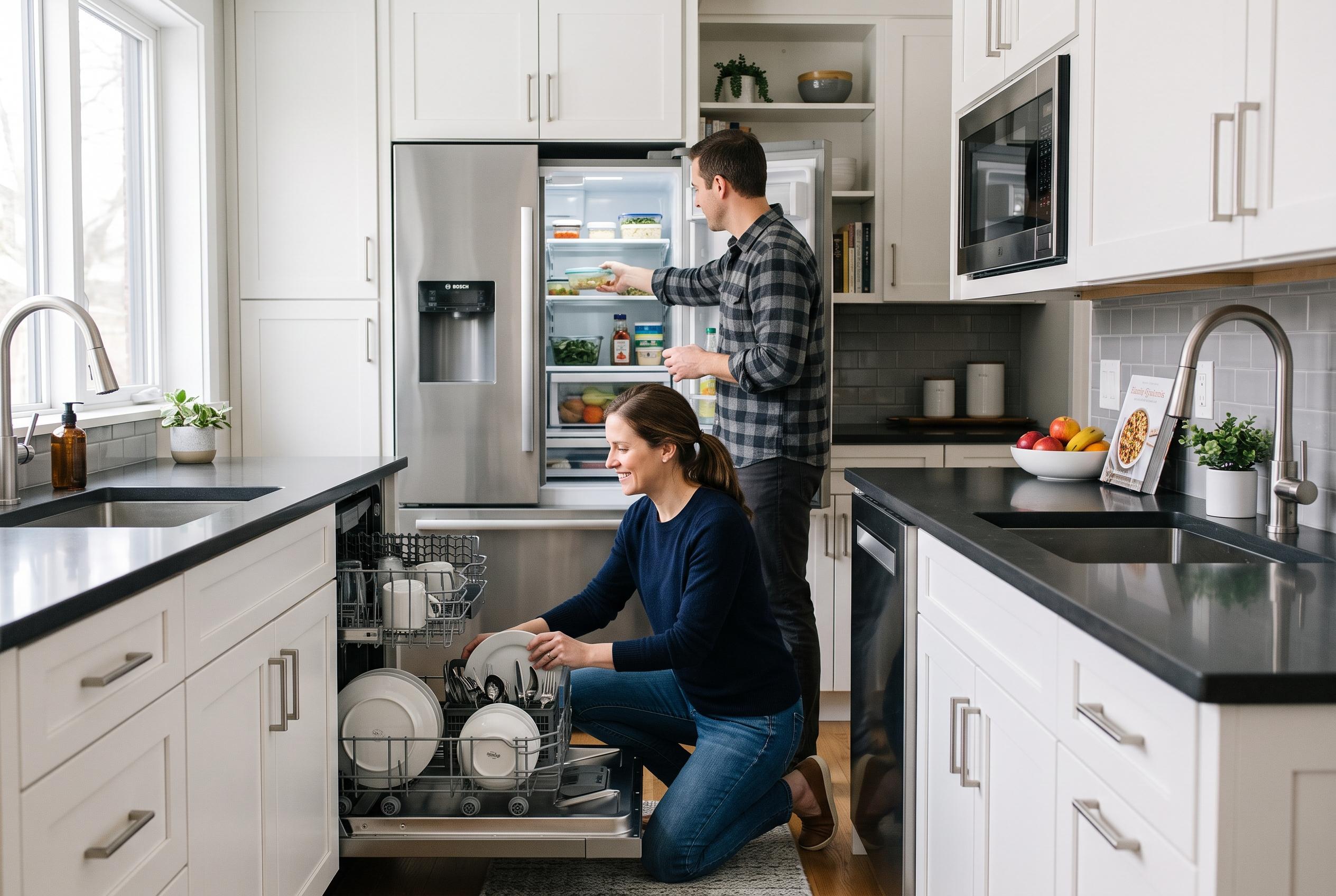

Choosing the right arrangement and handling of appliances like microwaves, fridges, dishwashers and washing machines can significantly improve their performance and energy use, according to recent research and expert advice.
Small loading choices can make a noticeable difference to how well household appliances work, how long they last and how much energy they use. In the case of microwaves, dishwashers, fridges, washing machines and tumble dryers, the basic rule is the same: do not simply fill them and hope for the best. Correct arrangement affects cleaning, heating, cooling and overall efficiency, according to the article from Abendzeitung and supporting research on microwave heating.
In the microwave, food heats more evenly when it is spread out on a flatter plate rather than piled high in the centre. The article also stresses that lower power for a slightly longer period often gives better results than maximum wattage, especially when the food is stirred once or twice and left to rest briefly afterwards. Scientific studies on domestic microwave ovens support that view, showing that shape, volume, position and power level all affect heating uniformity and energy use.
The choice of container matters too. Porcelain and glass are the safest default materials, while metal should stay out of the microwave entirely. Plastic is acceptable only if it is clearly labelled for microwave use. The article also warns against heating whole eggs, sausages or tomatoes in their skins, as pressure can build up and cause them to burst. Using a cover over the plate reduces splashing and helps keep food from drying out.
Refrigerator storage is equally about order rather than mere capacity. The article says fruit and vegetables belong in the designated drawer, with some produce kept apart where possible to preserve freshness. Different fridges create different temperature zones, so placement depends on the model. In many standard appliances, dairy sits best in the middle, butter keeps more easily in the door and raw meat or fish belongs in the coldest lower section. But in models with dynamic cooling, temperature is more even and shelf position matters less.
Overfilling the fridge is a common mistake. Air needs room to circulate, and the article says only food that benefits from temperatures of roughly 4C to 10C should be stored there. Bananas, lemons, tomatoes and onions can lose flavour in the cold. The article adds a practical unloading tip: empty the lower shelves first so drips do not fall on food below.
The same principle applies to the dishwasher and washing machine. In the dishwasher, items should be placed with a slight tilt and enough space between them for water jets to reach every surface. The spray arms must not be blocked, and cutlery should not be packed too tightly. Larger, dirtier items belong in the lower rack, where the water is hotter and under greater pressure. Research on microwave and appliance efficiency broadly supports the idea that layout and spacing matter because they change performance, not just convenience.
For laundry, the article advises emptying pockets, closing zips and buttons and mixing larger garments with smaller ones so the load is distributed properly. Overfilling weakens cleaning performance and can strain the machine. The right fill level depends on the programme: regular cotton or coloureds can usually reach about three-quarters full, while wool and delicate fabrics need much more space. Care labels and the machine manual remain the best guides, because the exact setting, detergent and load limit vary by appliance.
Disclaimer: This content is intended for informational purposes only. Readers are advised to exercise their own judgement, conduct due diligence, or consult a qualified expert before acting on any information provided.