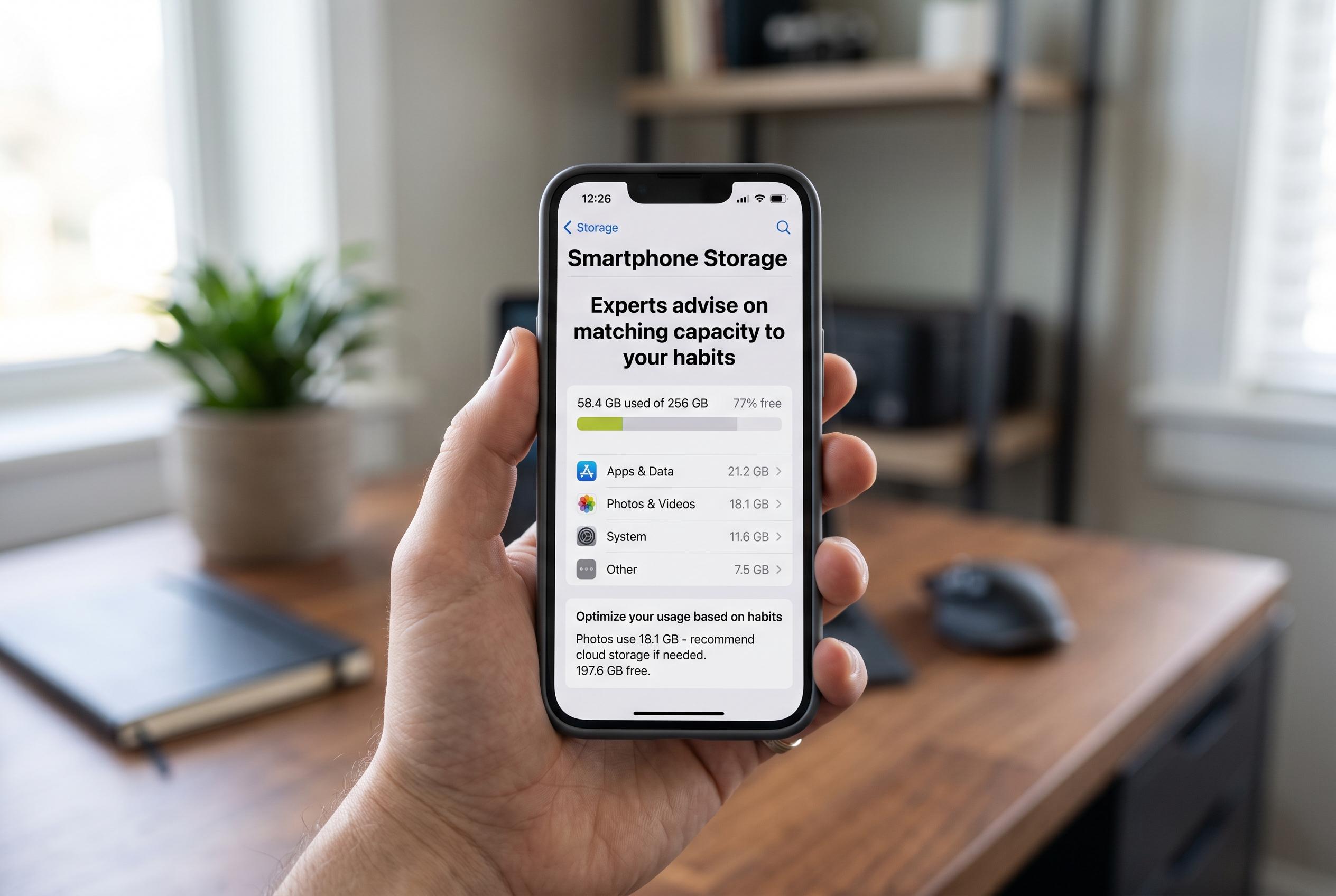

Choosing the right smartphone storage requires understanding your usage habits, with recommendations ranging from 64GB for light users to 256GB for heavy media consumers, highlighting the importance of planning for future needs.
Choosing the right smartphone storage is less about buying the biggest number on the box and more about matching capacity to how you actually use the device. Storage fills quickly once a phone becomes a camera, entertainment hub and work tool. If it runs too close to full, users can face failed downloads, repeated housekeeping and slower day-to-day performance. The most useful approach is to think in terms of habits, not headline specifications.
For light users, 64GB can still be workable, but it leaves little margin once the operating system and preloaded software take their share. Tom’s Guide says 128GB is the practical starting point for most buyers because it allows space for apps, photos, short videos and system updates without constant micromanagement. Samsung also notes that phone memory and storage are different things: RAM supports active tasks, while storage holds data, media and apps. That distinction matters because many buyers focus on speed when they really need more room.
The amount you need rises quickly if you take lots of photos or record video regularly. Samsung’s storage guides explain that higher-resolution video can consume space at a surprising pace, while large apps and games also add up faster than many users expect. Tom’s Guide and Know Your Mobile both recommend 256GB or more for heavier users, particularly those who keep large media libraries, download content for travel or play storage-hungry games. In practical terms, 128GB suits broad everyday use, but 256GB offers a safer buffer for people who treat their phone as their main media device.
It also helps to check usable storage rather than the number advertised on the retail page. Operating systems, security files and built-in apps reduce the space available from the first day of use, which is why a 128GB handset never provides the full 128GB to the owner. Optimum and Materiel.net both advise buyers to consider how long they plan to keep the phone, since storage needs usually rise over time as apps get larger and photo libraries grow. That makes the next tier up a sensible choice for anyone expecting to keep a device for several years.
Users can stretch storage further with disciplined file management. Samsung and Optimum recommend removing duplicate photos, clearing old downloads, deleting rarely used apps and reviewing media stored inside messaging apps, which often accumulates quietly in the background. Cloud backup can also make a major difference by moving photos, videos and documents off the handset while keeping them recoverable when needed. For Android users, expandable storage via microSD remains an option on some models, but many phones now rely entirely on internal memory, so the initial purchase decision matters more than it once did.
For most buyers, 128GB remains the most balanced choice. It is enough for daily use without forcing constant cleanup, while still avoiding the higher cost of capacities many people will never fill. Light users can get by with 64GB if they stream rather than store, but anyone who shoots a lot of video, downloads media or wants a longer-lasting device should lean towards 256GB. The safest rule is simple: estimate how you use your current phone, then buy one tier above that need if you want fewer storage problems later.
Disclaimer: This content is intended for informational purposes only. Readers are advised to exercise their own judgement, conduct due diligence, or consult a qualified expert before acting on any information provided.