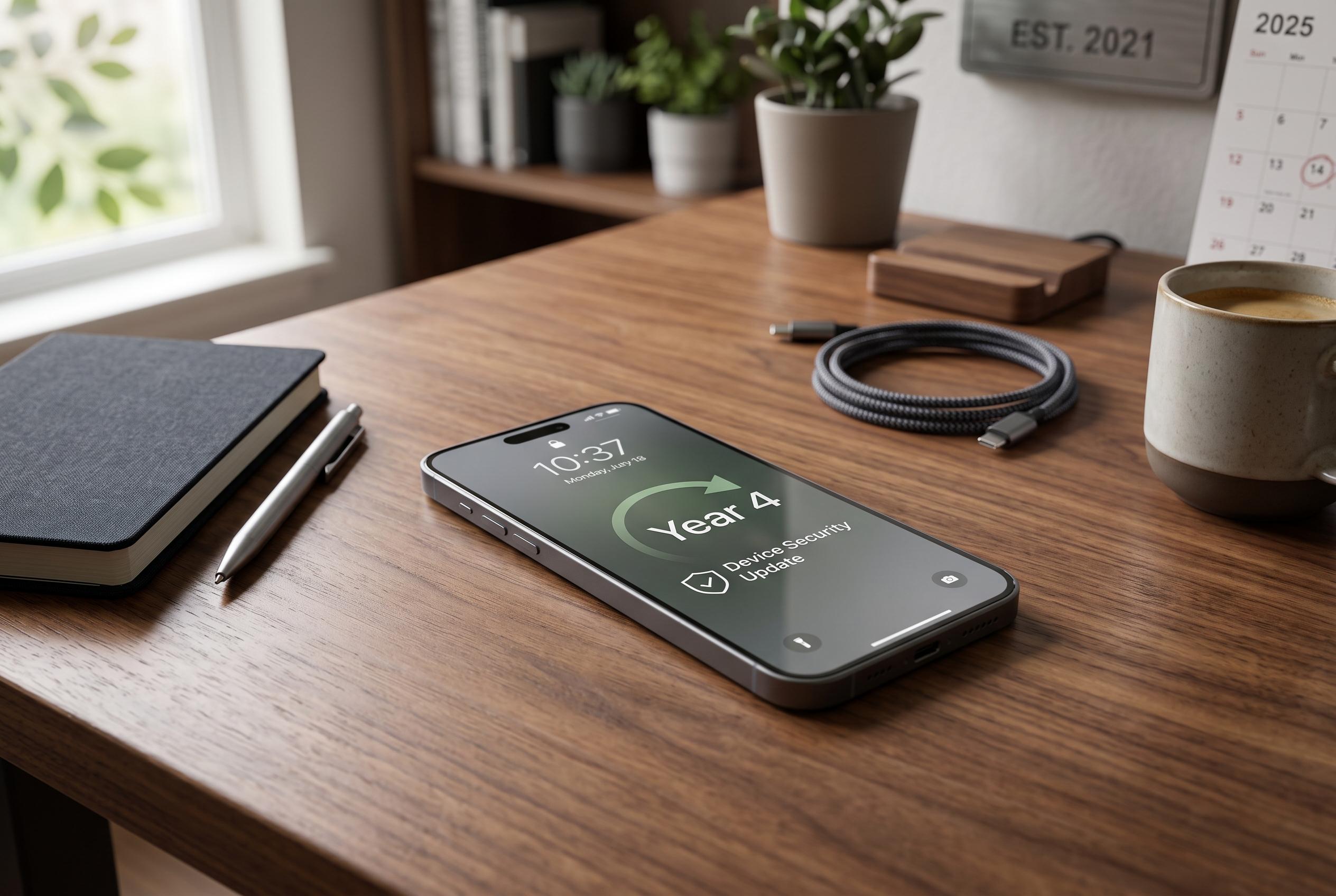

The typical lifespan of smartphones has increased to around four years, driven by hardware durability, software support, and higher upgrade costs, prompting a shift in user habits and new security thresholds.
Smartphones now last far longer than they did a decade ago, and the old habit of replacing a handset every two years has largely faded. Mobilsiden says the average user now keeps a phone for about three and a half years, helped by faster hardware, longer software support and higher prices that make upgrades harder to justify. Industry guides cited in the related material point in the same direction, with many flagship phones now expected to remain usable for 4 to 7 years depending on brand and model.
Battery wear remains the most common reason people decide to change phones. Lithium-ion batteries lose capacity over time, and after two or three years many users notice shorter battery life and, in some cases, slower performance. Even so, that does not automatically mean a new phone is needed. If the handset is otherwise stable, a battery replacement can be a much cheaper way to extend its life. The calculation changes once other faults appear, such as a damaged screen or worn charging port, because repair costs can quickly outweigh the value of keeping an ageing device.
Security is the point at which replacement becomes non-negotiable. Once a manufacturer stops issuing security updates, the phone is no longer properly protected against new vulnerabilities. That matters because smartphones are now used for banking, digital identity and other sensitive services. Mobilsiden notes that major manufacturers such as Apple, Samsung and Google now offer support for as long as seven years on some models, but that level of support is not universal, especially in cheaper phone ranges.
For most people, the practical sweet spot for upgrading is around four years. At that stage, owners have usually extracted most of the value from the original purchase, while improvements in camera quality, display technology and charging are more likely to feel substantial. Related reports suggest that a three- to five-year cycle is common for many devices, with premium models generally lasting longer than budget phones because of better components and stronger update policies. In short, the best time to replace a phone is not when a newer one appears, but when the old one can no longer be repaired economically, kept secure or used without frustration.
Disclaimer: This content is intended for informational purposes only. Readers are advised to exercise their own judgement, conduct due diligence, or consult a qualified expert before acting on any information provided.