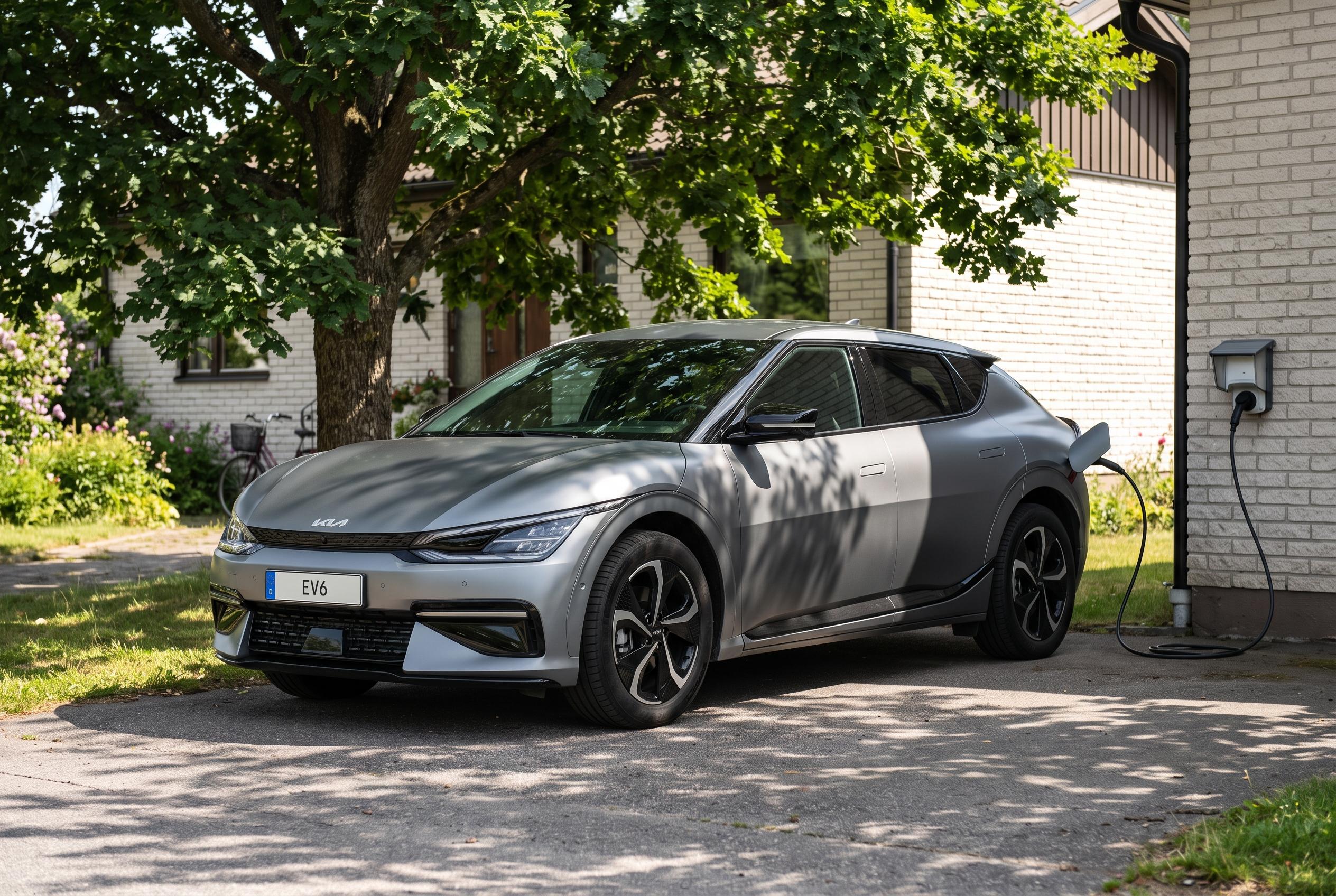

Hot weather not only affects electric vehicle comfort but also worsens battery wear. Studies show that high temperatures combined with full charges can speed up chemical ageing, urging drivers to adjust their charging routines amidst climate extremes.
Summer heat can do more than make an electric car uncomfortable: it can also slow charging and quietly add wear to the battery. The real issue is often not that the vehicle is charged to 100%, but that it then sits for hours in a hot environment while the battery remains full. Studies cited by Focus, including research from RWTH Aachen and later work in the field, suggest that heat combined with a high state of charge speeds chemical ageing inside lithium-ion cells.
That matters because battery degradation is not driven by a single factor. A 2026 study in npj Sustainable Mobility and Transport found that ambient temperature can affect driving range, acceleration and charging times, underlining how sensitive battery-electric vehicles are to weather extremes. A broader review in Renewable and Sustainable Energy Reviews likewise says high temperatures accelerate deterioration by encouraging unwanted reactions inside the cell, damaging materials and raising thermal risk.
The practical takeaway is straightforward: timing matters as much as the charge level itself. If a car is charged to full shortly before departure, the battery is exposed to that stressful condition only briefly. If it is fully charged overnight and then left in the sun through the day, the cells spend much longer under heat and high voltage, which is more damaging over time.
Researchers have also pushed back against overly simple rules of thumb. A 2025 study in Joule, based on 232 commercial battery cells tracked over as long as 13 years, confirmed the link between heat, charge state and ageing but found that battery chemistry makes the pattern far from uniform. Earlier work in the Journal of The Electrochemical Society came to a similar conclusion, showing that ageing does not move in a neat straight line from 0% to 100%.
Manufacturers already build those realities into their guidance. Volkswagen recommends a daily charging target of 80% for the ID.4 Pro 4Motion and suggests 100% mainly before longer trips. Ford sets a higher everyday target of 90% for the Mustang Mach-E with an NCM battery and advises delaying charging so the pack can cool first. For the LFP version, Ford says the battery should be fully charged at least once a month so the management system can calculate state of charge accurately, and that if the vehicle is parked for more than 30 days the charge level should be around 50%.
Battery cooling systems can reduce the damage, but not remove it altogether. Volkswagen’s ID.4, for example, uses liquid cooling channels in the battery floor to keep cells near 25C. But even with thermal management, the best habit in hot weather is to finish charging as close to departure as possible and, where practical, park in the shade or a garage. One accidental full charge on a hot day is unlikely to cause noticeable harm; what matters is the repeated pattern over months and years. According to Oak Ridge National Laboratory, charging behaviour, charging rate and driving patterns all feed into long-term degradation, and more aggressive charging can meaningfully reduce usable capacity over time.
Disclaimer: This content is intended for informational purposes only. Readers are advised to exercise their own judgement, conduct due diligence, or consult a qualified expert before acting on any information provided.