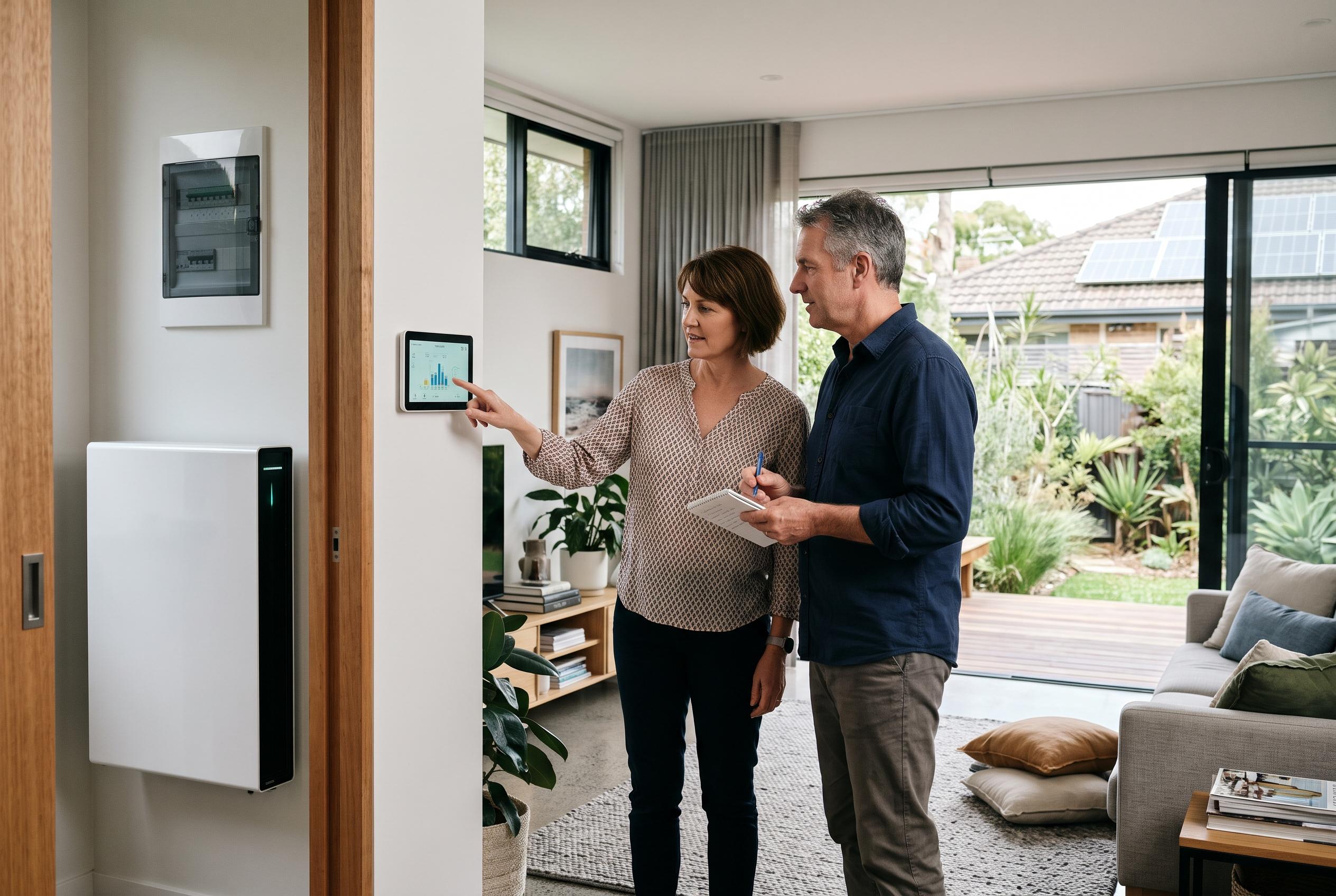

With battery incentives changing in 2026, Sydney households are being urged to assess demand, tariffs, backup needs, compatibility and contract terms before choosing a system.
Choosing a home battery in Sydney in 2026 should begin with the way a household actually uses electricity, not with a discount banner or a salesperson’s preferred model. A battery can shift surplus solar power into the evening, cut exposure to peak tariffs and, if properly configured, provide limited backup during outages. But the financial result depends on the home, the tariff, the solar system and the installation design. Industry guides in Australia increasingly frame the decision around self-consumption, system sizing and incentive eligibility rather than around headline price alone.
The first step is to measure demand properly. The Clean Energy Regulator advises households to look at annual consumption, the timing of that use and likely future changes before choosing storage. That means checking a full year of bills, smart-meter data and solar monitoring records where available, then comparing daytime export with evening and overnight demand. It is also important to model changes such as an electric vehicle, electric hot water or more time spent at home, because those shifts can alter the size and payback of the system.
Capacity and power output must be examined separately. Battery capacity, usually given in kilowatt-hours, shows how much energy can be stored, while power output, shown in kilowatts, determines how quickly that energy can be delivered. Australian buyer’s guides stress that usable capacity is often lower than the nominal figure on the brochure, and that a battery can be too large for the solar array or inverter it is meant to support. For that reason, buyers should ask for both nominal and usable capacity, continuous output, short-burst rating, reserve settings and the charging and discharging losses assumed in the quotation.
Compatibility with the existing solar system is another common fault line. Some homes will suit a retrofitted AC-coupled battery, while others will benefit more from a DC-coupled or hybrid arrangement. Guidance from Australian installers notes that the best option depends on whether the battery is being added to an existing array or designed alongside a new one. Homeowners should provide the inverter model, panel details and any network paperwork, then ask for written confirmation of what equipment can be retained, what must be replaced and whether warranties are affected.
Backup needs should also be defined in plain terms. A battery does not automatically keep a home running during a blackout. Outage operation depends on the hardware and the way it is configured, and many systems protect only selected circuits rather than the whole house. Sydney households should identify which loads matter most, such as refrigeration, lighting and communications, then ask which circuits will remain live, whether solar can recharge the battery during an outage, how the changeover works and how long backup will last under the assumed load.
The economics deserve the same level of scrutiny. Australian commentary on home storage says the value case depends on the household’s tariff structure, its export rate, how much of the stored energy is actually used and whether the battery is cycled enough to justify the purchase. A battery can reduce grid imports, but it can also reduce feed-in credits by keeping more solar onsite. Buyers should therefore demand a comparison between the current setup and the proposed battery, together with conservative assumptions for installation cost, electricity prices, degradation, finance charges and backup reserve.
Incentives in 2026 add another layer of complexity. The federal Cheaper Home Batteries Program remains relevant for eligible solar-connected systems, but the support calculation changed on 1 May 2026, so an earlier quote may no longer match the current discount structure. Eligibility depends on product and installation requirements, including approved batteries and an appropriately accredited installer. New South Wales also offers a separate incentive linked to participation in a virtual power plant, although that is not the same as simply buying a battery. Homeowners should ask for the full price before any rebate is applied and request proof that the system meets the current rules.
Virtual power plant participation needs careful reading as well. Industry guides describe VPPs as arrangements in which a provider may coordinate charging and discharging across participating batteries, which can create savings but can also affect cycling, warranty conditions and the amount of reserve left available to the household. Consumers should separate the hardware question from the contract question, then examine export payments, fees, term length, exit rights and the level of control granted to the operator. Capability to join a VPP later is not the same as agreeing to one now.
The final checks are practical rather than promotional. Installation rules affect mounting position, clearance from openings and the suitability of the site, while network distributors may require applications and approval before work begins. Warranties should be read in full, including years covered, cycle limits, throughput caps and exclusions. An itemised quote should spell out switchboard work, backup hardware, commissioning, monitoring and any extra electrical work. If the numbers do not justify the purchase, improving self-consumption with the existing solar system, or waiting for a better fit, remains a rational decision.
Disclaimer: This content is intended for informational purposes only. Readers are advised to exercise their own judgement, conduct due diligence, or consult a qualified expert before acting on any information provided.