

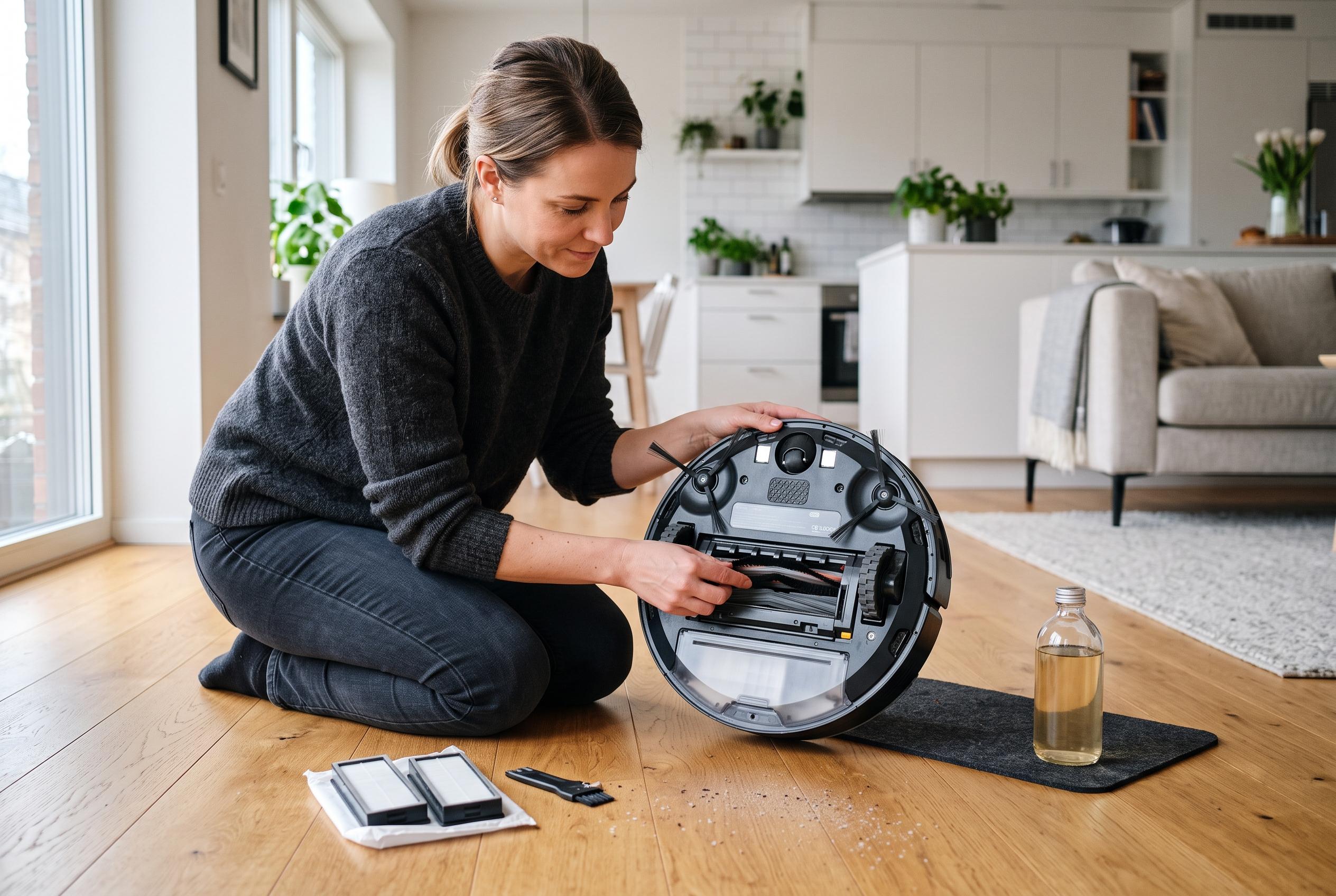

Regular checks of filters, brushes, sensors and mop systems can keep robot vacuums working effectively, while unsuitable cleaning fluids may damage both machines and floors.
Keeping a robot vacuum in good condition is not optional. If the machine is left to collect hair, dust and stagnant mop water, performance falls, suction weakens and the appliance is more likely to fail early. Ideal Home says the job is modest if it is done routinely: a short weekly clean, a longer monthly service and a refresh of the dock every few months are enough to keep most models working properly.
The first step is to switch off both the robot and its charging base before any maintenance begins. That matters because the bot and dock should be treated separately. Once power is disconnected, it is worth checking the maker’s manual, since some brands specify particular cleaning products or replacement intervals. Dyson says a maintenance routine should be built around regular inspection rather than waiting for a problem to appear, which is especially important on machines that vacuum and mop in one pass.
For hybrid models, the water system needs attention as much as the dust path. Fresh water should be topped up frequently, while used water should be emptied before it sits long enough to smell. The dock’s washing tray also needs a wipe-down, and any built-in heating element must be fully cool before it is cleaned. Where mop pads are not washed automatically, they should be rinsed after use and allowed to dry completely so that they do not spread grime or odours back across hard floors.
Dust management is equally important. Whether the machine uses a small onboard bin or an auto-empty dock with a dust bag, the collection system has to be cleared regularly. A full dust chamber can restrict airflow and reduce suction, so frequent emptying matters more than most owners realise. Consumer Reports advises that filters also need regular cleaning, because clogged media can quickly undermine performance and recirculate fine dust. In practice, that means tapping out loose debris, brushing away trapped dirt and replacing dust bags before they overfill.
Brushes are another common failure point. Hair, threads and pet fur can wrap around side brushes and the main roller, slowing movement and leaving debris behind. The easiest fix is a weekly check, followed by careful removal of any strands with the supplied tool, scissors or another suitable cleaner. Consumer Reports and Dyson both note that wheels and brush assemblies should also be inspected, because hidden debris can interfere with navigation and add strain to the motor.
Filters and sensors deserve monthly attention at minimum. A dirty filter can reduce suction and put extra load on the machine, while dusty sensors can interfere with mapping, obstacle detection and charging. The safest approach is a dry cloth for the sensors and charging contacts, plus light tapping or brushing for the filter unless the manufacturer says it can be washed. Dyson recommends periodic deep-cleaning of the exterior and regular checks on replaceable parts, while Consumer Reports says sensors should be kept clean to avoid navigation errors.
The broader point is that a robot vacuum is only partially hands-free. It still needs simple, regular care if it is to justify its cost and keep floors consistently clean. That includes following the maker’s instructions, replacing consumables on schedule and avoiding unsuitable additives in mop water. Ideal Home warns against vinegar in a robot vacuum mop, arguing that only water and approved cleaning fluid should be used, both to protect the machine and to avoid damage to floors.
Disclaimer: This content is intended for informational purposes only. Readers are advised to exercise their own judgement, conduct due diligence, or consult a qualified expert before acting on any information provided.



