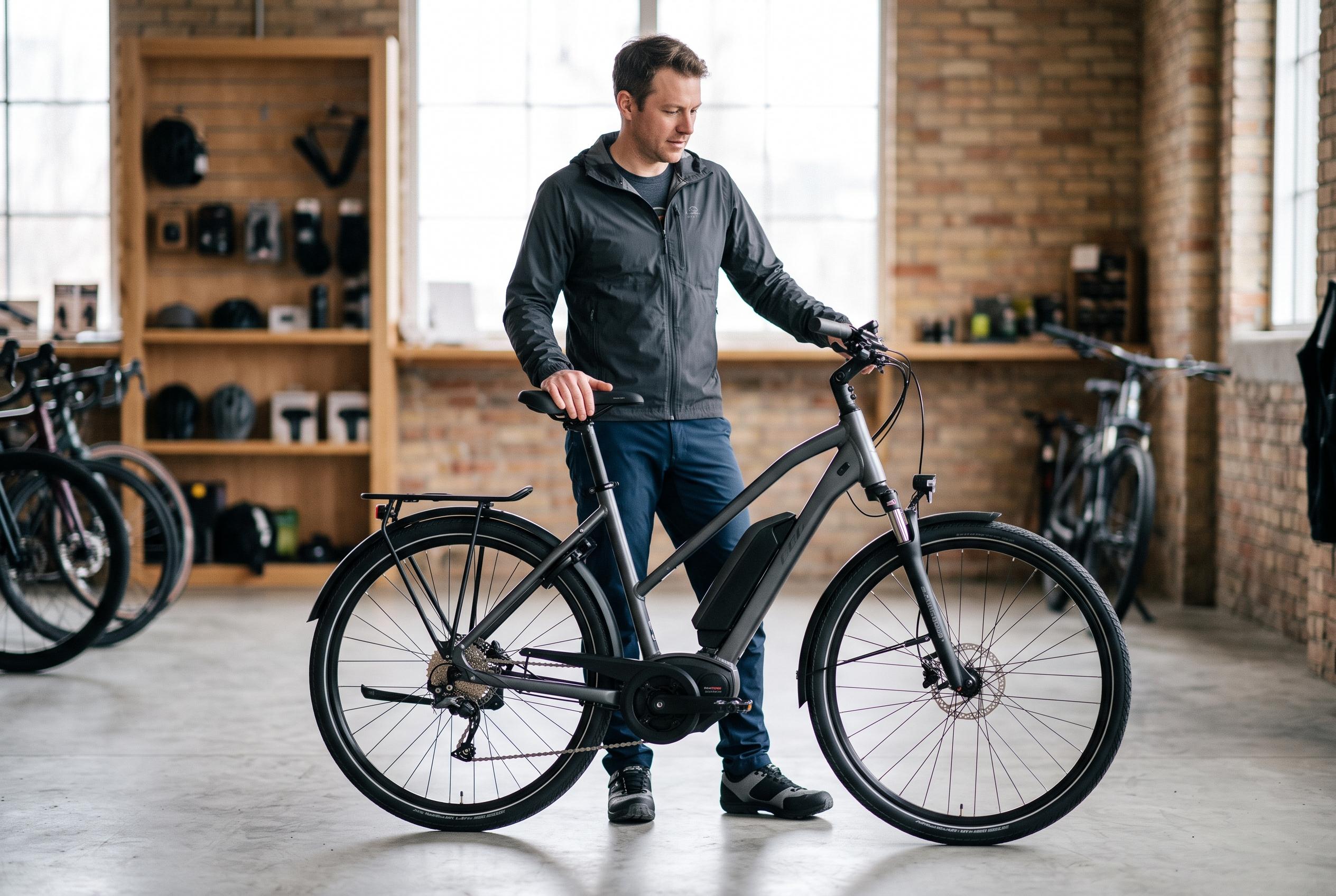

Riders are advised to carefully dry and check their e-bikes after exposure to rain to prevent electrical failures and potential fire risks, as experts highlight key areas prone to water ingress.
Wet weather can expose weaknesses in an e-bike’s electrical system long before any obvious mechanical fault appears. Himiway’s guide says riders should cut power at once if a bike stops working after rain, remove the battery, and avoid charging or restarting it until all moisture has been dealt with. The same approach is echoed by other repair guides, which identify wet connectors, battery terminals, displays, controllers and sensors as the most common points of failure.
The safest response is to dry the bike methodically rather than rush it back into service. Himiway recommends moving the machine indoors, wiping the battery cradle and contact pins, and leaving the bike in a ventilated room with steady airflow for at least a day or two after heavier exposure. Qiolor and Tesway likewise advise checking every plug-in connection in the main wiring harness, since moisture inside a single connector can be enough to interrupt the signal path and stop the system from starting.
Several faults can look similar from the saddle. A display may light up while the motor remains dead, which Mad Labs Repair says often points to the controller, a brake cut-off switch, or a damaged signal line rather than a flat battery. Himiway also notes that wet brake sensors can falsely tell the controller that the levers are still engaged, preventing assist from activating. If the bike behaves erratically, the throttle, cadence sensor or handlebar controls may also have taken on water.
Battery damage deserves the greatest caution. Himiway warns that water inside the pack can short the battery management system, corrode the cell connections and create a delayed fire risk if the battery is charged or powered on too soon. That is why repair guides advise isolating a suspect battery and avoiding any attempt to revive it casually. Radio Flyer similarly tells owners to keep wet e-bikes out of service until they have been thoroughly dried and inspected.
Most of the advice also stresses the difference between water resistance and waterproofing. Tesway and Qiolor note that many e-bikes can cope with rain and road spray, but not submersion, pressure washing or prolonged exposure in deep puddles. Himiway adds that IP ratings, where fitted, describe resistance under test conditions rather than immunity to real-world water ingress. In practical terms, even a rain-ready bike still benefits from conservative riding and careful storage.
Prevention is usually simpler than repair. Across the guides, the recurring recommendations are to keep connectors sealed, apply dielectric grease where appropriate, use protective covers on displays and controls, and let the bike dry fully after every wet ride. For riders who depend on their e-bike daily, that routine matters: it reduces corrosion, lowers the chance of a sudden shutdown, and helps preserve the controller, battery and motor for longer-term use.
Disclaimer: This content is intended for informational purposes only. Readers are advised to exercise their own judgement, conduct due diligence, or consult a qualified expert before acting on any information provided.