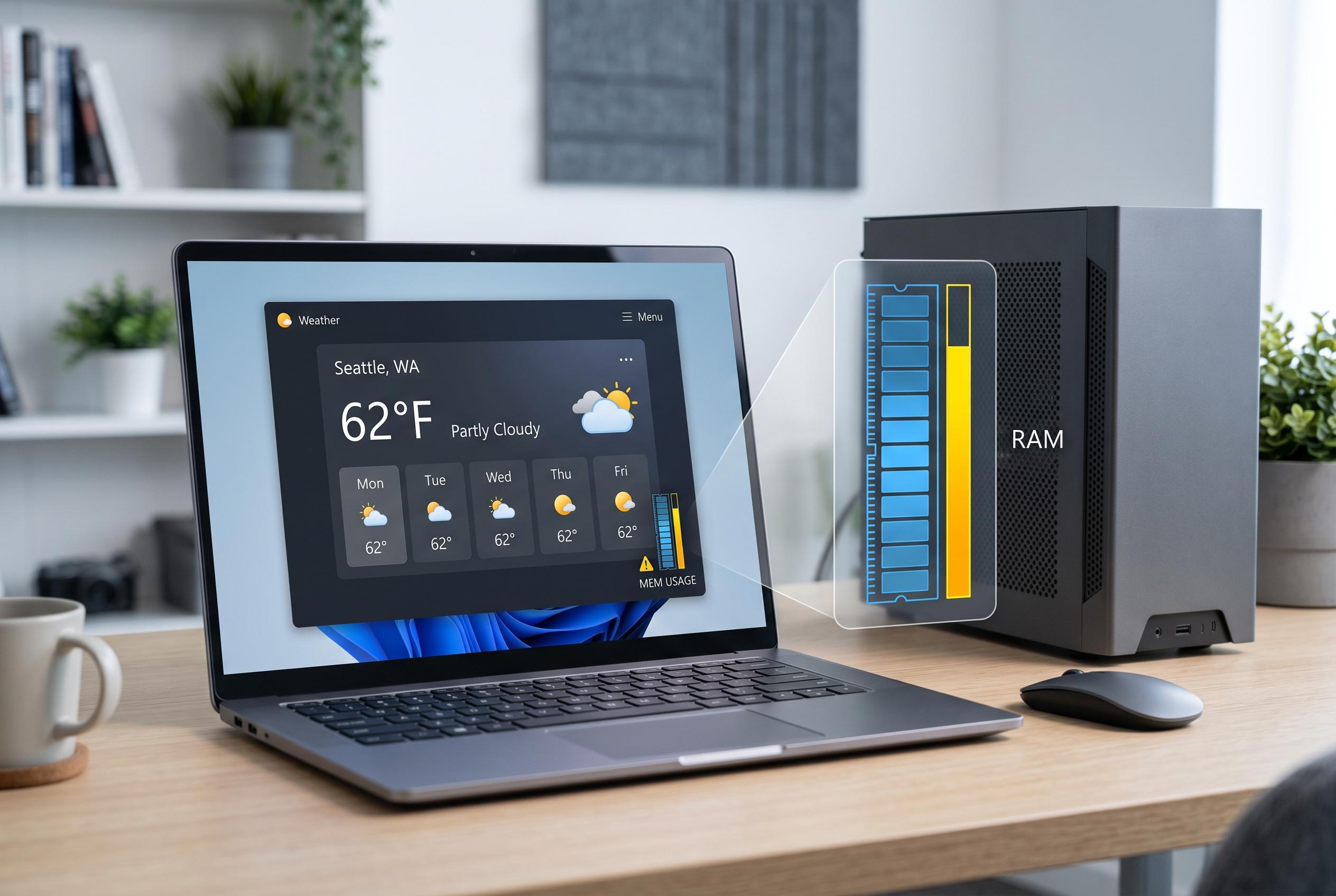

The Windows 11 Weather app’s unexpectedly high memory consumption on 8GB devices highlights challenges in balancing performance and efficiency in budget hardware, prompting scrutiny of embedded web technology in native apps.
Microsoft’s effort to make Windows 11 comfortable on 8GB PCs has run into an awkward problem: one of its most basic built-in apps is using far more memory than many users would expect. Testing first reported by Windows Latest found that the Weather app could rise above 1GB of RAM when opened and still sit around 500MB while idling in the background, a heavy footprint for a simple forecast tool on budget hardware. That matters because 8GB remains common on lower-cost laptops, where memory pressure can quickly affect the rest of the system.
The reason is architectural rather than cosmetic. According to Microsoft’s own WebView2 documentation, the technology used by the Weather app embeds web content inside a Windows app and relies on multiple Chromium-based processes for rendering, graphics and supporting tasks. In practice, that means the Weather experience is closer to a browser page than a traditional lightweight desktop programme. Windows Latest said it found several Chromium sub-processes running behind the app, which helps explain why a small utility can behave more like a web browser than a native widget.
That design choice has drawn wider criticism because it is not limited to Weather. Windows Central reported that Microsoft is under pressure to reduce the memory footprint of Windows 11 across the stack, including shell components and preloaded software, with an emphasis on 8GB devices. Marcus Ash, Microsoft’s corporate vice president of design and research for Windows, said in an interview that the company is working to cut memory bloat and manage resources more intelligently. Separately, Pavan Davuluri, who leads Windows and Devices, has said memory optimisation for 8GB PCs is a top engineering priority through the rest of 2026.
There are, however, caveats. Windows Forum noted that the original Weather measurements did not disclose the exact Windows build, app version, WebView2 runtime or test hardware, so the numbers may vary from device to device. Even so, the broader point stands: a forecast app built on the same web engine used by heavier Microsoft products is difficult to reconcile with the company’s push for efficiency on entry-level PCs. Reports cited by Windows Latest suggest a more native implementation may be under consideration later in 2026, but for now users who want to reduce background load can disable the Weather widget or remove the app entirely.
Disclaimer: This content is intended for informational purposes only. Readers are advised to exercise their own judgement, conduct due diligence, or consult a qualified expert before acting on any information provided.