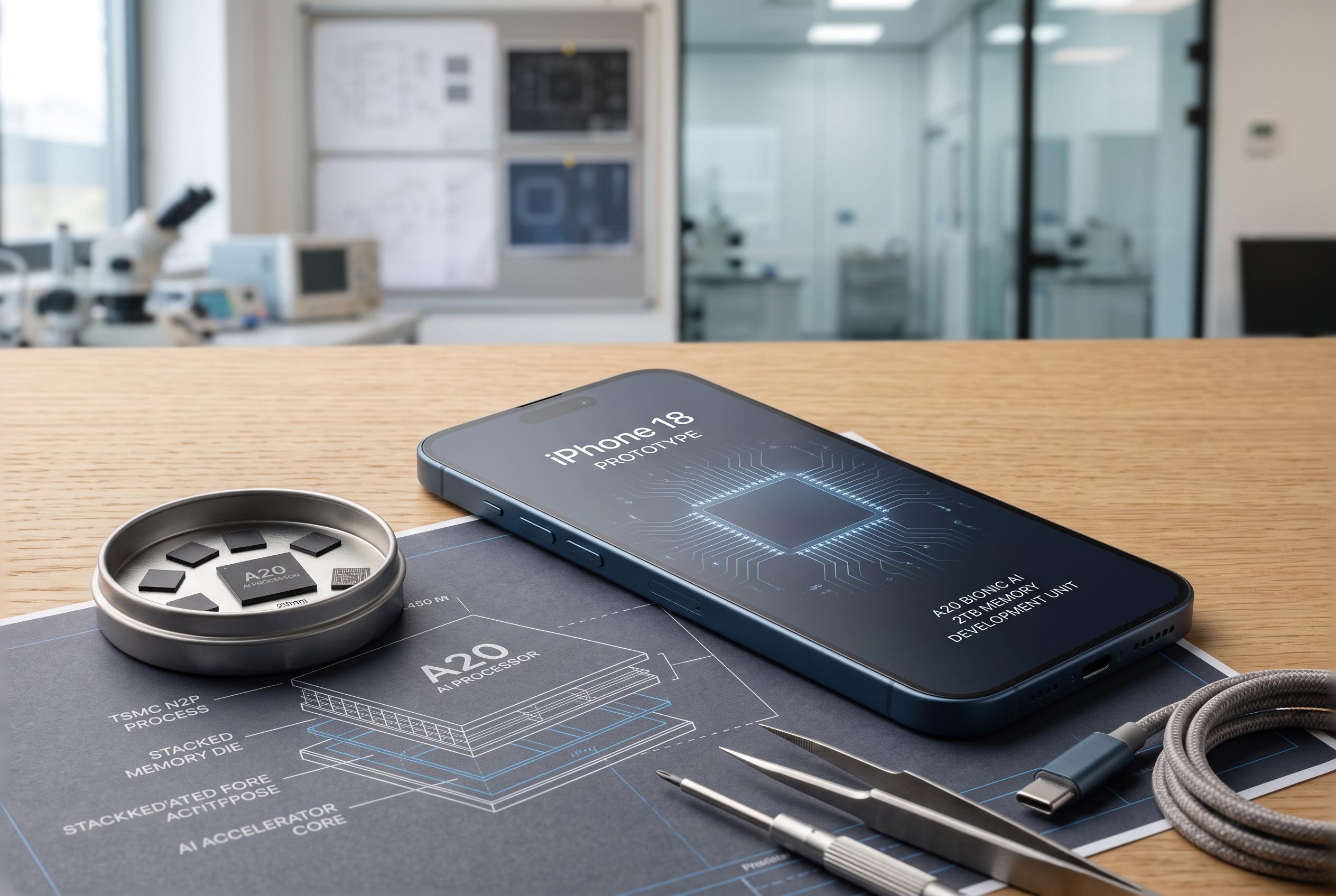

Apple faces potential delays for its upcoming iPhone 18 models as TSMC’s advanced 2-nanometre chip production prioritises artificial intelligence customers, risking supply shortages and component bottlenecks.
Apple could face tighter supply than usual for next year’s premium iPhones as TSMC’s leading-edge 2-nanometre production remains heavily booked by artificial intelligence customers, according to a report cited by MacRumors. The bottleneck could affect the iPhone 18 Pro, iPhone 18 Pro Max and the long-rumoured foldable iPhone, all of which are expected to rely on Apple’s next wave of custom silicon.
The issue is not a lack of demand for Apple’s devices, but pressure on TSMC’s most advanced fabrication lines. MacRumors reported that strong AI chip orders have already absorbed much of the Taiwanese foundry’s initial 2nm capacity, leaving less room for consumer products as Apple prepares its next flagship launch. That matters because the 2nm node is expected to bring meaningful gains in both power efficiency and processing performance, two features central to Apple’s hardware strategy.
There is, however, a more optimistic reading of TSMC’s progress. The company’s 2nm programme has been advancing steadily, with trial production reportedly exceeding 60% yield by late 2024, a level that usually indicates a process is close to commercial readiness. Both MacRumors and TechSpot said TSMC began mass production in the fourth quarter of 2025 and has been planning a sharp increase in output through 2026, with Apple expected to be among the first major customers to use the process.
Even so, supply can still be constrained during the ramp-up phase. MacRumors said Apple had secured nearly half of TSMC’s initial 2nm capacity for the iPhone 18 family, but that does not guarantee smooth availability if competing AI and smartphone orders keep rising. The iPhone 18 Pro models are still expected in autumn 2026, while the base iPhone 18 models may follow in March 2027, meaning Apple may have to balance launch demand against a finite supply of advanced wafers.
A separate report from Tom’s Hardware pointed to a second possible constraint: memory shortages. It said Apple is also contending with DRAM pressure, with roughly $1 billion worth of processor wafers waiting for packaging because enough memory has not been secured. If that picture proves accurate, Apple’s supply challenge would not be limited to chip fabrication alone but could extend deeper into the broader component chain.
Disclaimer: This content is intended for informational purposes only. Readers are advised to exercise their own judgement, conduct due diligence, or consult a qualified expert before acting on any information provided.