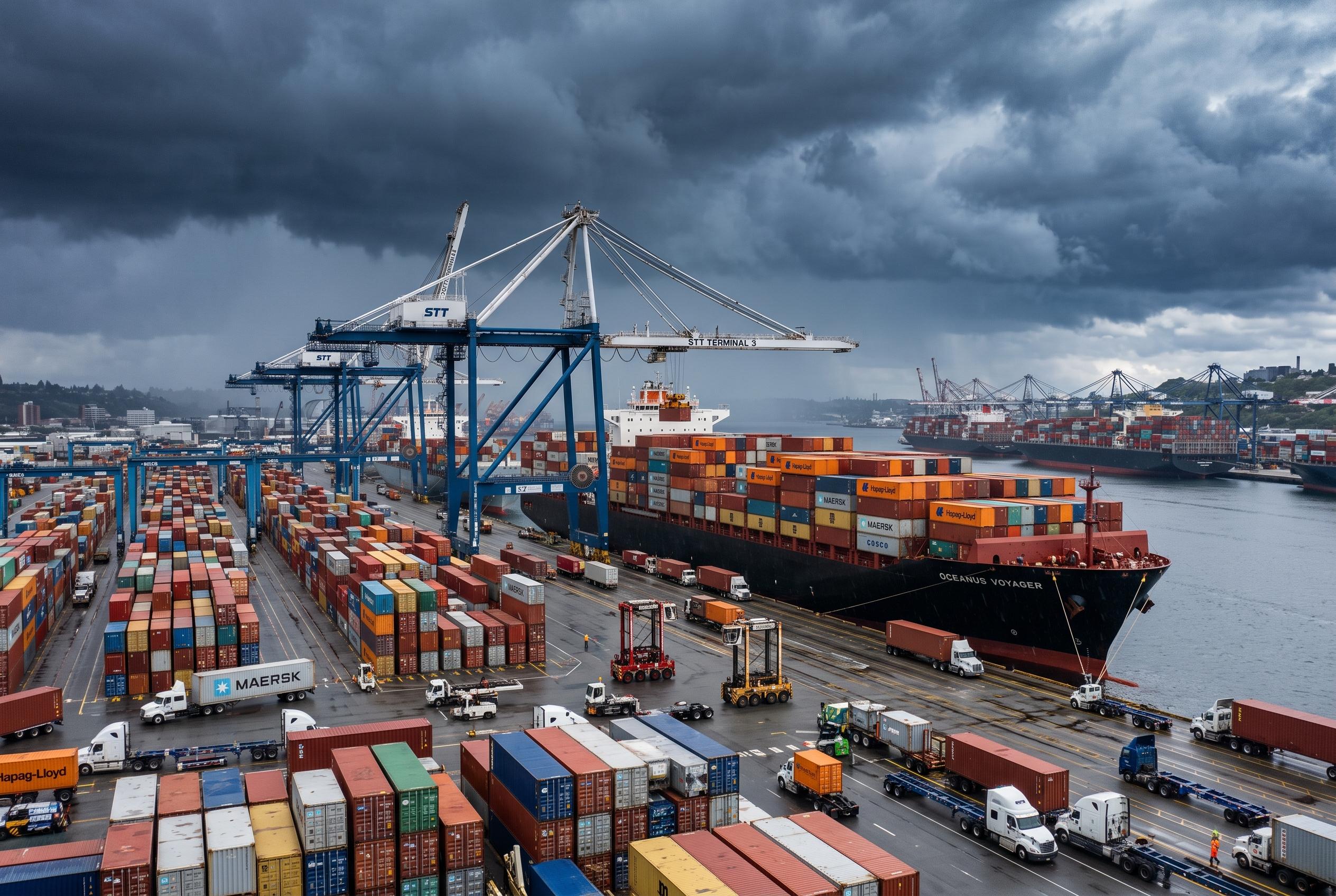

Severe weather events, port congestion, and infrastructure linked to artificial intelligence are causing unexpected volatility in transpacific shipping costs, even as consumer demand softens, according to industry reports.
Typhoons in Asia and a burst of cargo linked to artificial intelligence infrastructure are pushing transpacific container rates higher, even as broader consumer demand softens, according to Seatrade Maritime News. The underlying picture remains uneven: freight tied to digital expansion has helped fill part of the gap left by weaker retail volumes, but the sharper force on pricing is operational disruption at ports in China and elsewhere in Asia.
Ted Chen, director of ocean freight at Dimerco Express Group, said the front-loading wave has already passed its peak and that rates on the Pacific trade are easing from their highs. He argued that transport costs are unlikely to fall at the same pace as demand because fuel and canal surcharges remain sticky. His comments were quickly overtaken by events, however, as blank sailings and cargo backlogs caused by severe weather have tightened capacity again.
Peter Sand, senior analyst at Xeneta, said US importers have been the least fortunate. He said spot rates from Asia to the US West Coast and US East Coast rose 14% and 13% respectively in early August, leaving East Coast pricing close to the $10,000 per FEU mark. Xeneta data cited by Seatrade put average spot rates at $6,824 per FEU to the West Coast and $9,988 per FEU to the East Coast, underscoring how quickly disruption can feed through to shipper costs.
Chen said poor weather has delayed vessels by as much as five to seven days when they are unable to berth in heavy winds, while congestion at Asian ports is adding to the squeeze. He also pointed to tighter loading conditions at the Panama Canal, where queues are forming and El Niño could intensify restrictions further. Sand offered a different interpretation of blank sailings, saying carriers are trying to balance soft demand against available capacity by cancelling scheduled departures at short notice, a practice that has unsettled importers.
The broader market picture is mixed. Rates from Asia to North Europe and the Mediterranean have slipped by nearly 5%, while Atlantic rates have risen 6.8% from North Europe to the US East Coast, according to the same Xeneta data cited in the report. Separate market tracking from other shipping analysts has shown how quickly container pricing can swing when congestion, seasonal demand and carrier capacity management line up at the same time.
Disclaimer: This content is intended for informational purposes only. Readers are advised to exercise their own judgement, conduct due diligence, or consult a qualified expert before acting on any information provided.