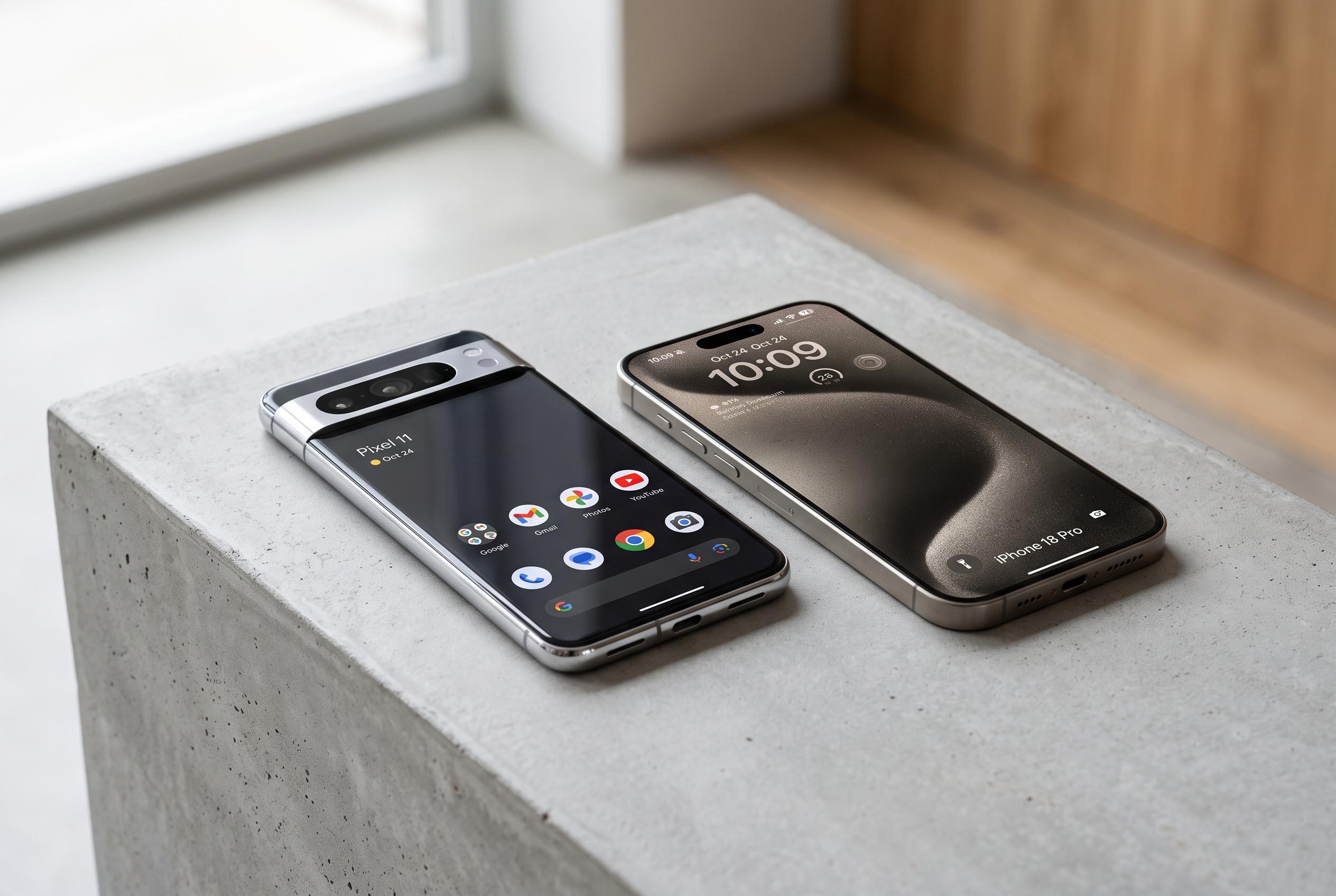

As Google raises the price of its Pixel 11 line amid soaring memory costs, industry analysts suggest the iPhone 18 Pro may also see modest price increases this September, reflecting broader supply chain pressures and component costs.
Google’s decision to raise the price of its Pixel 11 line has reopened a familiar question for Apple watchers: will the iPhone 18 Pro cost more when it arrives in September? The answer may depend less on strategy than on a market that has become sharply more expensive, especially for memory. According to reports from Reuters and industry analysts, the cost of RAM has climbed rapidly this year as chipmakers divert supply towards artificial intelligence customers, tightening availability for consumer devices.
Google’s pricing changes are not as simple as they first look. The Pixel 11 now starts at a higher sticker price, but the company has also removed the 128GB version, so the new entry model is 256GB. In that sense, the base price for equivalent storage is unchanged. The clearest increase is in the Pixel 11 Pro XL, which is said to be $100 dearer across its available storage options. TechRadar reported that the Pixel 11 family was unveiled at Google’s Made by Google event on 12 August, with the launch centred on the Pixel 11, Pixel 11 Pro, Pixel 11 Pro XL and Pixel 11 Pro Fold.
That matters for Apple because it has already been using storage and configuration changes to soften price moves. Apple last year raised the entry storage on some models rather than relying only on headline price increases. But this year’s situation is less forgiving. All iPhone models now begin at 256GB, which leaves less room to disguise a higher starting price. MacRumors reported in June that IDC believed Apple could lift iPhone 18 Pro prices by as much as $100, while TechInsights told The Wall Street Journal that Apple might need a far steeper increase to preserve margins as component costs rise.
Still, not every analyst expects a dramatic jump. J.P. Morgan has said the increase may be much smaller than feared, and Ming-Chi Kuo has argued that Apple may try to hold pricing steady by absorbing more of the cost pressure. That view reflects Apple’s broader approach: use its scale to secure supply, even if margins come under strain. But Tim Cook has also warned that price rises are unavoidable, suggesting Apple sees little choice if memory costs remain elevated. Apple has already increased prices on some Macs and iPads, indicating that the pressure is no longer theoretical.
For the iPhone 18 Pro, the most likely outcome is a modest but real increase rather than a shock jump. The new model is expected to bring only incremental changes, including a smaller Dynamic Island, a new chip and camera improvements, rather than a major redesign. That leaves component economics, not features, as the main force shaping the final bill. If Apple follows Google’s lead, the increase may be closer to $100 than $300. But with memory still expensive and the supply chain under strain, the company may have little room to avoid passing at least part of the burden on to buyers.
Disclaimer: This content is intended for informational purposes only. Readers are advised to exercise their own judgement, conduct due diligence, or consult a qualified expert before acting on any information provided.