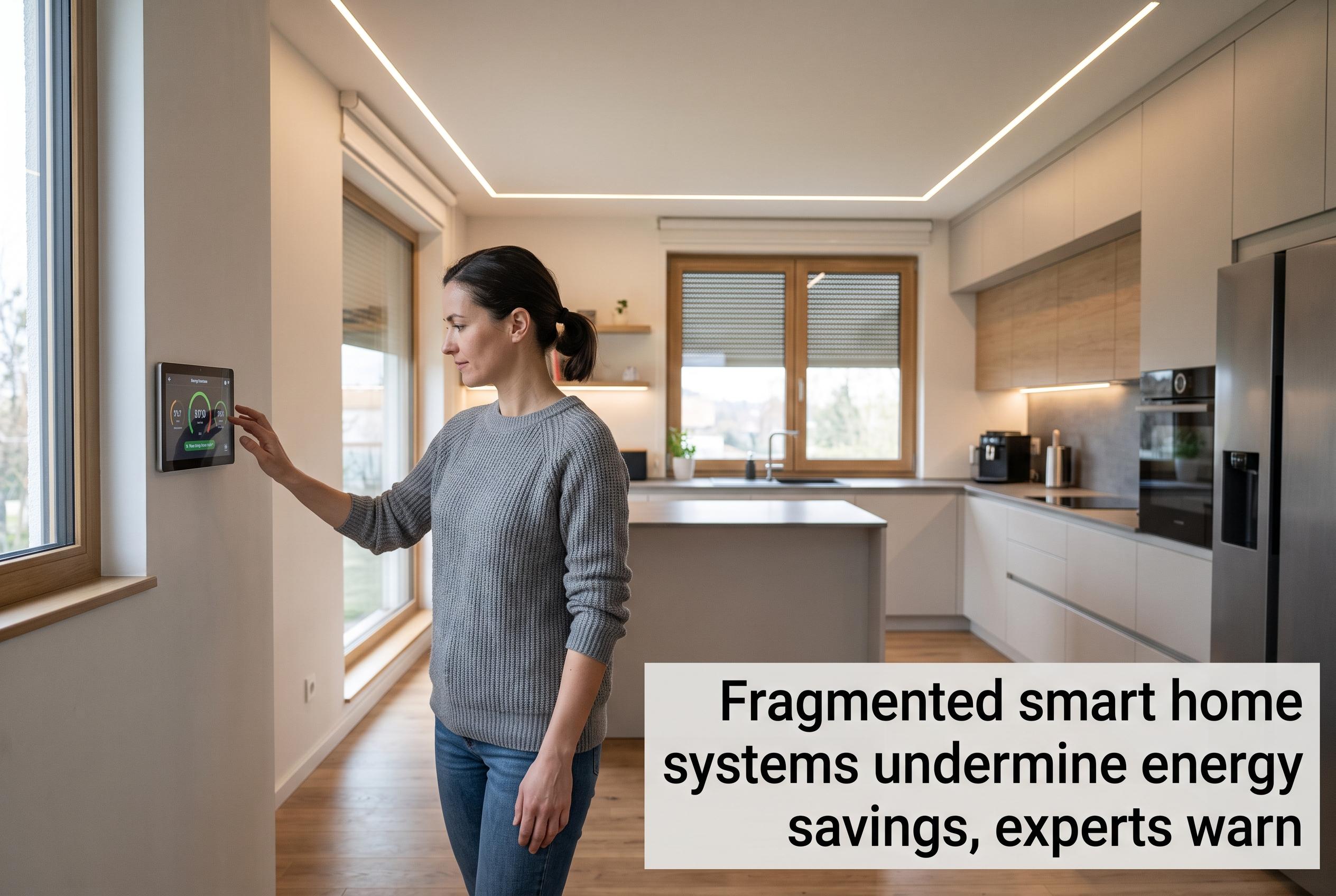

Despite the popularity of smart home devices, experts highlight that inconsistent installation and usage routines prevent households from achieving meaningful energy savings, with coordinated automation and behavioural discipline being key to success.
Smart homes are often sold as a route to lower utility bills, but for many households the result is the opposite. The core problem is not the technology itself but the way it is installed and used: devices are typically added one at a time, with little thought given to how heating, cooling, lighting and appliances should work together. According to the material from Automated Home, that fragmented approach leaves the biggest energy drains untouched and turns many expensive systems into little more than remote controls.
That weakness is echoed by Casability and TechBullion, which both argue that complexity and separation undermine savings. Devices that need constant manual adjustment tend to be ignored, while systems that evolve independently create data silos and higher running costs. In practice, the smart home fails when convenience features are prioritised over coordinated energy management. A house full of connected products can still waste power if each one is acting alone.
The clearest gains come from automating the areas that consume the most energy. Heating, ventilation and air conditioning usually offer the largest opportunity, especially in climates with sharp seasonal swings. Lighting controls come next, particularly in hallways, bathrooms and exterior fixtures where motion sensors or time-based rules can stop lights from staying on unnecessarily. Smart plugs can also cut wasted electricity from televisions, games consoles, streaming boxes and office equipment that draw power even when idle. The key is to target recurring, predictable waste rather than to chase novelty.
Platform choice matters as well. The material notes that homes built around a hub and common standards such as Wi-Fi, Zigbee and Z-Wave tend to perform better than those assembled from incompatible gadgets. That is because local coordination is more reliable than scattered cloud-dependent routines, especially when internet service is unstable. As HeyoSmart observes, poor design can also raise maintenance costs and make upgrades harder later, which means the financial case for smart home tech depends as much on architecture as on device quality.
There is also a behavioural issue. Automated routines only save money when they replace manual habits consistently. Casability and the thermostat-focused pieces both point out that systems left on default settings, or used without regular review, rarely deliver the promised reduction in bills. In some homes, aggressive temperature setbacks can even work against savings if they trigger less efficient heating modes. The lesson is straightforward: the schedule matters more than the marketing.
For households trying to cut costs, the practical approach is to start small. A smart thermostat, a few motion sensors and a handful of energy-monitoring plugs will usually do more than an expensive collection of decorative devices. Once the basics are working, homeowners can add night-time shut-down routines, occupancy-based lighting and better temperature scheduling, then compare monthly bills to see whether the changes are actually working. According to Parks Associates, smart home ownership is now widespread in the United States, which makes the gap between ownership and savings more significant: many homes have the gear, but too few have the automation discipline that turns it into lower energy use.
Disclaimer: This content is intended for informational purposes only. Readers are advised to exercise their own judgement, conduct due diligence, or consult a qualified expert before acting on any information provided.