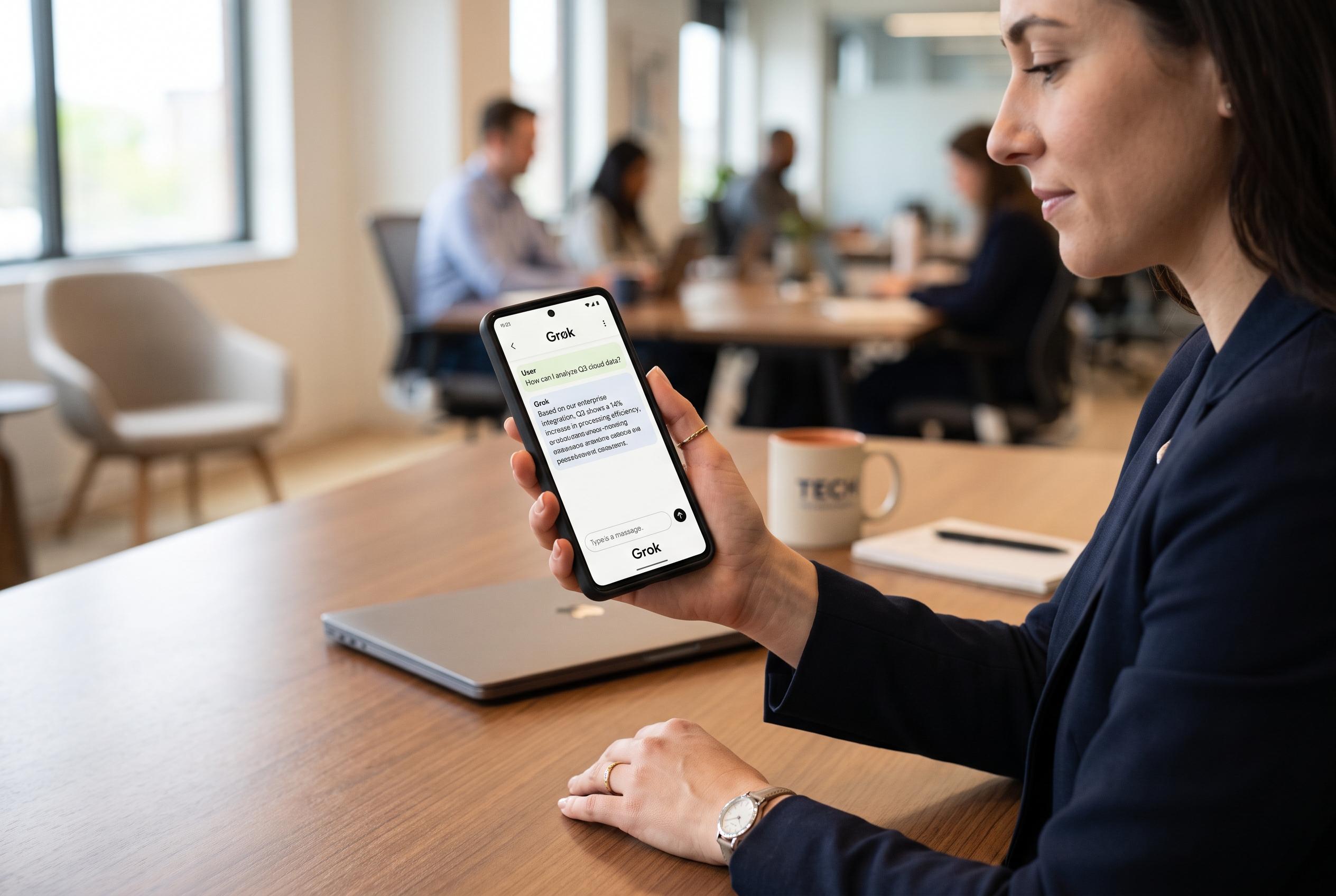

xAI has launched a limited beta of Grok Bot on iPhone, offering a new form of cloud-connected AI agent capable of multi-step work tasks, raising both productivity prospects and security considerations.
Grok Bot has arrived on iPhone in early beta, turning xAI’s Grok service into something closer to a remote assistant than a conventional chatbot. According to the company’s own documentation and pricing pages, Grok remains available on web, iOS and Android, while the new bot feature is being offered only to a narrow set of paid users who can hand it tasks to complete on a cloud computer rather than on the handset itself.
The service is pitched at users who want software to carry out multi-step work, not just generate text. SpaceXAI says the agent can sign in to websites and applications, move between tools, work with files and return for approval when needed. The company’s documentation for Grok also shows that the wider product already supports features such as connectors, file uploads and voice interaction, which helps explain why the bot extension is being framed as part of a broader push into agentic work.
Access is limited at launch. The Grok Bot beta is tied to higher-priced plans, including SuperGrok Heavy, Cursor Ultra and Cursor Premium Teams. Cursor’s pricing page shows that its Ultra tier is an expensive, high-usage offering, while xAI’s published Grok pricing lists SuperGrok and Business subscriptions for individual and organisational use. The limited rollout suggests that xAI is still testing reliability and cost before widening access.
The appeal is clear: a phone can become the control point for work that continues elsewhere. A user could assign research, drafting, invoice chasing or customer follow-up, then review results later without keeping a laptop open. That model also raises obvious security and governance questions, because an agent with saved logins, browser sessions and access to company systems can make real changes rather than merely suggest them. App Store approval does not by itself validate every action taken by a remote autonomous agent, and businesses will still need to scrutinise retention, account control and off-boarding procedures.
There is also a practical difference between a bad answer and a bad action. A chatbot mistake is only text until someone acts on it. An autonomous bot can enter the wrong value, message the wrong contact or alter a shared document before anyone notices. For that reason, the most sensible early use cases are narrow ones with clear approvals, reversible steps and close human oversight.
Disclaimer: This content is intended for informational purposes only. Readers are advised to exercise their own judgement, conduct due diligence, or consult a qualified expert before acting on any information provided.