
Best Buy’s strategic focus on AI-enabled gadgets and upgraded PCs is boosting investor confidence, but the retailer faces persistent margins and competition challenges as it leverages emerging technologies to revitalise sales.
Wall Street’s case for Best Buy is not about the retailer building artificial intelligence tools. It is about whether it can profit as AI moves into the devices consumers already buy. That shift is beginning to show up in smart glasses, health-tracking wearables and a new wave of AI-capable PCs, all of which play to Best Buy’s strength as a specialist electronics seller.
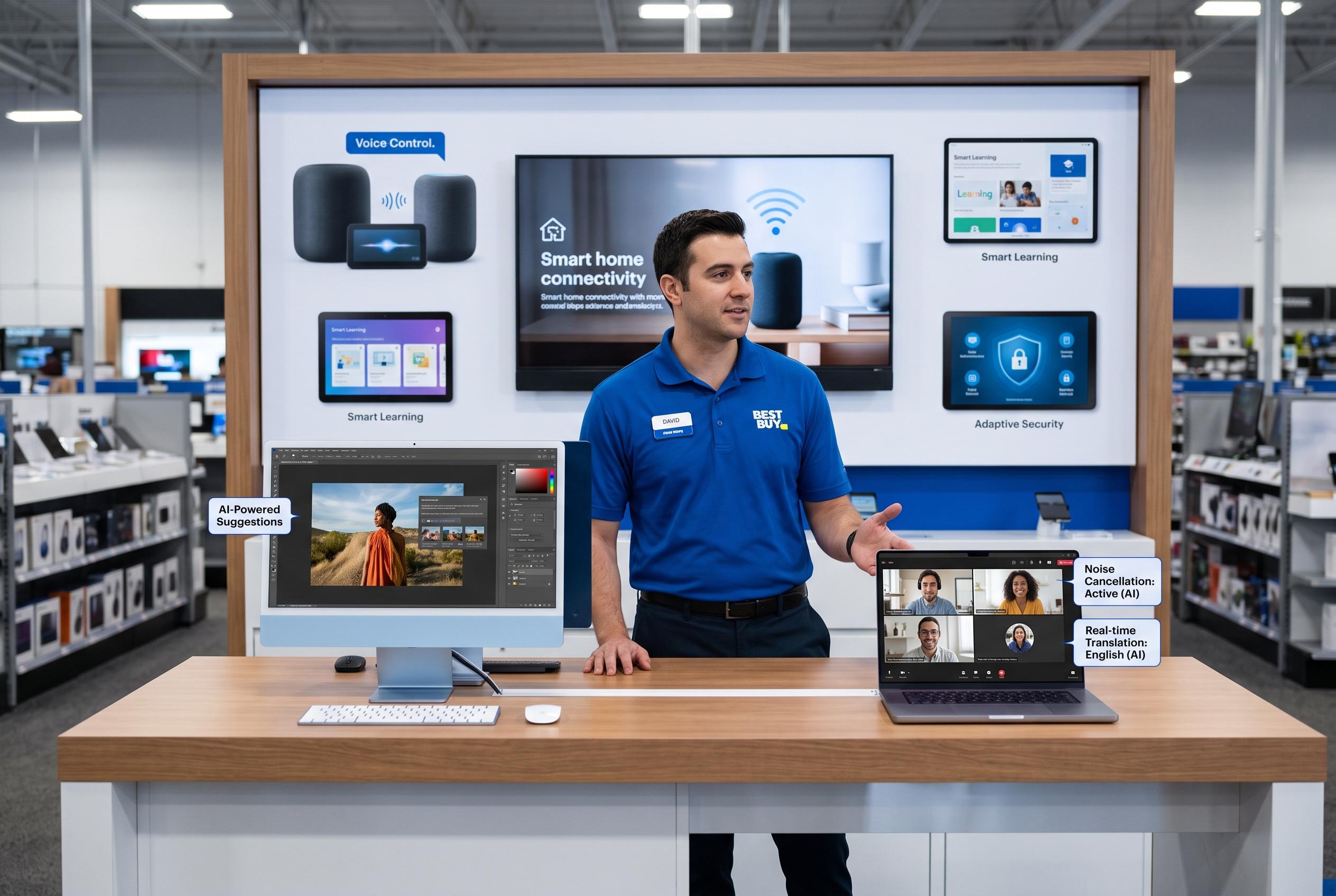
The company has said newer product categories, including AI-enabled devices, are growing quickly, and it has begun creating in-store experiences centred on those products. Best Buy has also moved to make its shops a place where shoppers can try the technology before buying it, rather than simply ordering online. That matters because consumer electronics often sell better when buyers can see, handle and compare them.
The AI story is now extending into computing as well. Best Buy’s PC business has improved as customers replace older laptops with machines designed for on-device AI tasks. According to company-linked reporting, the retailer has broadened its lineup of Copilot+ PCs and trained tens of thousands of staff to demonstrate them. It has also partnered with Meta on the Meta Ray-Ban Display, giving it an exclusive major retail role for the glasses and adding another showcase for AI hardware in stores.
Investors are clearly taking notice. One market estimate cited an 18% rise in Best Buy’s shares as enthusiasm built around AI-related gadgets, advertising growth and marketplace expansion. But the argument is not without risk. Best Buy remains a low-margin consumer retailer exposed to online competition and to a familiar problem in discretionary spending: shoppers can delay upgrades when budgets tighten. With the shares already up sharply, even a modest earnings miss could unsettle the stock.
At roughly 15 times earnings, Best Buy still trades far below the valuation given to many AI-linked technology names. That gap reflects slower growth expectations, but it also gives the retailer a cheaper way to gain exposure to the AI upgrade cycle than buying the semiconductor or software companies behind it. For now, the question is whether that cycle turns into durable sales, rather than just a short-lived boost from novelty.
Disclaimer: This content is intended for informational purposes only. Readers are advised to exercise their own judgement, conduct due diligence, or consult a qualified expert before acting on any information provided.