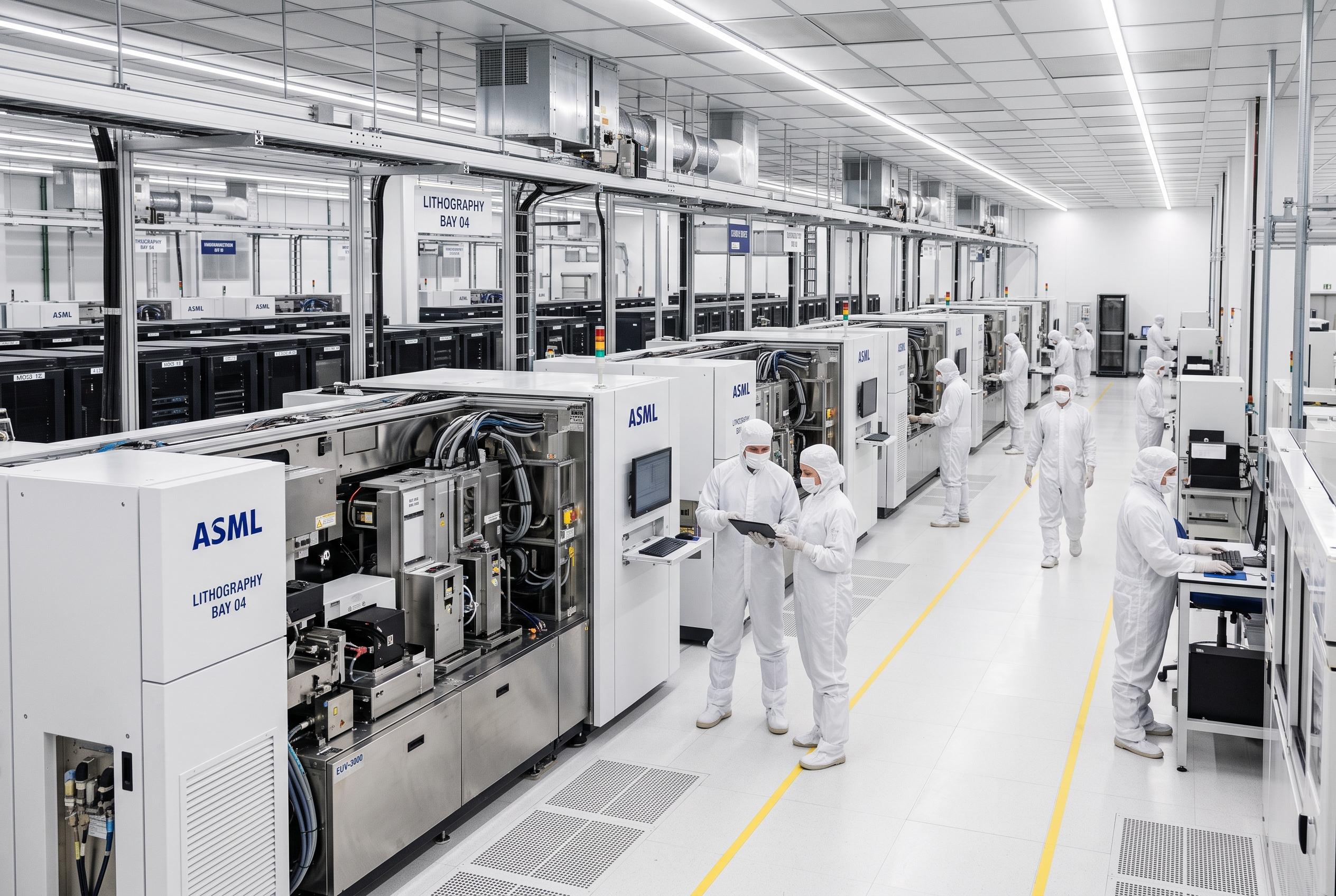

Chinese chipmakers focus on mature process nodes, gaining significant market share and challenging established global foundries, driven by domestic demand and geopolitical factors.
China’s foundry businesses are emerging as one of the most significant parts of the country’s chip-making push, according to analysis of revenue trends and market-share data compiled from industry trackers and reported by eDaily. The focus is not on the most advanced chips used by TSMC and Samsung Electronics, but on mature process nodes of 10 nanometres and above, which are widely used in cars, home appliances, telecoms equipment and other everyday products.
The strongest gains have come from SMIC, Hua Hong Group and Nexchip. eDaily’s comparison of the top 10 global foundries over the first quarter of 2024 to the first quarter of 2026 found that the three Chinese companies grew their average sales by more than 50%, far ahead of the 17.2% average rise among the next nine largest foundries outside TSMC. SMIC’s revenue climbed from $1.75bn to $2.5bn, Hua Hong’s from $670mn to $1.23bn and Nexchip’s from $310mn to $390mn over the period.
That growth is also showing up in market share. TrendForce data cited by eDaily put SMIC at 5.2% of the global foundry market in the first quarter of this year, ahead of UMC at 3.9% and GlobalFoundries at 3.8%, while Hua Hong held 2.5% and Nexchip 0.8%. Reuters and other international reports have described this shift as evidence that Chinese chipmakers are steadily taking business in the mid-range and legacy-chip segments that remain vital to global manufacturing.
The drivers are part industrial and part geopolitical. Because of US export controls, Chinese foundries cannot use extreme ultraviolet lithography tools needed for the most advanced nodes, pushing them towards deep ultraviolet equipment and older process technologies. That constraint has become a strength of sorts: by concentrating on mature chips and benefitting from domestic demand, state support and foreign investment, Chinese firms have built scale, improved utilisation and lowered costs. Industry figures quoted by eDaily say that could give China a larger role not just in consumer electronics, cars and communications gear, but even in low-cost products such as toys and lifts.
Inha University professor Lee Gyu-bok, a former head of the Korea Semiconductor Industry Association, said China’s influence in the lower- and mid-priced chip market is likely to keep growing, helped by government backing, returning talent and a deep labour pool. The longer that trend continues, the greater the pressure on established foundries in Taiwan, the United States and elsewhere to defend a segment of the market that still underpins much of the world’s industrial supply chain.
Disclaimer: This content is intended for informational purposes only. Readers are advised to exercise their own judgement, conduct due diligence, or consult a qualified expert before acting on any information provided.