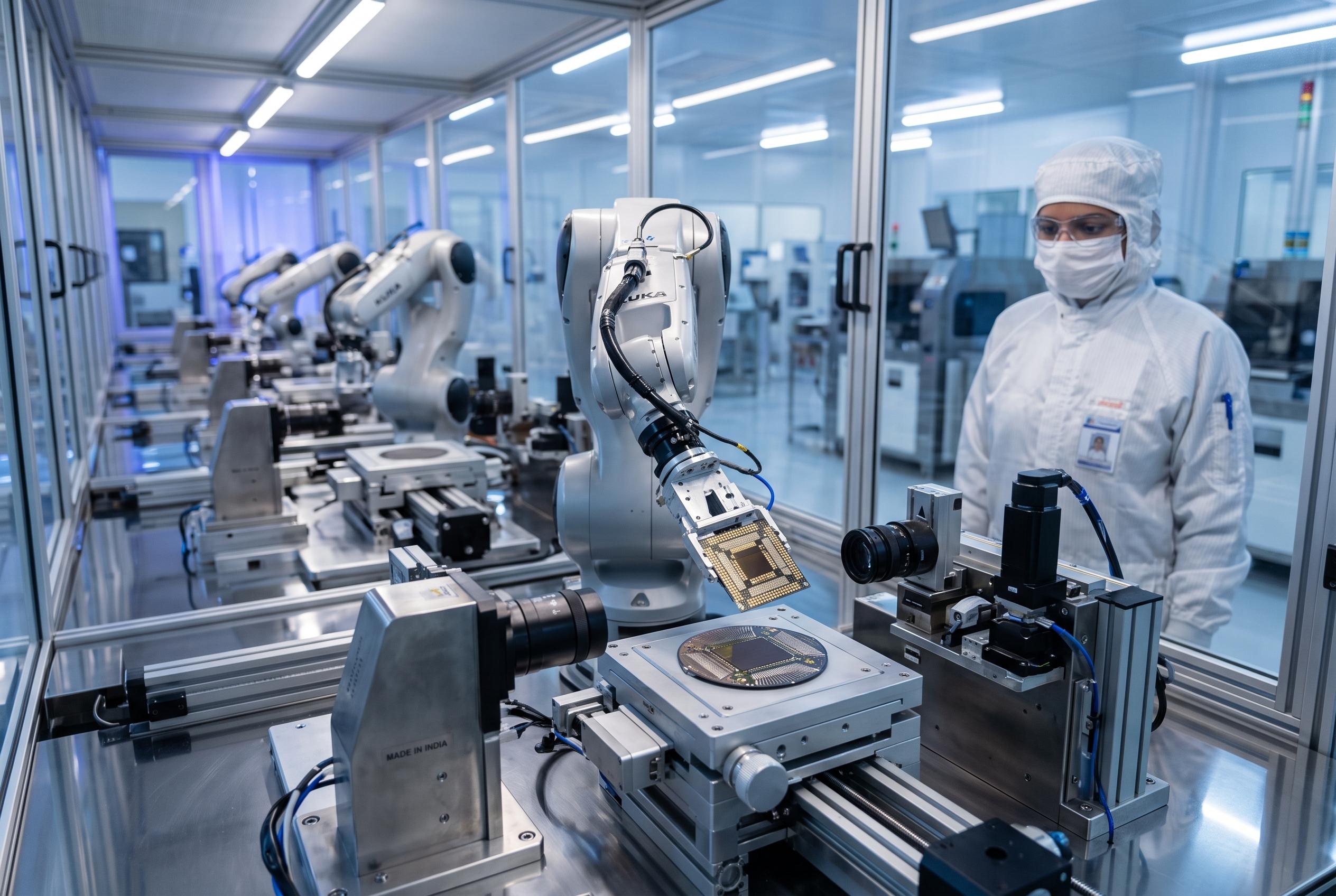

India’s new semiconductor packaging plant in Uttar Pradesh, part of the HCL-Foxconn joint venture, is set to significantly reduce reliance on imported display driver chips, boosting domestic production and supporting the country’s broader semiconductor ecosystem by 2028.
India Chip, the HCL-Foxconn joint venture, says its upcoming semiconductor packaging plant in Uttar Pradesh will produce about 36 million display driver chips a month and could cover roughly 40% of India’s domestic demand for that component. The company’s chairman, Shikhar Malhotra, set out the figures at Semicon India 2026, saying the facility is designed to serve a market that remains heavily dependent on overseas supply. According to the lead report, Prime Minister Narendra Modi virtually laid the foundation stone in Jewar on Thursday, while the project itself was first broken ground in February and is due to open in 2028.
The initial output will focus on display driver chips used in smartphones, laptops, cars, wearables, televisions and medical equipment. Malhotra said 80-85% of the components used in Indian displays are imported, and he argued that the country still buys more than $30 billion of chips from abroad each year. In his view, that makes display electronics one of the clearest gaps in India’s manufacturing base.
The project was approved earlier this year by the Union Cabinet as a ₹3,700-crore semiconductor unit under the India Semiconductor Mission. Business Standard and Mint reported in May that the plant near Jewar airport is expected to handle 20,000 wafers a month, with a monthly output of 36 million chips, and that it is the sixth semiconductor unit cleared in India. The company says the OSAT facility should also draw in suppliers of substrates, lead frames, bonding wires, moulding compounds, speciality gases and precision tooling, much of which is still imported.
Malhotra also presented the venture as part of a wider industrial shift, not just a single factory. He said India already has a strong base in software, artificial intelligence and chip design, and that manufacturing capacity can now be added to that mix. The company’s message is that packaging and assembly could help anchor a larger domestic semiconductor ecosystem, while also encouraging multinational suppliers to produce more of the supporting materials in India.
Disclaimer: This content is intended for informational purposes only. Readers are advised to exercise their own judgement, conduct due diligence, or consult a qualified expert before acting on any information provided.